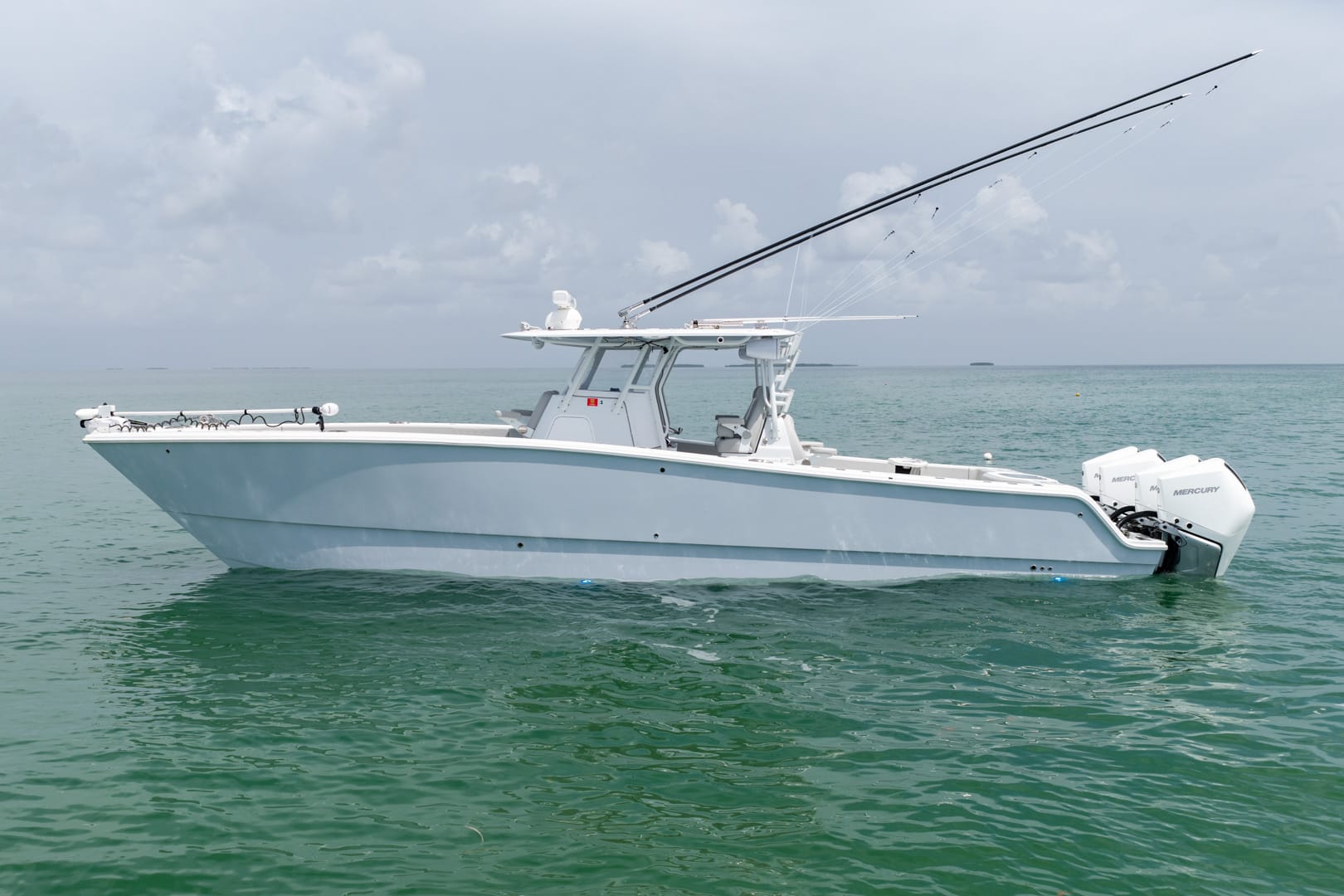
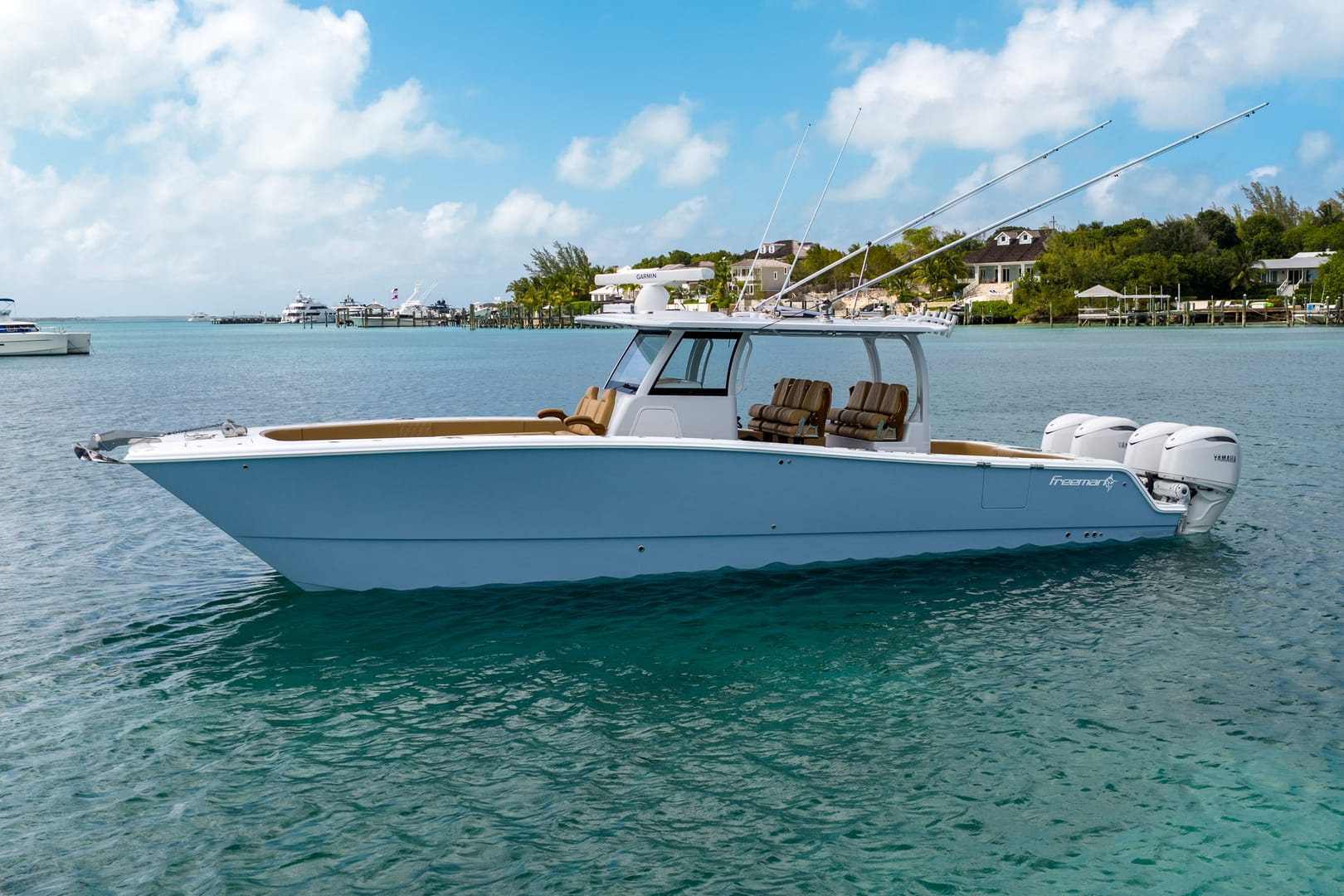
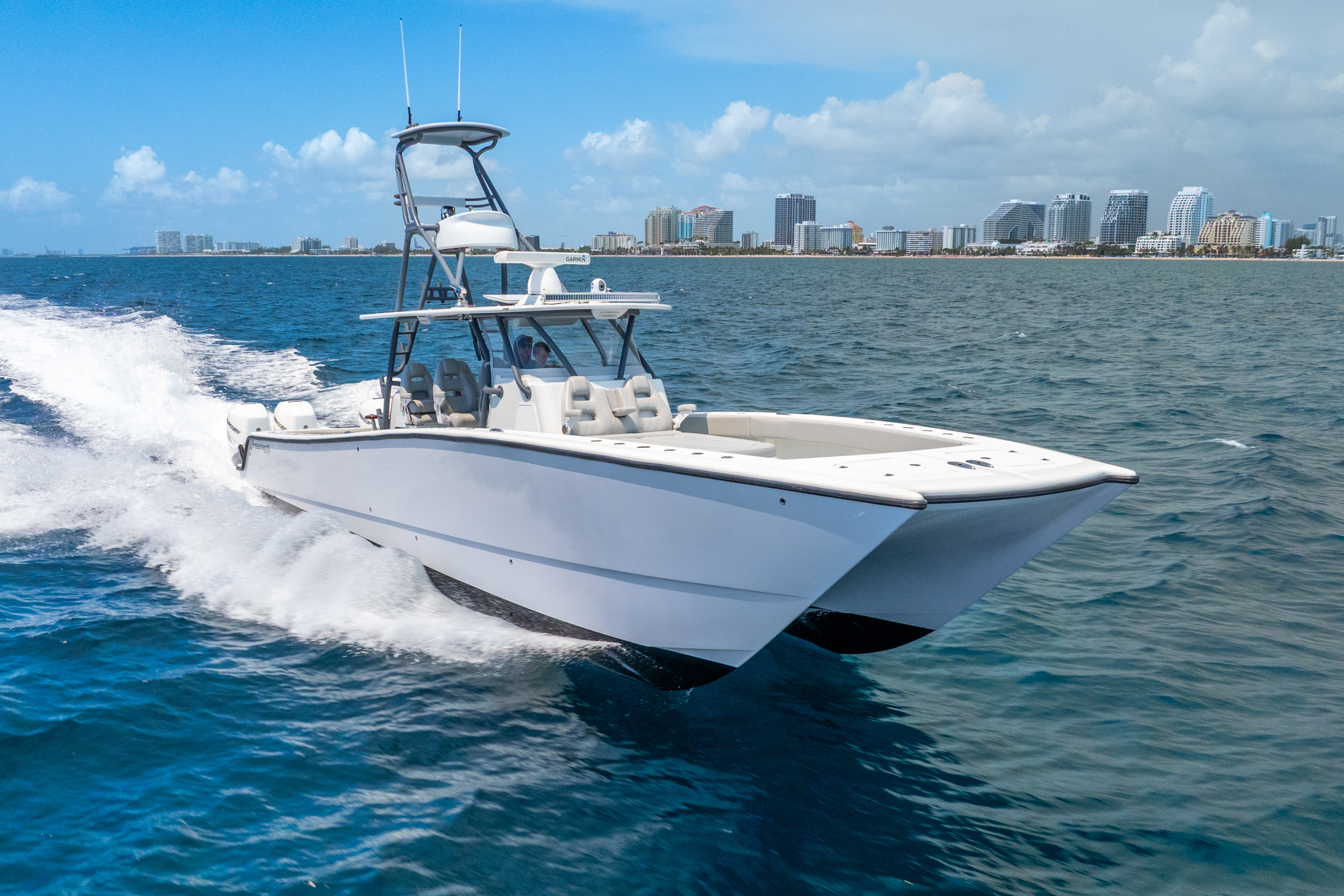
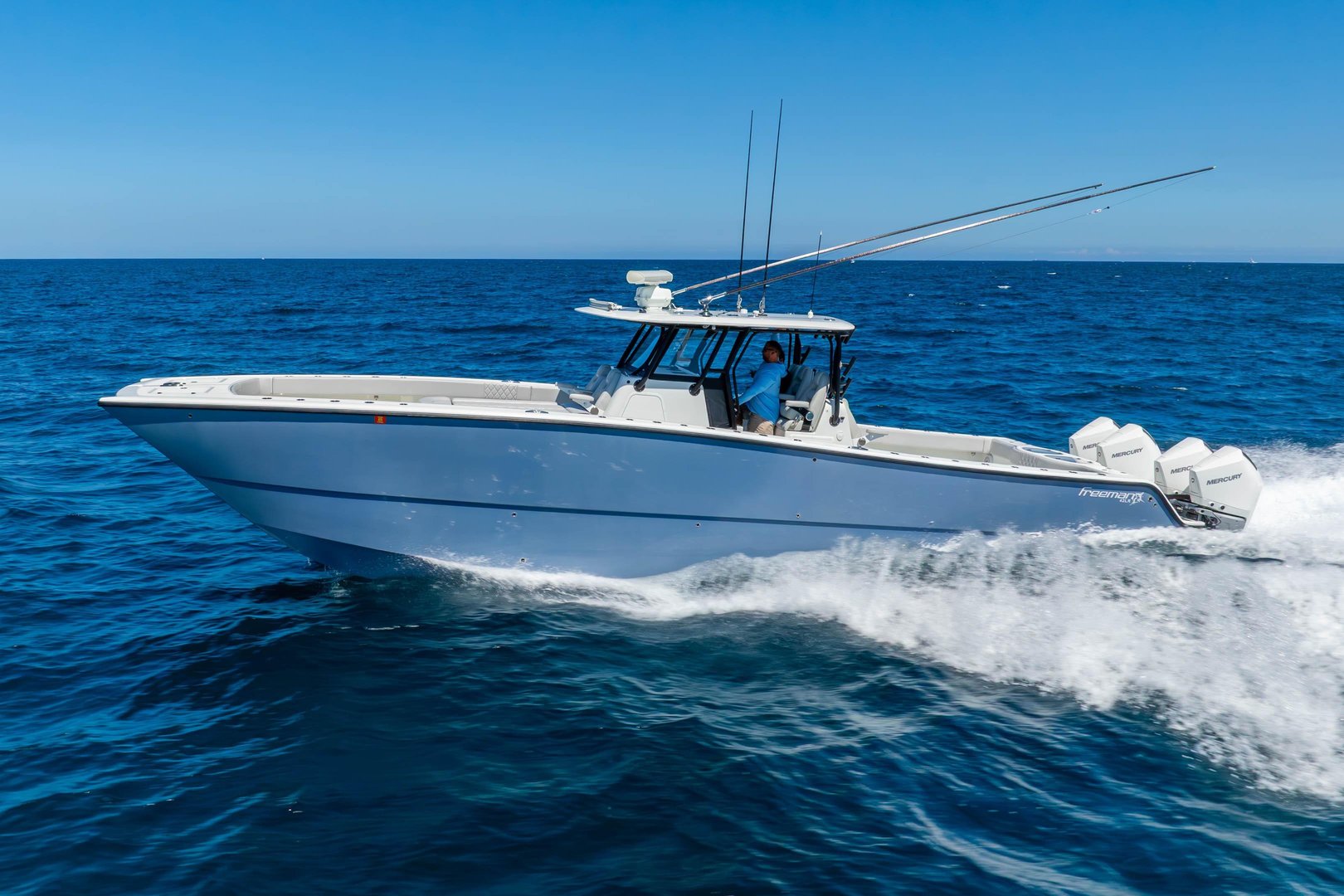
Center consoles have become faster than ever. What was once considered extreme speed is now common, with many boats regularly running 60, 70, or even 80+ mph. The real question is not how fast a center console can go, but how fast it should go.
Why center console speeds keep increasing
Advances in hull design, lighter construction, and high-horsepower outboards have pushed center console performance forward. Multiple-engine setups and improved electronics have made high speeds more accessible to everyday owners.
Speed sells. Faster boats attract attention at docks, on social media, and at boat shows. As a result, manufacturers continue to chase higher top-end numbers.
The difference between top speed and usable speed
A boat’s top speed is rarely the speed it runs most of the time. Usable speed is the speed you can safely maintain in real-world conditions.
Many center consoles that can hit 70+ mph are most comfortable cruising in the 40 to 50 mph range. Beyond that, ride quality, reaction time, and safety margins begin to shrink.
Conditions matter more than horsepower
Flat water makes high speed feel easy. Offshore conditions change quickly.
At higher speeds, small waves become big impacts, and unexpected boat traffic becomes harder to avoid. Even experienced operators must slow down as seas build or visibility drops.
Reaction time and stopping distance
Speed reduces reaction time. At 70 mph, a boat covers over 100 feet per second. That leaves very little room to react to floating debris, wakes, or sudden course changes.
Center consoles also do not stop like cars. High speed combined with limited stopping ability increases risk significantly.
Operator experience plays a major role
High-speed operation requires experience, awareness, and restraint. Reading water, anticipating wave patterns, and managing trim are critical skills.
An inexperienced operator at high speed is far more dangerous than an experienced operator running conservatively in rough conditions.
Comfort and fatigue at speed
High speeds increase physical fatigue. Impacts are harder, noise levels rise, and small corrections require constant attention.
Over long runs, running slower often results in arriving less tired and more in control, even if the trip takes slightly longer.
Is there a “safe” speed limit?
There is no universal speed limit for center consoles. The safe speed changes with conditions, load, visibility, and crew experience.
As a general guideline, if you feel the need to brace constantly or reduce visibility to maintain speed, you are likely running too fast.
When speed becomes more risk than reward
Speed becomes a liability when it prevents you from reacting safely to changing conditions. Offshore boating rewards judgment more than raw performance.
The fastest boats are often the ones that slow down early and run within their limits.
Final thoughts
Too fast for a center console is not a specific number. It is the point where control, visibility, and safety begin to suffer.
Modern center consoles are capable of extreme speeds, but the smartest operators know when to back off. Running fast can be fun. Running safely keeps boating fun long-term.