How Much Horsepower Does a Boat Really Need?
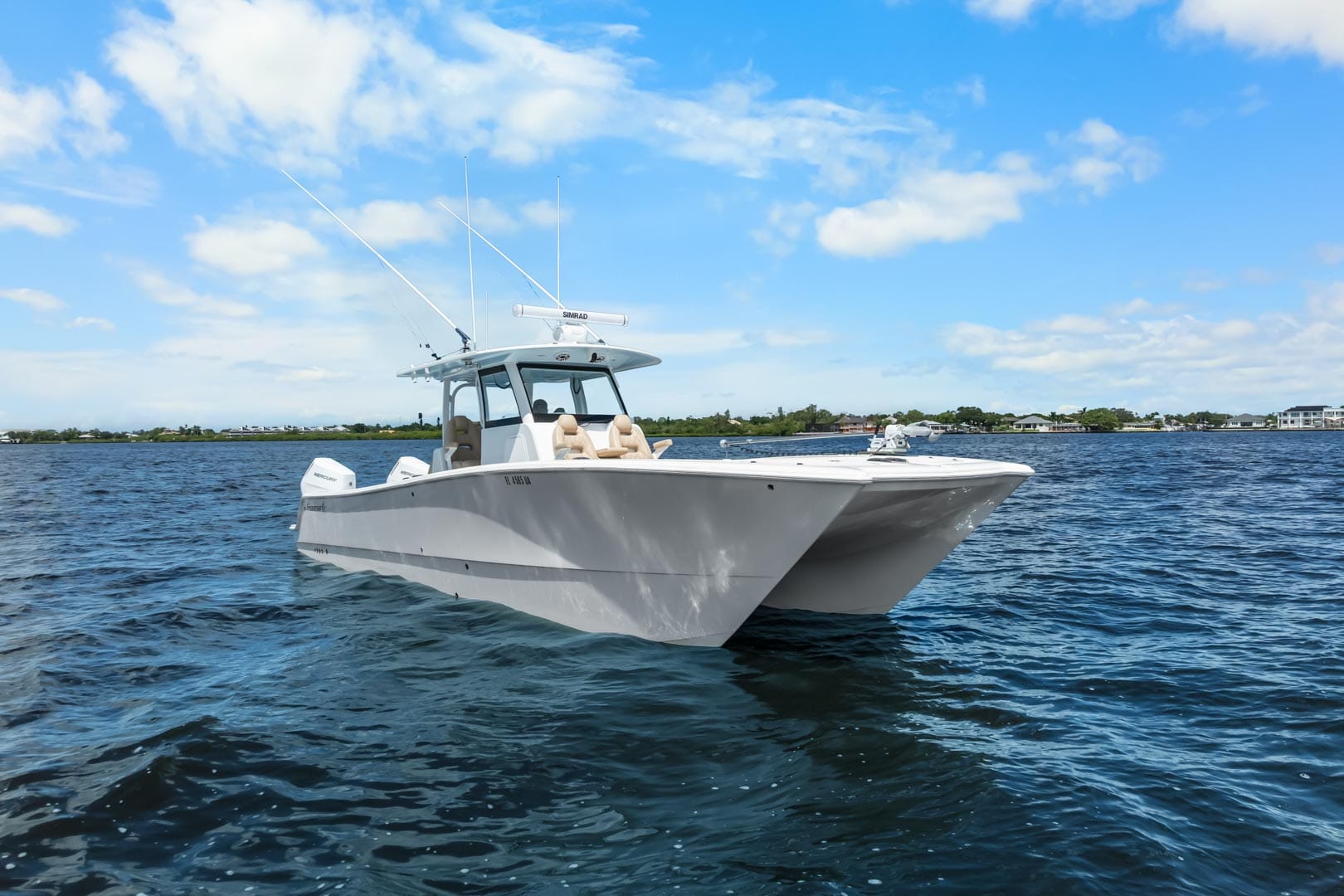
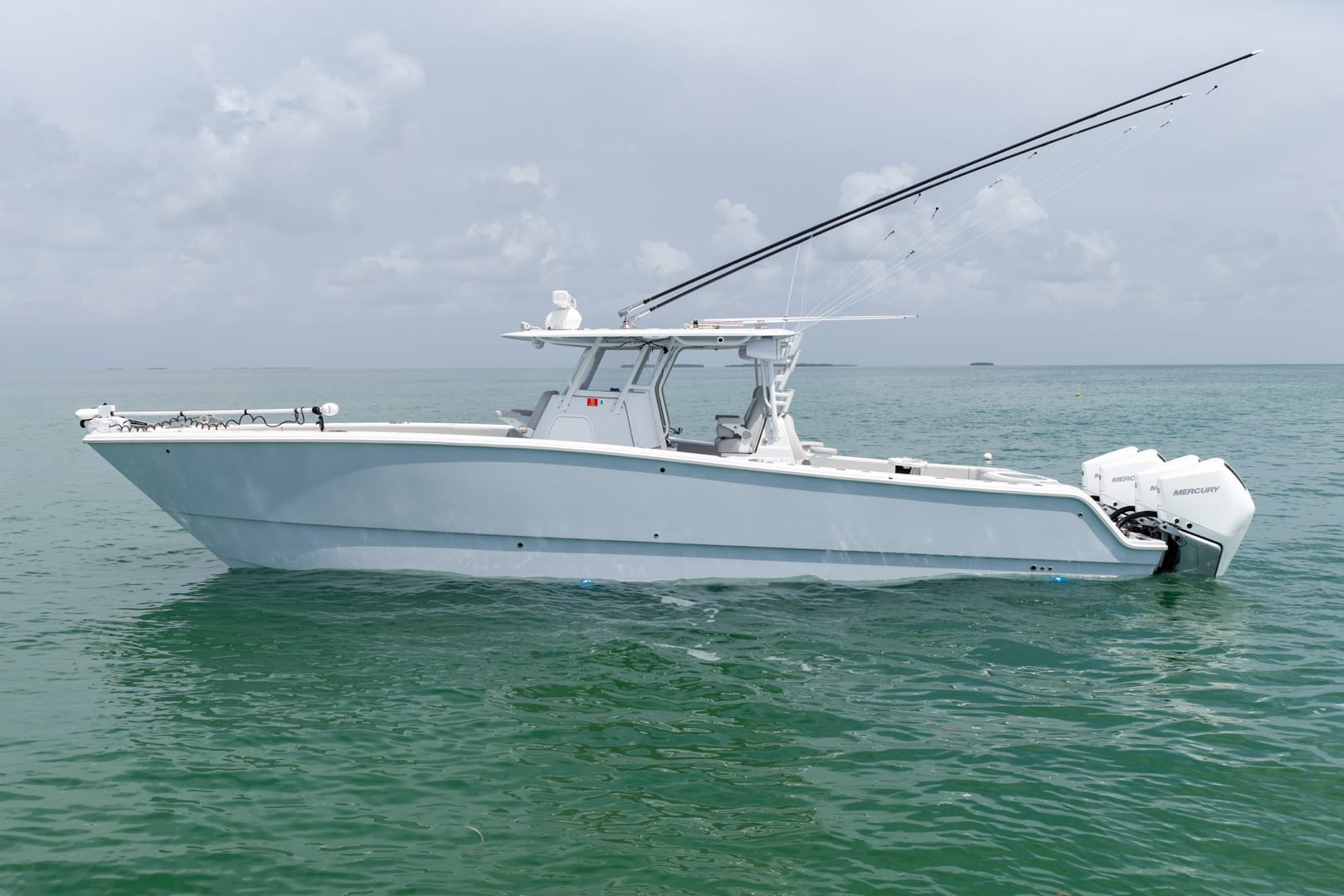
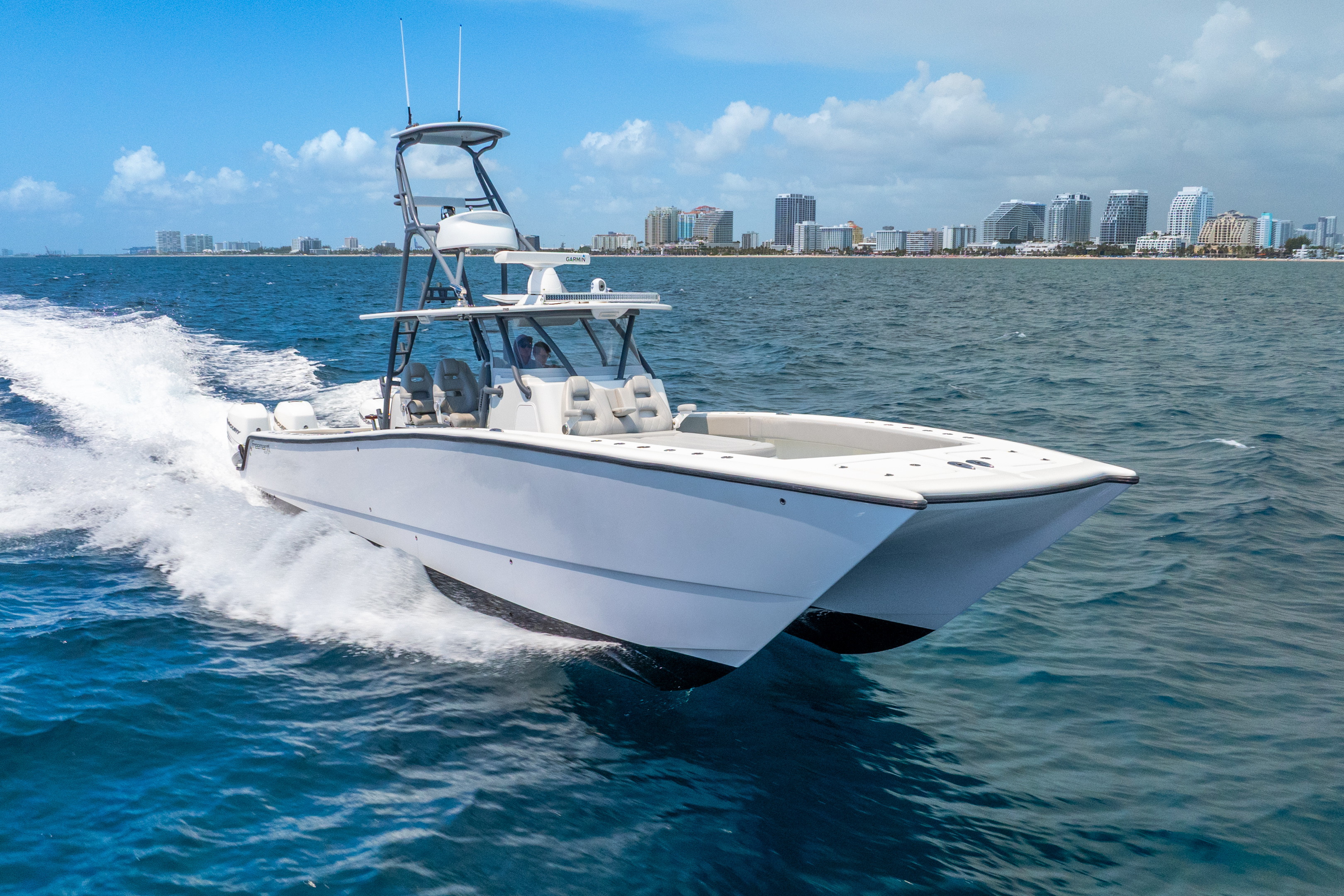
When buying a boat, one of the biggest decisions is choosing the right engine. Some boats perform perfectly well with a 90-horsepower outboard, while others need several hundred horsepower just to reach their intended cruising speed. On larger offshore center consoles, total horsepower can exceed 2,000.
But how much horsepower does a boat actually need?
The answer depends on more than the boat's length. Weight, hull design, passenger capacity, fuel load, and intended use all affect how much power is necessary. A lightweight 20-foot flats boat might perform well with a 115-horsepower outboard, while a heavier 20-foot offshore center console could benefit from 150 or 200 horsepower.
Choosing the wrong engine can be expensive. Too little horsepower may leave a boat struggling to get on plane, especially when loaded with passengers and equipment. Too much horsepower can increase purchase costs, fuel consumption, and maintenance expenses without providing a meaningful advantage.
This guide explains how to estimate the horsepower a boat needs, what different boat sizes typically use, and how to choose an engine that balances performance, efficiency, and reliability.
How Much Horsepower Does a Boat Need?
For most recreational planing boats, the goal is to have enough horsepower to accelerate comfortably, reach plane without excessive effort, and maintain a practical cruising speed under normal operating conditions.
That doesn't necessarily mean selecting the most powerful engine available.
A boat primarily used for relaxed cruising at 25 mph may not benefit significantly from an engine package capable of pushing it beyond 60 mph. However, a heavily loaded offshore fishing boat may need considerably more power to maintain acceptable performance.
The best starting point is the boat manufacturer's recommended horsepower range. Boatbuilders test their hulls with different engine configurations and often publish performance reports showing speed, acceleration, and fuel economy.
These results are more useful than a generic horsepower formula because they account for the actual characteristics of the hull.
Boat Horsepower by Size: General Guidelines
Although boat length alone cannot determine the ideal engine size, it provides a useful starting point.
The following table shows broad horsepower ranges commonly encountered on different types of recreational boats.
| Boat Length | Typical Boat Type | Illustrative Horsepower Range |
|---|---|---|
| 10–14 feet | Jon boat or small utility boat | 5–25 HP |
| 14–16 feet | Aluminum fishing boat or skiff | 15–60 HP |
| 16–18 feet | Flats boat, bay boat, or runabout | 60–150 HP |
| 18–20 feet | Center console or recreational boat | 90–200 HP |
| 20–24 feet | Bay boat, center console, or deck boat | 150–350 HP |
| 24–28 feet | Offshore center console | 250–600 HP total |
| 28–35 feet | Offshore center console | 400–1,200 HP total |
| 35–45 feet | Large performance center console | 700–2,000+ HP total |
These are illustrative ranges, not recommended engine ratings for every boat. Actual requirements vary considerably, and the manufacturer's maximum horsepower and engine weight limits must always be followed.
It's also important to distinguish between horsepower per engine and combined horsepower. A boat with twin 300-horsepower outboards has 600 total horsepower, while a boat with triple 300s has 900.
Why Boat Weight Matters More Than Length
Two boats of the same length can have very different power requirements.
Consider a lightweight 20-foot flats boat and a heavily equipped 20-foot offshore center console. The flats boat may have a shallow hull, limited equipment, and relatively low displacement. The offshore center console may have a deeper hull, larger fuel tank, substantial T-top, and additional fishing equipment.
Even though both boats measure approximately 20 feet, the offshore boat may weigh significantly more when fully loaded.
That additional weight affects acceleration, planing performance, and the amount of power required to maintain speed.
When selecting an engine, owners should consider the boat's actual operating weight rather than relying exclusively on its advertised dry weight.
What Counts Toward a Boat's Operating Weight?
- Hull and installed equipment
- Outboard engines and rigging
- Fuel and freshwater
- Passengers and personal belongings
- Fishing equipment, bait, ice, and coolers
- Batteries, electronics, and safety equipment
For example, 100 gallons of gasoline weighs approximately 600 pounds. Add four adults, fishing equipment, and supplies, and a boat's operating weight can easily exceed its advertised dry weight by more than 1,000 pounds.
This difference is especially important when evaluating whether a smaller engine will provide adequate performance.
Boat Horsepower-to-Weight Ratio Explained
One way to compare propulsion packages is by calculating the boat's horsepower-to-weight ratio.
A simple approach is to divide the boat's fully loaded weight by its total horsepower.
Weight per Horsepower = Loaded Boat Weight ÷ Total Horsepower
For example, imagine a boat weighing 4,000 pounds when fully loaded.
With a 150-horsepower outboard, the ratio is approximately 26.7 pounds per horsepower.
With a 200-horsepower outboard, the ratio decreases to 20 pounds per horsepower.
The second configuration has more available power relative to the boat's weight, which may improve acceleration and performance under load.
However, this ratio cannot reliably predict top speed or determine whether an engine is appropriate for a particular hull. Hull efficiency, propeller selection, weight distribution, and engine characteristics also play major roles.
Boat Horsepower Calculator: Example
Suppose you're comparing several engine options for a 22-foot center console weighing approximately 5,000 pounds when fully loaded.
| Engine Power | Loaded Weight | Pounds per HP |
|---|---|---|
| 150 HP | 5,000 lb | 33.3 |
| 200 HP | 5,000 lb | 25.0 |
| 250 HP | 5,000 lb | 20.0 |
| 300 HP | 5,000 lb | 16.7 |
These calculations assume the same loaded weight for comparison purposes, although actual engine weights can differ.
As horsepower increases, each horsepower has less weight to move. But that doesn't automatically make the largest engine the best choice.
If the boat is rated for a maximum of 250 horsepower, installing a 300-horsepower engine would exceed that rating.
Even within the approved range, a larger engine may cost substantially more without providing benefits the owner regularly uses.
How Much Horsepower Does a 20-Foot Boat Need?
Many 20-foot recreational boats use outboards in the 115- to 200-horsepower range, depending on the hull.
A lightweight bay boat may perform comfortably with 115 or 150 horsepower. A heavier center console designed for offshore use may benefit from 150, 200, or more horsepower if approved by the manufacturer.
For buyers, the important question isn't simply whether 150 horsepower is enough for a 20-foot boat. It's whether that specific boat can accelerate comfortably, reach plane with a full load, and maintain the desired cruising speed.
Manufacturer performance reports and sea trials are the best ways to evaluate those differences.
How Much Horsepower Does a 25-Foot Boat Need?
At approximately 25 feet, engine requirements become increasingly dependent on hull design and intended use.
A lightweight bay boat may operate with a single 250- or 300-horsepower outboard, while a heavier offshore center console may use a single high-output engine or twin outboards.
For example, twin 150s provide 300 total horsepower, while twin 200s provide 400.
Both configurations could be appropriate for different 25-foot boats, provided they meet the manufacturer's specifications.
Buyers should consider how frequently the boat will travel offshore, how much equipment it carries, and whether engine redundancy is important.
How Much Horsepower Does a 30-Foot Center Console Need?
Many 30-foot offshore center consoles use twin outboards, although engine configurations vary by manufacturer.
Common examples include twin 250s, twin 300s, and twin 350s, providing approximately 500 to 700 combined horsepower.
Some performance-oriented boats may use substantially more power.
For a 30-foot center console, the best engine package depends on hull weight, fuel capacity, typical passenger load, and desired cruising performance.
Buyers planning long offshore fishing trips should pay particular attention to fuel economy at normal cruising speeds.
A boat that achieves a slightly higher maximum speed may not be the best option if its fuel consumption significantly reduces practical range.
Does More Horsepower Make a Boat Faster?
Generally, yes. Increasing horsepower can improve acceleration and maximum speed when the hull and propulsion system are designed to handle the additional power.
However, speed does not increase proportionally with horsepower.
Doubling the horsepower does not mean doubling the top speed.
As a boat travels faster, it must overcome increasing hydrodynamic and aerodynamic resistance. Additional horsepower may also require heavier engines and different propellers.
For example, upgrading from a 200-horsepower engine to a 250-horsepower engine may produce a noticeable improvement in acceleration and top speed, but the exact difference depends on the hull.
Some boats respond very well to additional power, while others experience diminishing returns.
Can a Boat Have Too Much Horsepower?
Yes. Installing more horsepower than a boat is designed to handle can create serious safety problems.
Excessive power may contribute to instability, structural stress, or loss of control. Additional engine weight can also affect trim and transom loading.
For boats with capacity plates, the maximum horsepower rating is an important limitation. Other boats may have manufacturer-specified propulsion limits even when a capacity plate is not required.
Owners should never assume that an engine is appropriate simply because it physically fits on the transom.
Before repowering, confirm the approved horsepower, engine weight, shaft length, mounting requirements, and rigging compatibility.
Is It Better to Have More Horsepower Than You Need?
There can be advantages to selecting an engine near the upper end of a boat's approved horsepower range.
A more powerful engine may provide stronger acceleration with a full load and allow the boat to maintain cruising speed without operating as close to maximum throttle.
It may also improve performance when carrying additional passengers, fuel, or fishing equipment.
However, larger engines may cost more, weigh more, and require different maintenance or rigging.
If a boat already performs comfortably with a smaller engine, the additional horsepower may provide little practical value.
Does a Bigger Boat Engine Use More Fuel?
A larger engine can burn more fuel at high output, but it is not necessarily less efficient at every cruising speed.
Fuel economy depends on engine efficiency, throttle setting, boat speed, hull resistance, and load.
For example, a boat offered with both 200- and 250-horsepower engines may achieve similar fuel economy at certain cruising speeds.
The larger engine may operate at a lower percentage of its maximum output, but that doesn't guarantee better efficiency.
Buyers should compare gallons per hour and miles per gallon at the speeds they expect to use most frequently.
For many boat owners, efficient cruising performance matters much more than maximum speed.
How Much Horsepower Do You Need for Watersports?
Watersports place different demands on a boat than ordinary cruising.
Pulling a skier or wakeboarder requires enough acceleration to get the rider out of the water and bring the boat up to the desired towing speed.
The appropriate horsepower depends on boat weight, hull design, propeller selection, passenger load, and the activity.
A lightweight recreational boat may tow a rider successfully with relatively modest horsepower, while a heavier boat carrying several passengers may require more.
Dedicated wake boats use specialized hulls and propulsion systems, so their horsepower requirements are not directly comparable to those of outboard-powered runabouts.
For watersports, acceleration and the ability to maintain a consistent towing speed are generally more important than maximum top speed.
How Much Horsepower Does a Fishing Boat Need?
Fishing boats vary enormously in size and intended use.
A small aluminum jon boat used on calm freshwater lakes may need only a modest outboard.
A shallow-water flats boat may prioritize low weight and draft rather than maximum speed.
Offshore fishing boats often carry larger fuel loads, heavier equipment, and multiple passengers, increasing their power requirements.
For anglers traveling long distances offshore, cruising efficiency and reliability may be more important than maximum horsepower.
A boat that maintains a comfortable cruising speed while carrying fuel, ice, and fishing gear may be more useful than one optimized primarily for top speed.
Single vs. Twin vs. Triple Outboards
As boats get larger, manufacturers may offer different engine configurations to achieve the desired performance.
Single Outboard
Single-engine setups generally offer lower purchase costs, fewer components to maintain, and simpler rigging.
They are common on smaller center consoles, bay boats, fishing boats, and recreational runabouts.
Twin Outboards
Twin engines provide additional total horsepower and a second propulsion source in the event of certain engine failures.
They are widely used on offshore center consoles and larger recreational boats.
However, twins introduce additional maintenance expenses and mechanical complexity compared with a single engine.
Triple Outboards
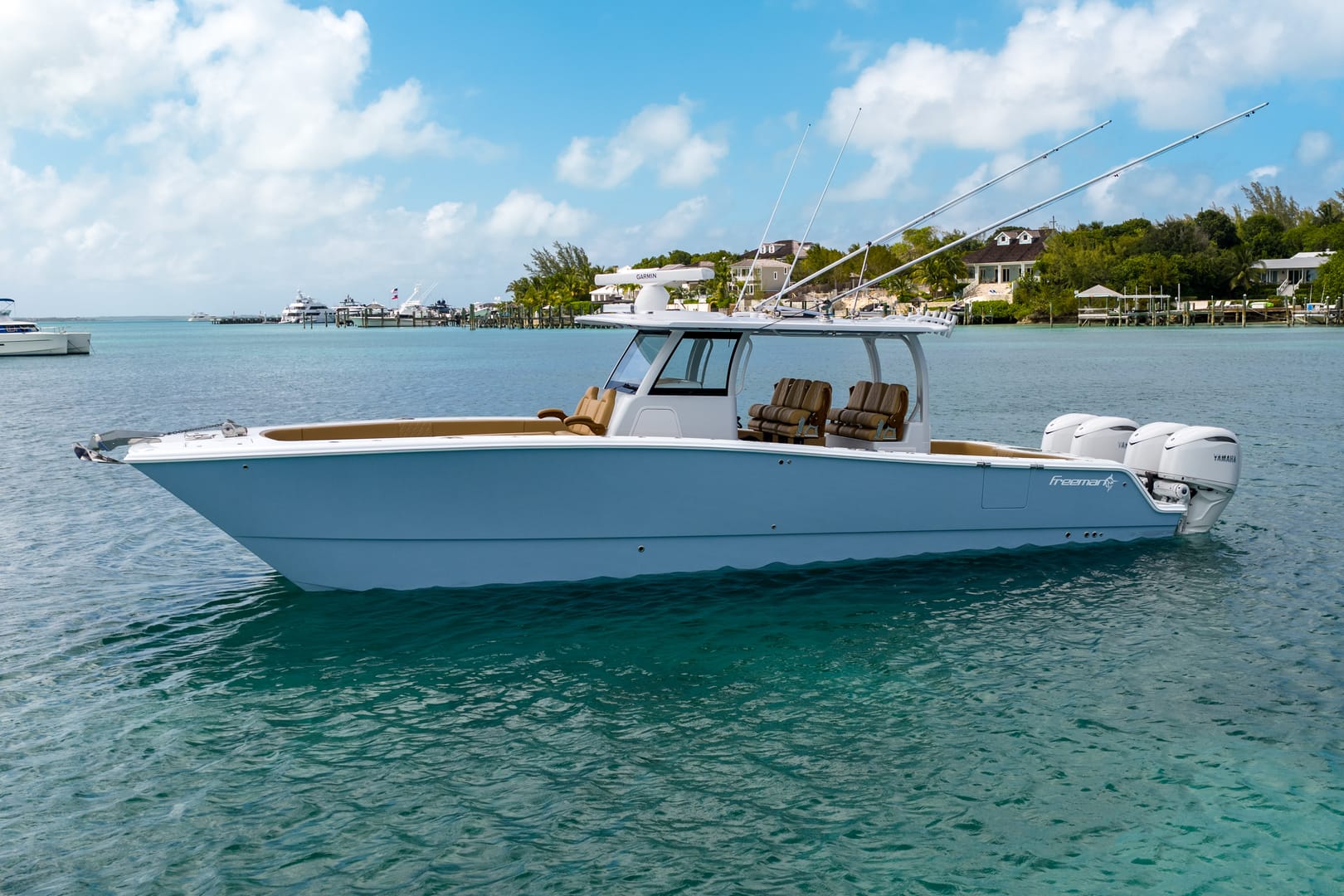
Triple-engine configurations are typically associated with larger, heavier, or higher-performance boats.
They can provide substantial horsepower and additional redundancy, but increase purchase costs, maintenance, weight, and rigging complexity.
For a more detailed comparison, read our Twin vs. Triple Outboards: Is the Third Engine Really Worth It? guide.
How to Choose the Right Horsepower for Your Boat
Check the Manufacturer's Horsepower Rating
Start with the boatbuilder's approved engine range and maximum horsepower. Never exceed the applicable rating.
Calculate Realistic Operating Weight
Include fuel, passengers, engines, batteries, fishing equipment, and other gear.
A boat that performs well during a lightly loaded demonstration may behave differently when fully equipped.
Determine Your Normal Cruising Speed
Consider how fast you actually intend to travel. If your normal cruising speed is 25 to 30 mph, evaluate how efficiently each engine option operates at those speeds.
Review Manufacturer Performance Reports
Look for measured data covering acceleration, top speed, fuel consumption, and cruising efficiency.
Consider Maintenance and Ownership Costs
More horsepower may involve higher purchase costs, additional fuel consumption, and more expensive equipment.
Take a Sea Trial
Whenever possible, test the boat with a realistic load and in conditions similar to those you expect to encounter.
Pay attention to acceleration, time to plane, cruising comfort, handling, and engine response.
Frequently Asked Questions About Boat Horsepower
How much horsepower does a 20-foot boat need?
Many 20-foot recreational boats use approximately 115 to 200 horsepower, depending on their hull design and weight. Always follow the manufacturer's approved engine specifications.
Is 150 horsepower enough for a 20-foot boat?
It can be. A 150-horsepower outboard may provide excellent performance on a lightweight 20-foot boat, but it could be less suitable for a heavier hull carrying substantial fuel and equipment.
How much horsepower does a 25-foot center console need?
Many 25-foot center consoles use approximately 250 to 400 total horsepower, depending on their hull, weight, and engine configuration.
How much horsepower does a 30-foot boat need?
Many 30-foot offshore center consoles use twin outboards producing approximately 500 to 700 combined horsepower. However, lighter or differently designed boats may require less.
Does more horsepower mean better fuel efficiency?
Not necessarily. A larger engine may operate efficiently at certain cruising speeds, but it can also consume more fuel. Compare measured fuel economy at the same boat speed.
Can you put a bigger motor on a boat?
Only if the engine is compatible with the boat's approved horsepower and weight limits. Owners should also verify transom capacity, mounting requirements, steering compatibility, and rigging.
What happens if a boat is underpowered?
An underpowered planing boat may accelerate slowly, struggle to reach plane, and have difficulty maintaining speed under heavy loads.
Final Thoughts: Choosing the Right Boat Horsepower
More horsepower can improve a boat's performance, but it isn't always necessary.
The right engine depends on the boat's hull, weight, intended use, and the speeds its owner expects to travel.
A lightweight fishing boat may perform perfectly with a modest outboard, while a heavily equipped offshore center console may require several hundred horsepower to achieve its intended cruising performance.
Rather than selecting an engine based on boat length alone, buyers should review manufacturer recommendations, calculate realistic operating weight, and compare actual performance data.
It's also important to consider long-term ownership costs. A larger engine or additional outboards may provide better acceleration and performance, but they can also increase maintenance expenses and overall operating costs.
Ultimately, the best engine is the one that allows the boat to perform comfortably and efficiently during the trips it will actually make.
Follow Boats Daily for more outboard engine guides, center console comparisons, boat maintenance advice, and practical information for boat owners.