FORT LAUDERDALE, FL – October 29, 2026: Viking Yacht Company has introduced the second-generation Viking 70 Convertible at the 2026 Fort Lauderdale International Boat Show, bringing a redesigned 70-foot sportfishing yacht to one of the world's most important boating events.
The new Viking 70 Convertible, also known as the Viking 70 Gen II, is one of four world premieres from Viking and Valhalla Boatworks at this year's show. Built for serious offshore fishing and long-distance cruising, the yacht combines a new hull design, a larger fishing cockpit, powerful twin diesel engines, and accommodations for extended trips.
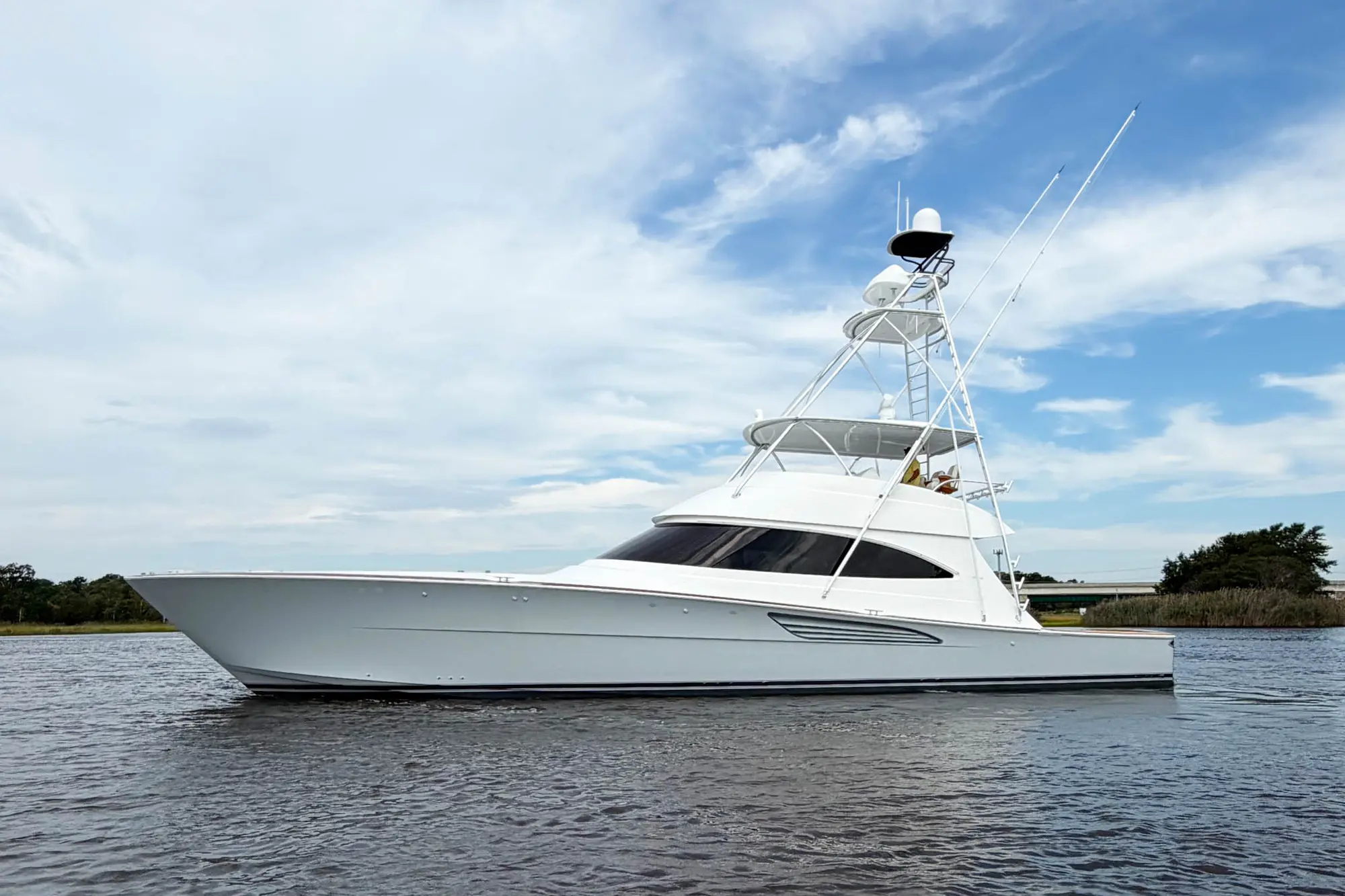
Hull No. 1 is being displayed at Bahia Mar with twin MAN V12X-2200 engines, a tuna tower from Palm Beach Towers, and an extensive package of fishing and navigation electronics.
The second-generation 70 is more than a cosmetic update. Viking has redesigned the platform to improve offshore performance, cockpit functionality, visibility, and onboard comfort while retaining the tournament-focused characteristics that have made the company's convertible sportfishing yachts popular among serious anglers.
Viking 70 Convertible Specifications
The new Viking 70 sits between the manufacturer's smaller convertible models and its larger 74-, 82-, and 90-foot sportfishing yachts.
Its dimensions and fuel capacity make it a substantial offshore fishing platform, with enough interior space for owners, guests, and crew.
| Specification | Viking 70 Convertible Gen II |
|---|---|
| Builder | Viking Yacht Company |
| Model | 70 Convertible, second generation |
| Length overall | 70 ft 10 in (21.59 m) |
| Beam | 18 ft 11 in (5.77 m) |
| Draft | 5 ft 6 in (1.68 m) |
| Displacement with standard fuel load | 118,500 lbs |
| Standard fuel capacity | 2,027 US gallons |
| Optional fuel capacity | 2,530 US gallons |
| Freshwater capacity | 345 US gallons |
| Staterooms | 4 |
| Heads | 5 |
| Engine options | Twin MAN V12X-2200 or MTU 12V2000 M96Z diesels |
| Bridge configurations | Open bridge, enclosed bridge, or sky bridge |
| World premiere | FLIBS 2026 |
These figures are based on Viking's published specifications. Actual displacement and performance will vary with equipment, fuel, water, and vessel loading.
What's New on the Second-Generation Viking 70?
One of the most important differences between the new Viking 70 Convertible and its predecessor is the hull itself.
Rather than updating the original 70 with a revised interior or new exterior styling, Viking developed a new running surface using design lessons from its more recent sportfishing yachts.
The second-generation 70 incorporates changes to deadrise, chine placement, and lifting strake geometry. These features influence how a hull moves through the water, generates lift, and handles offshore conditions.
Viking also refined the yacht's proportions. Interestingly, the new 70 has a beam three inches narrower than the manufacturer's second-generation 68 Convertible.
That narrower beam is part of a deliberate design approach intended to improve running characteristics rather than simply maximizing interior width.
The yacht also features a longer cockpit and a revised flybridge arrangement, with changes intended to improve fishing functionality and visibility from the helm.
For buyers comparing the new Viking 70 with an older 70 Convertible, these structural and layout changes are more important than exterior styling alone.
Twin MAN V12 Diesels Deliver 4,400 Horsepower
The Viking 70 Convertible is available with two high-output diesel propulsion packages.
One option uses twin MAN V12X-2200 engines, each rated at 2,200 metric horsepower, for a combined output of approximately 4,400 metric horsepower.
Buyers can also specify twin MTU 12V2000 M96Z engines rated at 2,222 metric horsepower each.
Hull No. 1, displayed at FLIBS 2026, is equipped with the MAN package.
These engines are intended to provide the power needed to move a large sportfishing yacht quickly between fishing grounds while carrying substantial fuel, equipment, and supplies.
Viking has indicated a target top speed of approximately 43 knots for the new model. However, that figure should be understood as a performance target rather than an independently verified sea-trial result for every configuration.
Actual cruising speed, maximum speed, and fuel efficiency will depend on engine selection, vessel loading, propeller setup, and sea conditions.
A Redesigned Cockpit Built for Tournament Fishing
For serious sportfishing buyers, the cockpit is one of the most important areas of any convertible yacht.
Viking has made the fishing cockpit a central focus of the new 70's design.
The extended cockpit provides additional working space for anglers and crew, particularly during offshore tournament fishing when multiple people may be handling lines, preparing bait, or maneuvering around the fighting chair.
The FLIBS display yacht features teak cockpit decking, teak mezzanine surfaces, and teak covering boards.
Two full-length fishboxes provide storage for the day's catch, while plumbing for two livewells supports live-bait fishing applications.
Hull No. 1 also features an ice-making system rated at approximately 750 pounds per day, a valuable feature for extended fishing trips where maintaining bait and catch quality is essential.
The cockpit mezzanine provides an elevated seating area where guests and crew can watch the fishing action while remaining close to the working deck.
These details reflect the practical demands of offshore fishing, where cockpit organization, equipment accessibility, and clear movement around the deck can matter as much as the yacht's speed.
Improved Flybridge Visibility and Helm Design
The second-generation Viking 70 also receives a redesigned flybridge.
Viking revised the bridge overhang and helm console placement to improve visibility toward the cockpit and stern.
That is particularly important when backing down on a fish, maneuvering during a tournament, or communicating with anglers working in the cockpit.
The open-bridge arrangement includes a center-console helm with space for integrated navigation displays and three helm chairs.
Forward and side lounge seating provide additional room for guests, with an optional freezer available in the forward lounge.
Viking also offers enclosed-bridge and sky-bridge configurations for owners who prefer greater weather protection or a different helm arrangement.
The open-bridge version on display at FLIBS features a Palm Beach Towers tuna tower, giving the captain an additional elevated operating position.
WhaleSpotter Technology Makes an Appearance on Hull No. 1
One of the more unusual technologies associated with the new Viking 70 is a WhaleSpotter thermal imaging system installed on the first hull.
The system is designed to help detect whales and other potential hazards ahead of a vessel using thermal imaging technology.
According to coverage of the FLIBS presentation, the installation represents the technology's first demonstration aboard a sportfishing yacht.
The camera is mounted on the tuna tower, providing an elevated position for observing the water ahead.
Whale-detection technology has attracted attention as the marine industry explores ways to reduce the risk of vessel strikes involving marine mammals.
However, detection performance depends on environmental conditions, equipment capabilities, and operating circumstances. Systems like these should be treated as additional situational-awareness tools rather than replacements for a proper lookout.
Its inclusion on the Viking 70 is nevertheless an interesting example of how advanced sensor technology is moving into recreational and sportfishing vessels.
Inside the Viking 70 Convertible: Four Staterooms and Five Heads
Although the Viking 70 is designed around offshore fishing, its interior is intended to provide the comfort expected from a luxury motor yacht.
The four-stateroom, five-head arrangement offers accommodations for owners, guests, and crew during extended cruising and fishing trips.
The main deck includes a spacious salon, dining area, and galley, creating a comfortable environment for relaxing between fishing sessions.
Below deck, the layout provides separate sleeping accommodations and private bathroom facilities.
A dedicated crew stateroom includes private access to the engine room, allowing crew members to reach machinery spaces without passing through the primary guest accommodations.
This arrangement is particularly useful on larger sportfishing yachts that operate with professional captains or crew.
Owners can also choose between different galley arrangements, including island and peninsula configurations, depending on their preferences.
The result is a vessel designed to function both as a serious fishing platform and as a comfortable yacht for longer trips.
Viking 70 Convertible Fuel Capacity and Offshore Range
Fuel capacity is one of the most important specifications for a yacht intended to travel long distances offshore.
The new Viking 70 carries 2,027 gallons of diesel fuel in its standard configuration.
An optional arrangement increases total capacity to approximately 2,530 gallons.
That additional capacity may be particularly attractive to owners who regularly travel to remote fishing destinations or operate far from established marinas.
However, Viking has not published a single verified cruising range that applies to all engine and equipment configurations.
Actual range will depend on cruising speed, engine load, sea conditions, vessel weight, and fuel reserves.
For long-distance offshore trips, owners should use performance data from their specific yacht rather than estimating range solely from tank capacity.
Construction and Engineering
Viking's approach to the new 70 extends beyond the hull's exterior shape.
The yacht uses resin-infused construction techniques for the hull and bulkheads, incorporating composite core materials intended to balance strength and weight.
Smaller components are produced using closed-mold manufacturing methods.
Underwater running gear includes carefully engineered struts and rudders designed to support the yacht's handling and performance objectives.
Hull No. 1 also carries an extensive onboard equipment package, including twin 29-kW Onan generators, a Seakeeper 26 stabilization system, a proportional DC bow thruster, and a watermaker.
Its electronics installation includes equipment from Furuno, Garmin, FLIR, and Starlink, reflecting the increasing importance of integrated navigation, communications, and fish-finding technology on modern offshore yachts.
Specific equipment will vary by build and owner selection.
Viking 70 Convertible vs. Viking 68 Convertible
Buyers considering a large Viking sportfishing yacht may naturally compare the new 70 with the company's second-generation 68 Convertible.
Despite the relatively small difference in overall length, the new 70 is not simply a stretched version of the 68.
Viking developed a distinct hull with revised proportions and a cockpit designed around the requirements of the larger platform.
The new 70 is also three inches narrower than the Gen II 68, illustrating how Viking has prioritized specific running characteristics rather than increasing every dimension.
The larger cockpit and four-stateroom layout are important considerations for owners who regularly fish with larger crews or spend extended periods aboard.
For prospective buyers, the decision should come down to intended use, operating requirements, preferred layout, and the practical differences between the models rather than length alone.
How Much Does the Viking 70 Convertible Cost?
Viking has not announced a universal published retail price for the second-generation 70 Convertible.
Pricing depends on engine selection, bridge configuration, fishing equipment, electronics, interior finishes, and other custom specifications.
New-build listings generally direct prospective buyers to contact a Viking dealer for current pricing and availability.
Given the extensive customization available on a yacht of this size, two Viking 70 Convertibles may have substantially different final purchase prices.
Buyers should also account for operating expenses, including fuel, maintenance, insurance, dockage, and professional crew where applicable.
Viking 70 Convertible Debuts at FLIBS 2026
The second-generation Viking 70 Convertible is making its world premiere at the 2026 Fort Lauderdale International Boat Show, running from October 28 through November 1.
The first hull is displayed at Bahia Mar, where Viking and Valhalla Boatworks are introducing four new models.
Alongside the Viking 70, the manufacturers are showcasing the Viking 64 Sport Coupe, Viking 50 Sport Coupe, and Valhalla 46 Sport Yacht.
According to opening-day coverage, Viking had already sold 13 examples of the new 70 before the show began, suggesting strong early interest in the redesigned platform.
The FLIBS display yacht features a Kingston Grey hull, twin MAN V12X-2200 diesels, and a Palm Beach Towers tuna tower.
For more launches and announcements from this year's event, read our FLIBS 2026: Biggest Yacht Debuts and Highlights So Far roundup.
Frequently Asked Questions About the Viking 70 Convertible
How long is the new Viking 70 Convertible?
The second-generation Viking 70 Convertible measures 70 feet 10 inches overall, with a beam of 18 feet 11 inches and a draft of approximately 5 feet 6 inches.
How fast is the Viking 70 Convertible?
Viking has indicated a target top speed of approximately 43 knots. Actual performance will depend on engine selection, loading, and sea conditions.
What engines does the Viking 70 use?
The new Viking 70 Convertible offers twin MAN V12X-2200 diesel engines or twin MTU 12V2000 M96Z diesels. Hull No. 1 uses the MAN propulsion package.
How much fuel does the Viking 70 Convertible hold?
Standard fuel capacity is 2,027 US gallons. An optional configuration increases capacity to approximately 2,530 gallons.
How many staterooms does the Viking 70 have?
The second-generation Viking 70 Convertible features four staterooms and five heads, including dedicated crew accommodations.
Is the Viking 70 designed for tournament fishing?
Yes. The yacht is designed as a high-performance offshore sportfishing platform, with a large cockpit, fishboxes, livewell provisions, specialized fishing equipment, and bridge configurations suited to tournament use.
When did the Viking 70 Gen II debut?
The second-generation Viking 70 Convertible made its world premiere at the 2026 Fort Lauderdale International Boat Show in October 2026.
Final Thoughts: Viking's New 70 Convertible Is Built for Serious Offshore Fishing
The second-generation Viking 70 Convertible represents a substantial evolution of one of the manufacturer's established sportfishing platforms.
With a redesigned hull, longer fishing cockpit, powerful diesel propulsion, and four-stateroom accommodations, the yacht is intended to serve owners who want both tournament-level fishing capability and the comfort required for extended cruising.
Its appearance at FLIBS 2026 also highlights Viking's continued investment in large offshore sportfishing yachts at a time when many manufacturers are expanding into luxury day boats and alternative cruising platforms.
The new Viking 70 remains focused on the fundamentals that matter to serious offshore anglers: performance, fishability, visibility, equipment integration, and dependable onboard systems.
As additional examples are delivered and independent performance data becomes available, buyers will have a clearer picture of how the second-generation 70 compares with competing sportfishing yachts.
For now, its world debut in Fort Lauderdale makes it one of the most important sportfishing introductions of FLIBS 2026.
Follow Boats Daily for more coverage of Viking Yachts, new sportfishing boats, and the latest launches from the Fort Lauderdale International Boat Show.