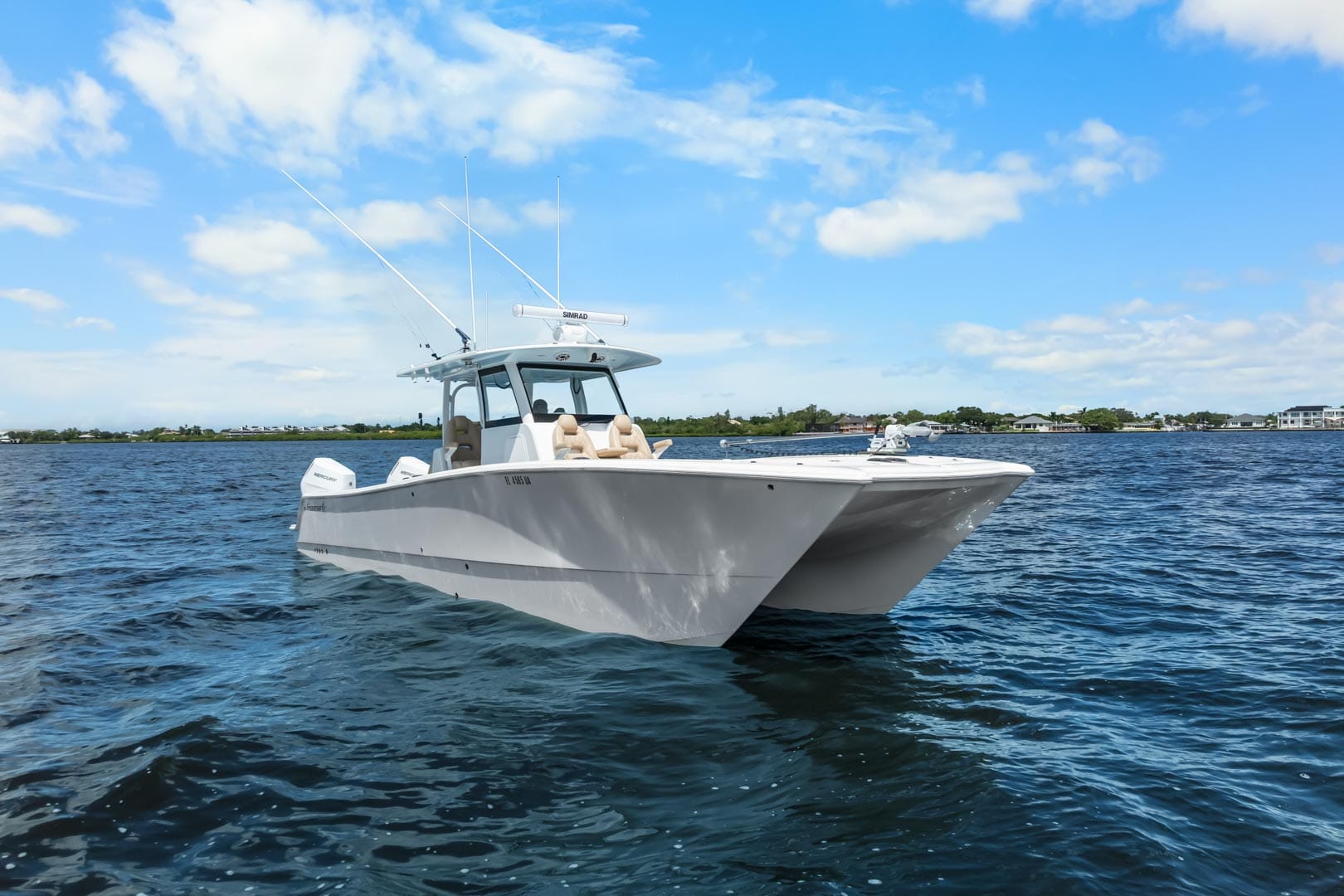
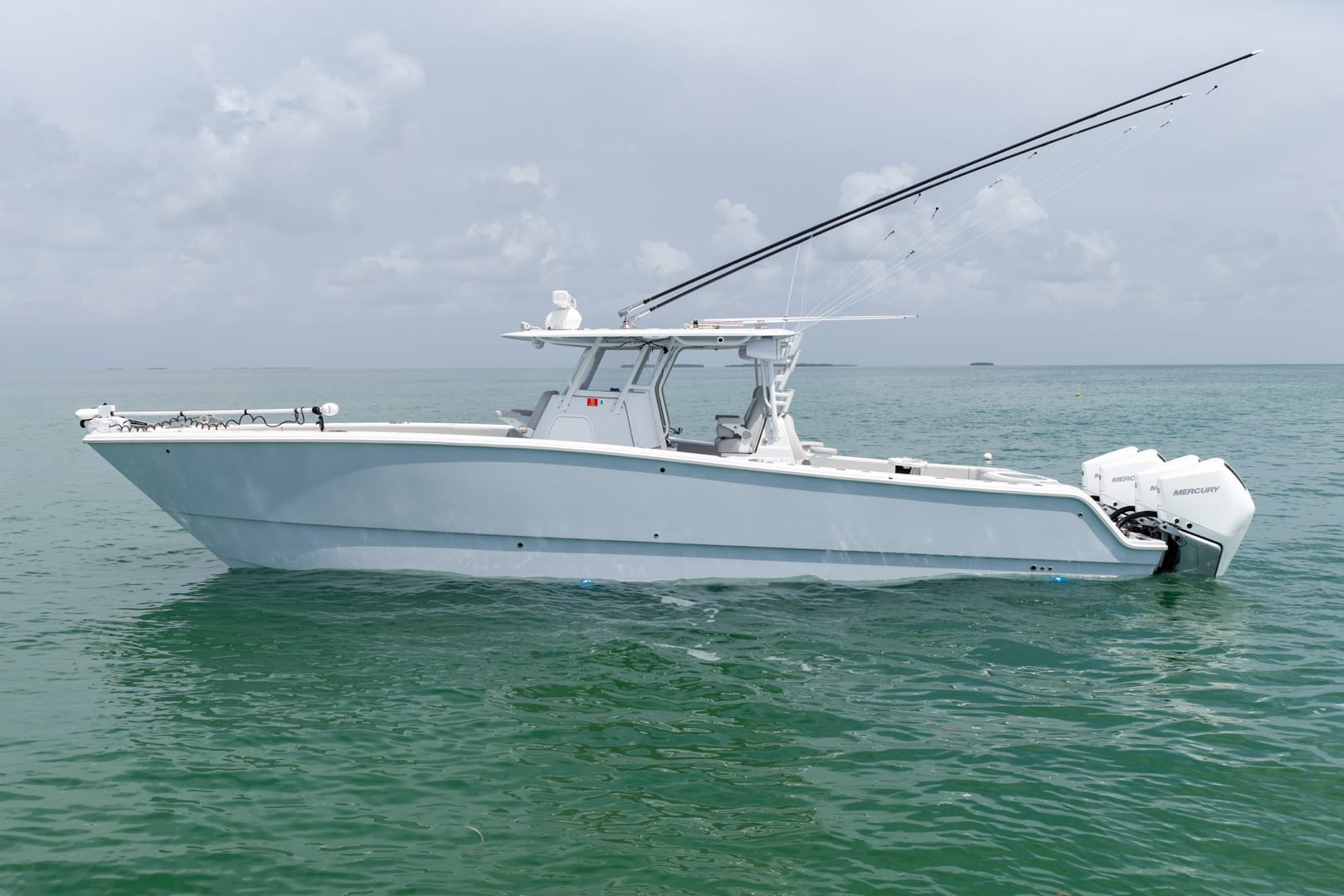
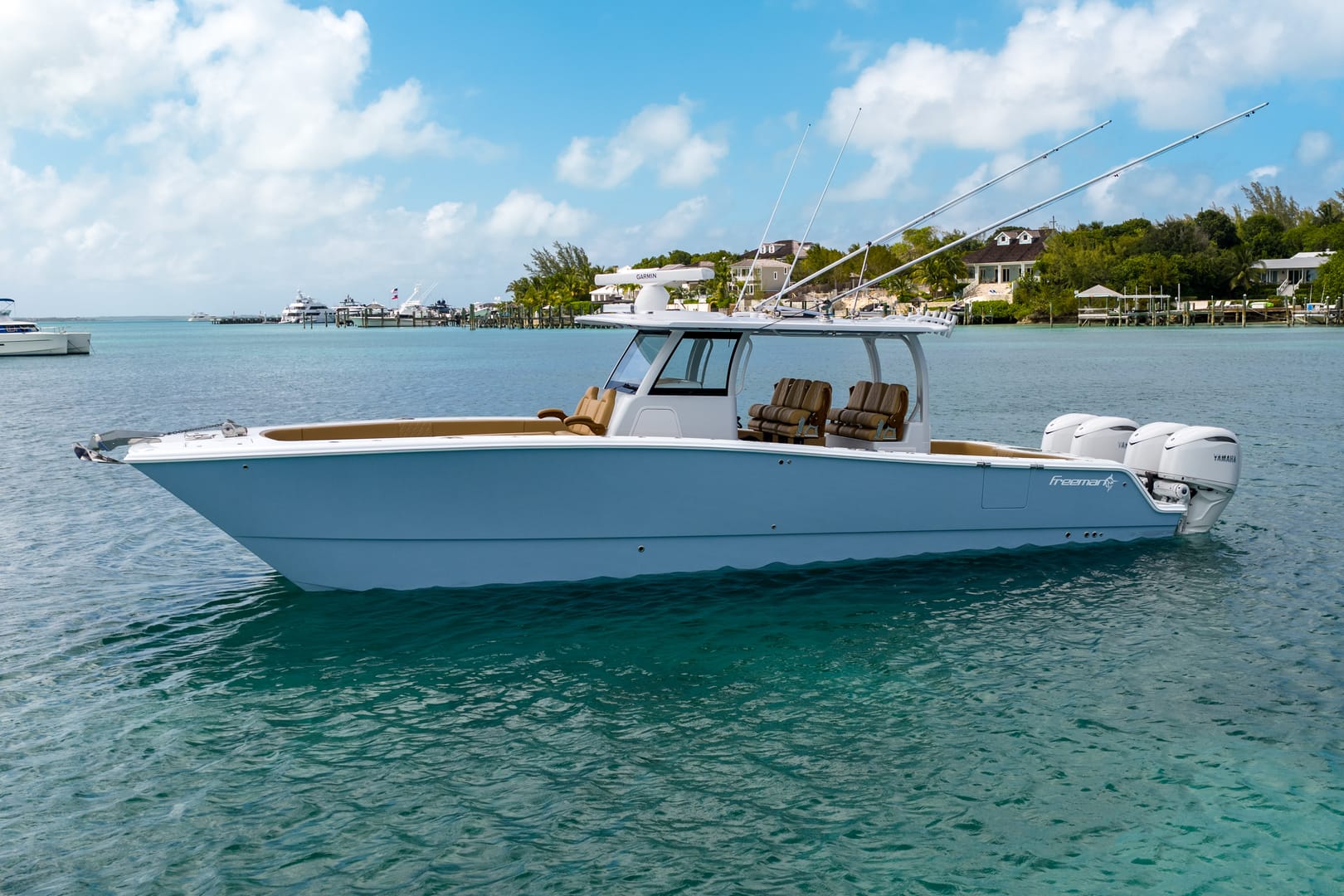
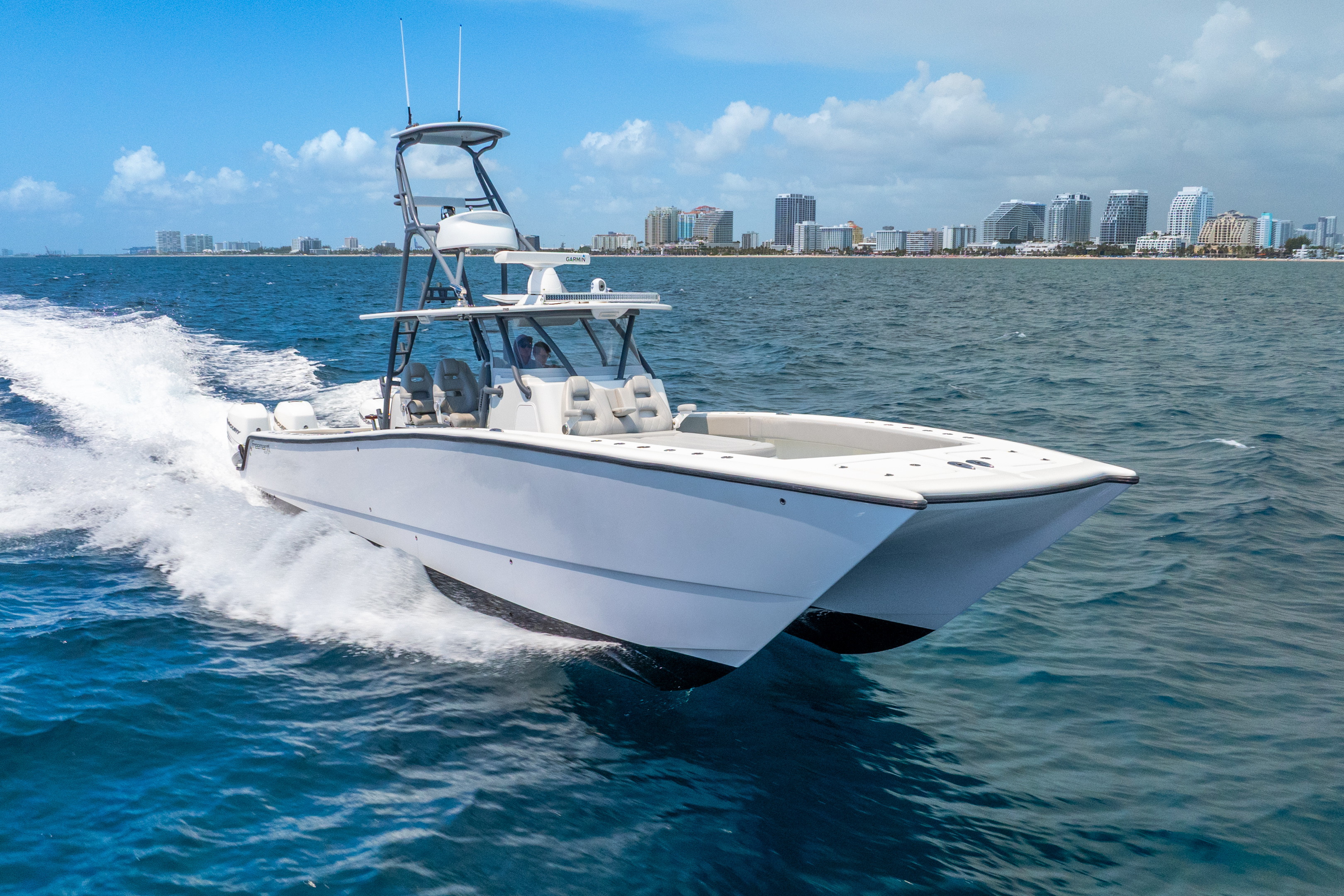
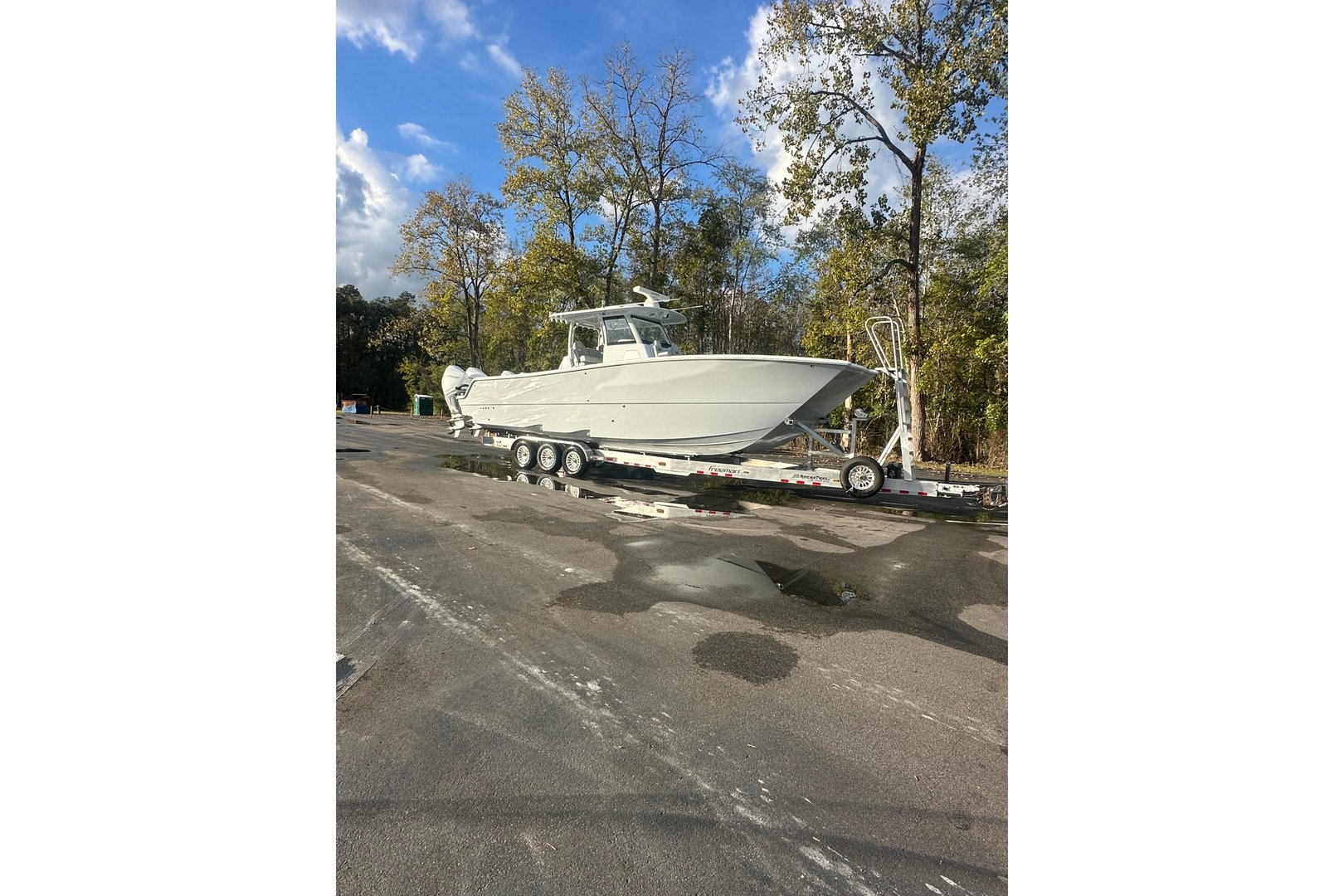
Center console boats have become some of the most popular vessels for offshore fishing, island hopping, and recreational boating. With powerful outboard engines, deep-V hulls, and increasingly sophisticated navigation systems, modern center consoles can travel surprisingly far from land.
But how far can a center console actually go offshore?
A 20-foot center console might be suitable for fishing a few miles off the coast on a calm day, while a 35-foot offshore fishing boat may have the fuel capacity and equipment to make trips more than 100 miles from shore. Some large, long-range center consoles are capable of considerably longer journeys.
However, the distance a boat can travel isn't necessarily the distance it can safely operate offshore. Fuel consumption, sea conditions, engine reliability, weather forecasts, and the distance to a safe harbor all matter.
Here's how to determine the realistic offshore range of a center console and what boat owners should consider before heading into open water.
How Far Offshore Can Different Size Center Console Boats Go?
There is no universal offshore distance limit based on boat length. A well-equipped 25-foot center console with sufficient fuel capacity may be capable of a longer trip than a larger boat with inefficient engines or limited range.
Still, boat size provides a useful starting point when comparing offshore capabilities.
| Center Console Size | General Offshore Use |
|---|---|
| 18–21 feet | Primarily inshore and nearshore trips; limited offshore use in favorable conditions |
| 22–25 feet | Nearshore fishing and some offshore trips when properly equipped and conditions permit |
| 26–30 feet | Common offshore fishing platform for longer runs and more demanding conditions |
| 31–35 feet | Longer offshore trips with greater fuel, equipment, and crew-carrying capacity on many models |
| 36–45+ feet | Potential for extended offshore fishing and long-distance runs, depending on design and range |
These categories describe typical uses, not guaranteed safe distances. Boat design, loading, operating conditions, crew experience, and equipment are more important than length alone.
For example, a purpose-built 26-foot offshore center console may perform better in open water than a larger bay boat designed primarily for protected coastal environments.
How Far Can a 20-Foot Center Console Go Offshore?
A 20-foot center console is generally best suited to inshore, coastal, and nearshore boating.
That doesn't mean it can never venture offshore. Experienced boaters may take appropriately equipped 20-foot boats into open water when weather, sea conditions, fuel reserves, and local circumstances are favorable.
However, smaller boats have less room for fuel, equipment, passengers, and supplies. They can also become uncomfortable or difficult to operate when waves build.
A 20-foot boat that feels perfectly comfortable in two-foot seas may behave very differently when conditions deteriorate.
For smaller center consoles, choosing conservative weather windows and remaining within a practical distance of shelter are especially important.
How Far Offshore Can a 25-Foot Center Console Go?
A 25-foot center console is a popular size for boaters who want to combine coastal cruising with occasional offshore fishing.
Depending on the model, a 25-footer may offer a deep-V hull, substantial fuel capacity, modern navigation electronics, and either single or twin outboard engines.
Some boats in this category can make offshore fishing runs of 20, 30, or more nautical miles when properly equipped and operated under suitable conditions.
But those distances shouldn't be treated as automatic recommendations.
A 25-foot center console with a 100-gallon fuel tank and a relatively thirsty engine has a very different operating range from a more efficient model carrying substantially more fuel.
Similarly, a boat with a relatively low freeboard or a hull optimized for shallow water may not be ideal for exposed offshore passages.
Before planning a long trip, owners should understand their boat's actual fuel consumption and performance in the conditions they expect to encounter.
How Far Can a 30-Foot Center Console Go Offshore?
For many offshore fishing enthusiasts, a 30-foot center console represents an attractive balance between capability, operating costs, and maneuverability.
Boats in this category often provide more deck space, larger fuel tanks, higher freeboard, and more substantial offshore equipment than smaller recreational center consoles.
Twin outboard engines are common, and some models feature advanced fish-finding electronics, large livewells, and comfortable seating for longer trips.
Depending on the vessel's fuel range and operating conditions, a properly equipped 30-foot center console may be capable of trips 50 to 100 nautical miles offshore or farther.
That doesn't mean every 30-footer should make those trips. A long offshore run requires careful fuel planning, suitable weather, reliable communications, and an experienced crew.
For boaters planning regular trips far from land, the specific model's hull design, fuel capacity, and tested cruising efficiency deserve close attention.
How Far Can a 40-Foot Center Console Go Offshore?
Modern 40-foot center consoles can be serious offshore machines.
Some are equipped with triple or quadruple outboards, large fuel tanks, advanced radar systems, joystick controls, and sophisticated navigation equipment.
These boats may be designed for long offshore fishing trips, extended coastal cruising, and crossings between Florida and the Bahamas.
Many large center consoles have the potential to travel hundreds of nautical miles on a full tank, depending on their configuration and cruising speed.
However, powerful engines don't automatically translate into greater efficiency.
A 40-foot center console running at high speed can consume fuel rapidly, particularly when carrying a heavy load or operating in rough water.
The most useful number isn't the boat's maximum advertised range. It's the realistic distance it can travel at an appropriate cruising speed while maintaining a substantial fuel reserve.
How to Calculate Your Center Console's Offshore Range
The most important factor in determining how far your center console can go offshore is fuel range.
To estimate range, you need three numbers: usable fuel capacity, fuel consumption at your intended cruising speed, and boat speed.
For example, imagine a center console with the following specifications:
- Fuel capacity: 200 gallons
- Cruising speed: 30 knots
- Fuel consumption: 20 gallons per hour
At that cruising speed, the boat travels approximately 1.5 nautical miles per gallon.
Multiplying 200 gallons by 1.5 nautical miles per gallon gives a theoretical range of 300 nautical miles.
But that figure assumes the boat can use every gallon of fuel and maintain the same efficiency throughout the trip.
Neither assumption is appropriate for offshore planning.
Why You Should Never Plan to Use Your Entire Fuel Tank
Offshore boaters need to account for changing conditions, unexpected delays, and differences between estimated and actual fuel consumption.
A commonly used starting point is the rule of thirds:
- One-third of the fuel for the outbound trip
- One-third for the return trip
- One-third held in reserve
Using the previous example of a boat with 200 gallons of fuel, approximately 67 gallons would be allocated to the outbound journey, 67 gallons to the return, and 66 gallons to reserve.
At 1.5 nautical miles per gallon, the outbound fuel allocation represents approximately 100 nautical miles.
That produces a preliminary planning figure of about 100 nautical miles offshore, assuming an out-and-back trip with similar operating conditions.
However, the rule of thirds is a guideline, not a guarantee of safety. Strong headwinds, adverse currents, rough seas, additional passengers, and extended idling can substantially change fuel consumption.
Some trips require a larger reserve, and actual usable fuel capacity may be lower than the tank's rated capacity.
Why Offshore Range Changes With Speed
One of the biggest mistakes boaters make is assuming that cruising faster will always get them farther.
In reality, fuel efficiency can change dramatically with speed.
Many planing center consoles operate efficiently within a particular cruising range. Running significantly faster may increase fuel consumption much more than it increases distance covered.
For example, a boat might cruise at 30 knots while consuming 20 gallons per hour, producing 1.5 nautical miles per gallon.
At 45 knots, the same boat might consume 45 gallons per hour, reducing efficiency to just 1 nautical mile per gallon.
Those are illustrative figures, not performance data for a specific model.
The point is that a higher cruising speed can substantially reduce your available range.
When planning long offshore trips, boaters should consult manufacturer performance reports and, more importantly, verify fuel consumption on their own vessel under realistic loading and sea conditions.
Does a Deep-V Hull Make a Center Console Better Offshore?
Hull design plays a major role in offshore performance.
Many offshore center consoles use deep-V hulls designed to provide a more comfortable ride through chop and moderate waves.
The sharper entry helps the hull cut through waves rather than simply slamming against them.
However, deep-V designs can require more power and fuel than flatter-bottomed boats, depending on the hull and operating conditions.
Other factors, including hull weight, beam, freeboard, construction, and weight distribution, also influence how a boat behaves offshore.
Some modern center consoles use stepped hulls intended to reduce drag and improve performance at speed.
Power catamarans are another popular offshore option, offering different handling characteristics and potentially favorable efficiency and ride qualities in certain conditions.
No hull design makes a boat immune to rough weather. The best offshore hull depends on how and where the vessel will be used.
Single vs. Twin Outboards for Offshore Fishing
Engine configuration is another important consideration when choosing a center console for offshore use.
A single outboard can be economical to maintain and may provide excellent performance on smaller boats.
Twin outboards offer an additional propulsion unit, which can be valuable if one engine experiences a mechanical problem.
However, twins don't guarantee that a boat can safely return to port after an engine failure.
Both engines may share fuel supplies, electrical systems, or other components that can be affected by the same problem.
And a boat designed for twin engines may have limited speed or maneuverability when operating on just one.
For offshore boating, engine maintenance, reliable fuel systems, proper safety equipment, and emergency planning are essential regardless of how many outboards are installed.
How Far Offshore Can You Go Before Losing Cell Service?
Cell phone reception becomes increasingly unreliable as boats travel away from shore.
Depending on coastal tower locations, antenna height, weather, and other factors, a phone may lose service within several miles or remain connected farther offshore.
There is no dependable distance at which cellular service always ends.
That's why boaters should never rely on a cell phone as their only means of emergency communication offshore.
A properly installed marine VHF radio is essential for many coastal operations, but its range is limited by antenna height and line-of-sight conditions.
For longer offshore trips, satellite communications and an appropriately registered emergency position-indicating radio beacon (EPIRB) can provide important additional safety capabilities.
Boaters should understand the limitations of each device before departing.
What Safety Equipment Do You Need for Offshore Center Console Fishing?
The farther you travel offshore, the more important emergency preparation becomes.
At a minimum, boaters need to comply with applicable federal and state safety equipment requirements. For exposed offshore trips, additional equipment may be appropriate even when it isn't legally required.
Depending on the trip and vessel, that can include:
- Properly fitted life jackets for everyone aboard
- A marine VHF radio and suitable antenna
- A registered 406 MHz EPIRB
- Personal locator beacons for crew members
- Current navigation charts and reliable GPS equipment
- Required visual distress signals
- Fire extinguishers and other required safety equipment
- Emergency supplies, drinking water, and first-aid equipment
- Appropriate anchoring and emergency repair equipment
- A suitable life raft for remote or extended offshore passages
Before departure, check weather and marine forecasts, verify engine and electrical systems, and leave a float plan with someone ashore.
A float plan should identify the vessel, people aboard, intended route, expected return time, and what to do if the boat doesn't return as scheduled.
Emergency equipment is most useful when the crew knows how to operate it.
How Far Offshore Is Too Far for a Center Console?
There isn't a single distance that separates safe boating from unsafe boating.
A 10-mile trip in deteriorating weather can be more dangerous than a much longer passage in favorable conditions aboard a properly equipped vessel.
The important question isn't simply how many miles you are from land.
It's whether the boat, crew, equipment, fuel reserves, and forecast conditions are appropriate for the trip.
Consider how quickly the weather could change, whether safe harbor is available, how long assistance might take to arrive, and what would happen if the primary engine or navigation system failed.
Experienced offshore boaters plan around those possibilities rather than assuming every trip will proceed exactly as expected.
Can You Take a Center Console From Florida to the Bahamas?
Yes. Center consoles are commonly used for crossings between South Florida and the Bahamas.
One of the best-known routes is from the Miami area to Bimini, a crossing of roughly 45 to 55 nautical miles depending on the departure and arrival points.
For many appropriately equipped center consoles, the distance itself is manageable.
However, crossing the Gulf Stream introduces additional considerations.
Strong currents, wind direction, and wave conditions can create challenging seas, particularly when winds oppose the current.
Boaters also need to account for international entry requirements, fuel availability, weather windows, and the return journey.
A center console with sufficient theoretical range isn't automatically suitable for a Gulf Stream crossing. The boat's actual capabilities and the prevailing conditions should determine whether the trip is appropriate.
What Is the Best Size Center Console for Offshore Fishing?
For boaters planning regular offshore fishing trips, center consoles in the approximately 26- to 35-foot range are often worth considering.
This category includes vessels with substantial fuel capacity, dedicated fishing layouts, offshore-oriented hull designs, and modern navigation systems.
However, the best size depends on your intended fishing grounds, number of passengers, storage needs, operating budget, and local sea conditions.
A 25-foot boat may be sufficient for occasional offshore trips close to shore, while someone regularly traveling long distances to remote fishing grounds may prefer a larger vessel with greater range and capacity.
Don't choose a boat based on length alone. Compare fuel capacity, verified cruising efficiency, hull design, equipment, and the manufacturer's intended operating conditions.
Frequently Asked Questions
Can a 22-foot center console go offshore?
Yes, some properly equipped 22-foot center consoles can operate offshore in suitable conditions. However, their practical range and weather limitations depend on hull design, fuel capacity, equipment, and crew experience. Smaller boats require especially conservative trip planning.
Can a 25-foot boat go 50 miles offshore?
Some 25-foot boats have sufficient range for a 50-nautical-mile offshore trip and return, but others do not. Fuel consumption, reserve requirements, weather, and the boat's offshore suitability must all be evaluated before attempting the trip.
How much fuel do you need to go 100 miles offshore?
It depends on the boat's fuel efficiency. At 1.5 nautical miles per gallon, a 100-nautical-mile outbound trip and 100-nautical-mile return would theoretically consume about 133 gallons. Applying a one-third reserve guideline would require approximately 200 gallons of usable fuel, assuming consistent conditions and no additional consumption. Real-world planning may require more.
Are center consoles safe in rough water?
Offshore-oriented center consoles can handle a range of sea conditions, but no boat is safe in every situation. Hull design, wave height, wave period, wind, loading, operator experience, and vessel condition all influence safety.
Can a center console cross the Atlantic Ocean?
Most recreational center consoles aren't designed for independent transatlantic crossings. Such journeys would require exceptional planning, specialized equipment, and potentially multiple refueling stops or support arrangements. For ordinary center console owners, coastal and regional offshore trips are far more realistic.
Final Thoughts: How Far Can a Center Console Really Go Offshore?
A modern center console can be far more capable than its relatively simple layout might suggest.
Smaller boats may be suitable for nearshore fishing, while larger offshore-oriented center consoles can make substantial runs to distant fishing grounds and island destinations.
But boat length and horsepower don't tell the entire story.
The true offshore range of a center console depends on usable fuel, real-world cruising efficiency, sea conditions, safety equipment, and the experience of the crew.
Before planning a long trip, calculate your fuel requirements conservatively, verify the weather forecast, prepare appropriate emergency equipment, and make sure the vessel is suitable for the intended passage.
The goal isn't to see how far offshore your center console can possibly travel. It's to make sure you can get back safely.