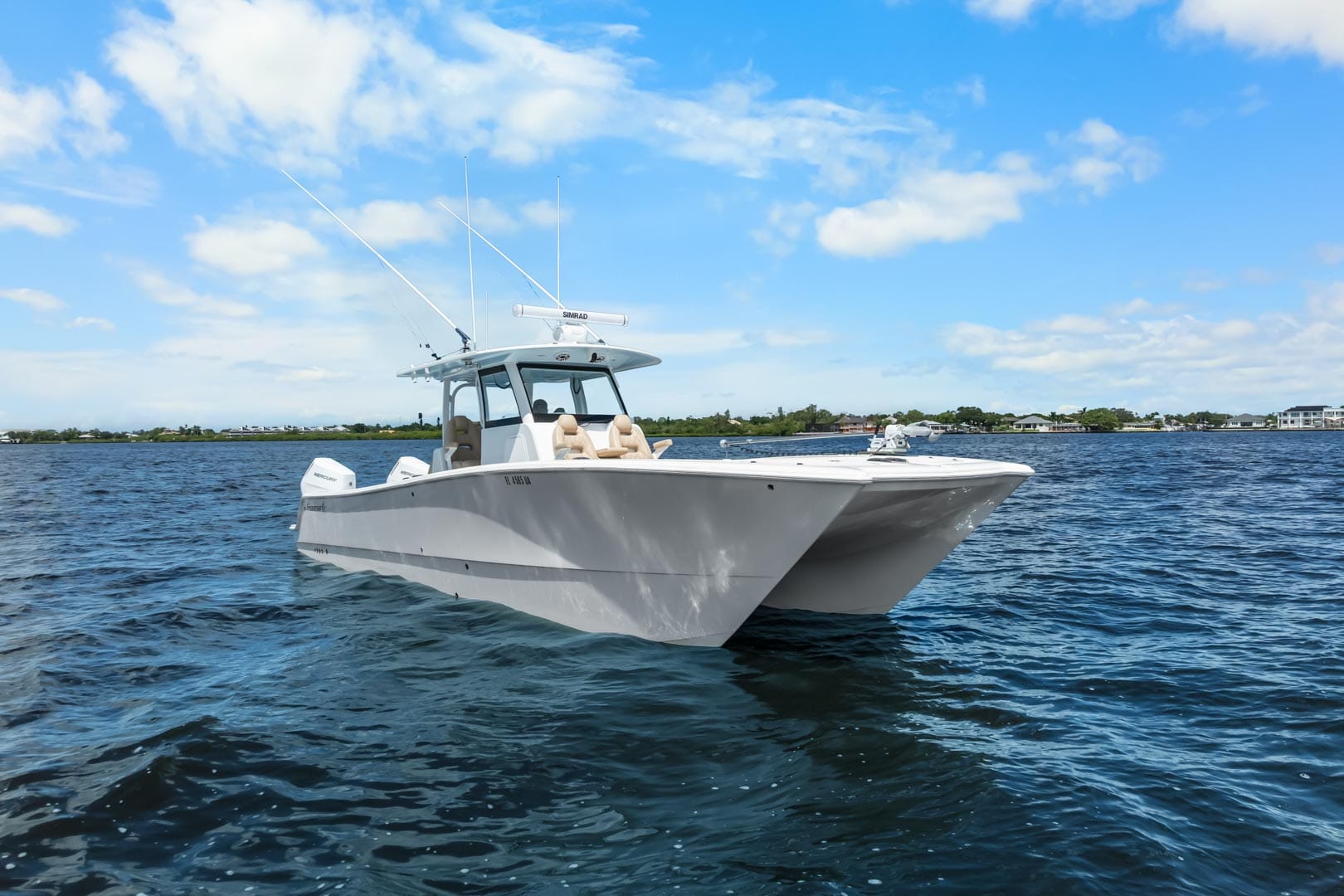
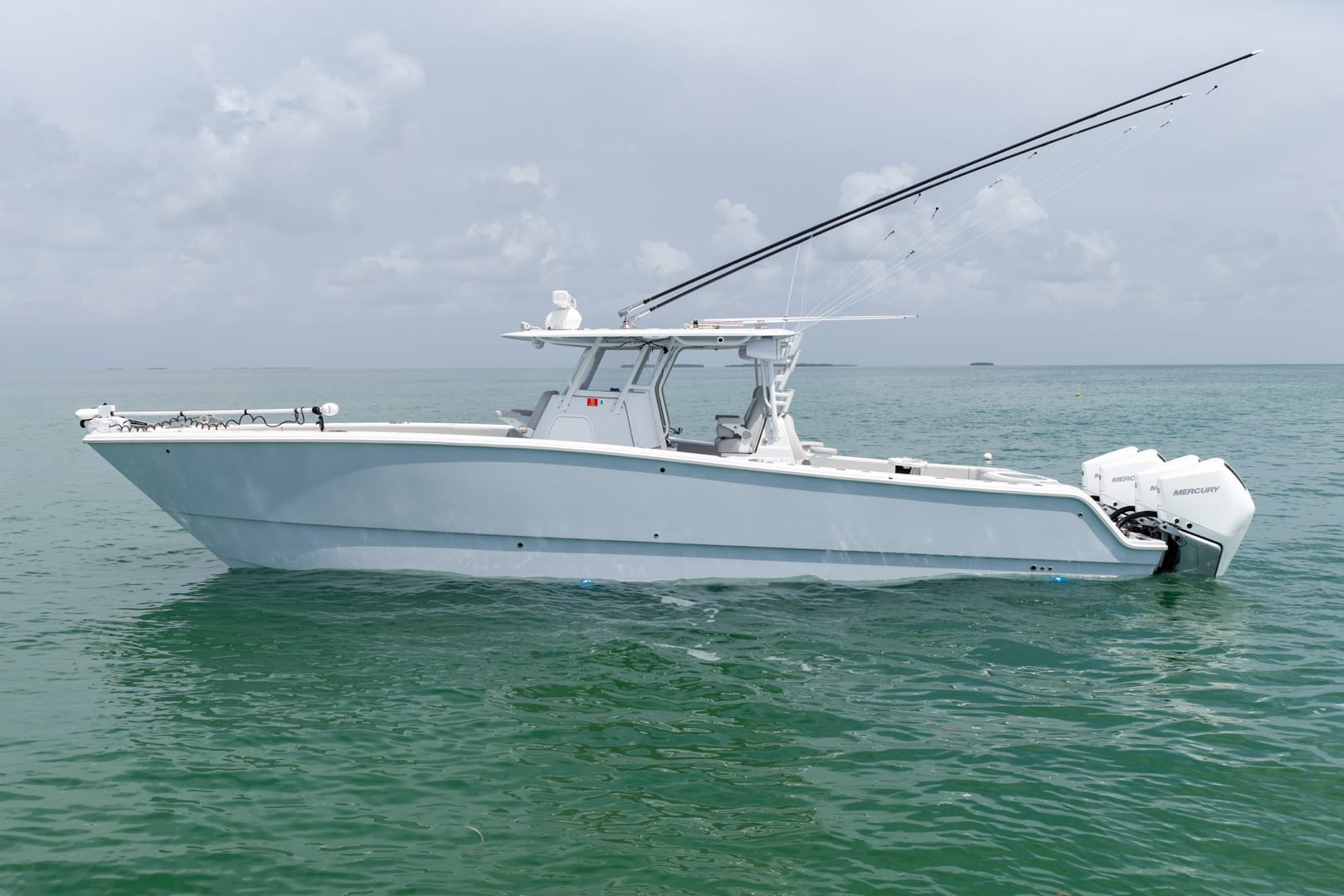
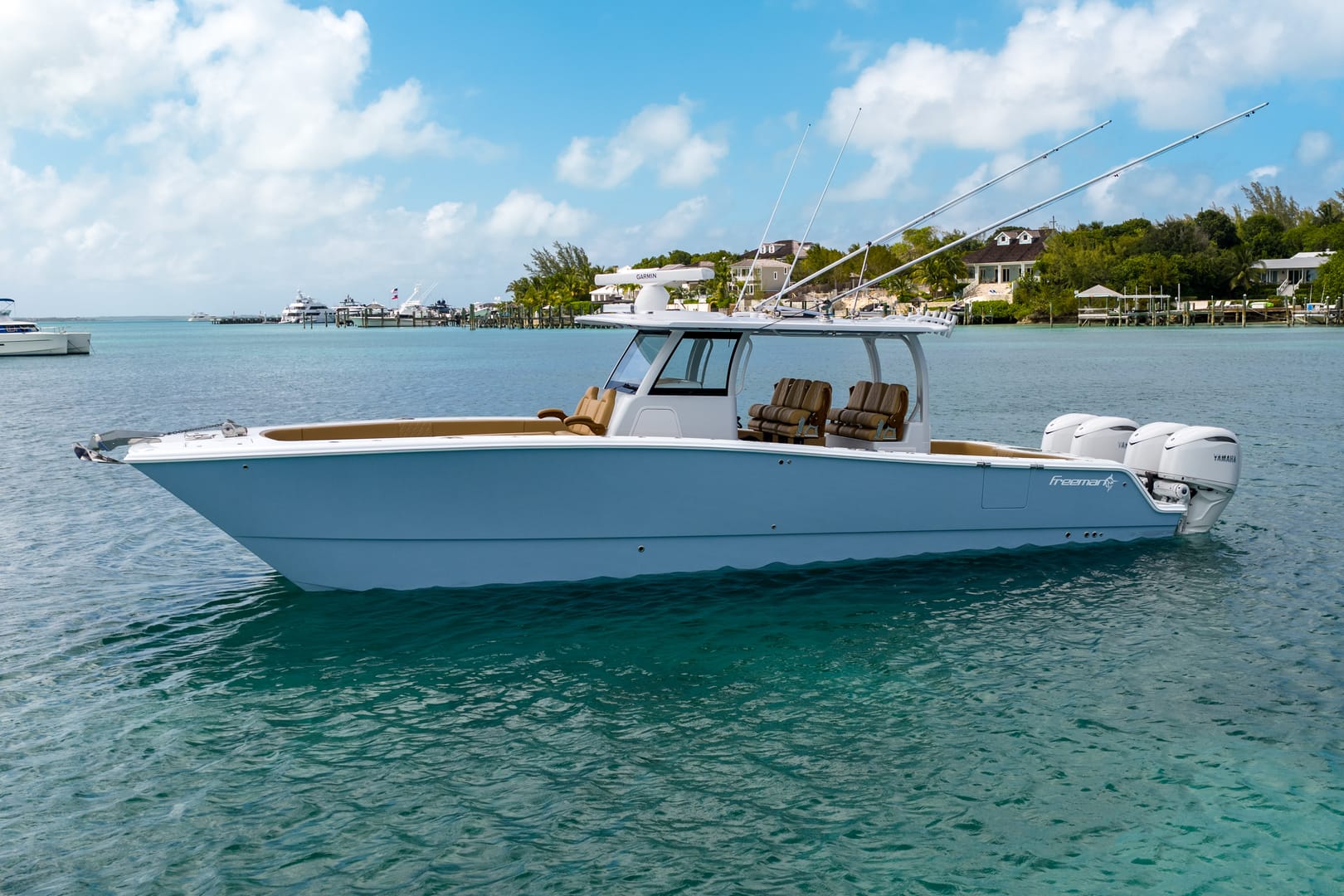
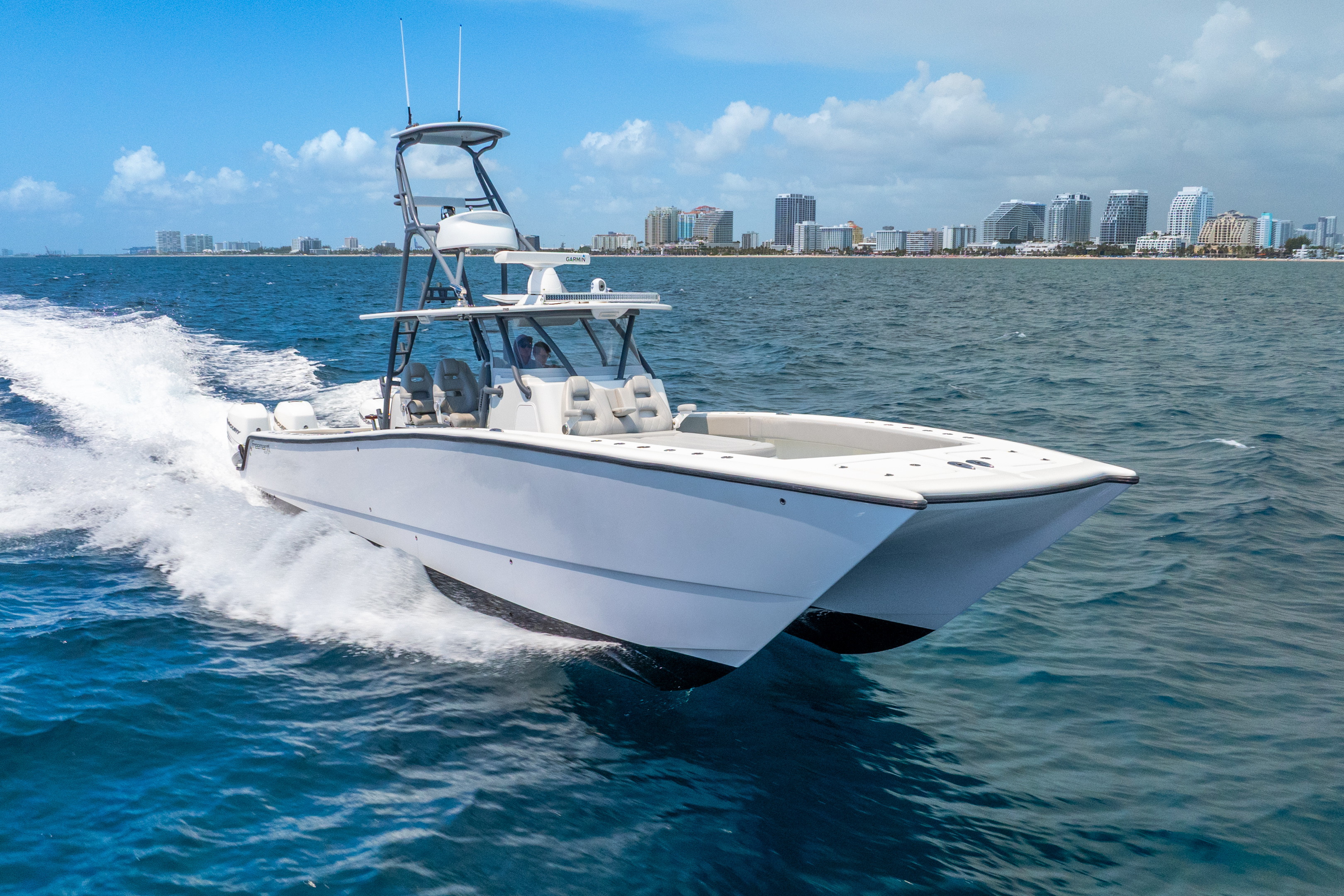
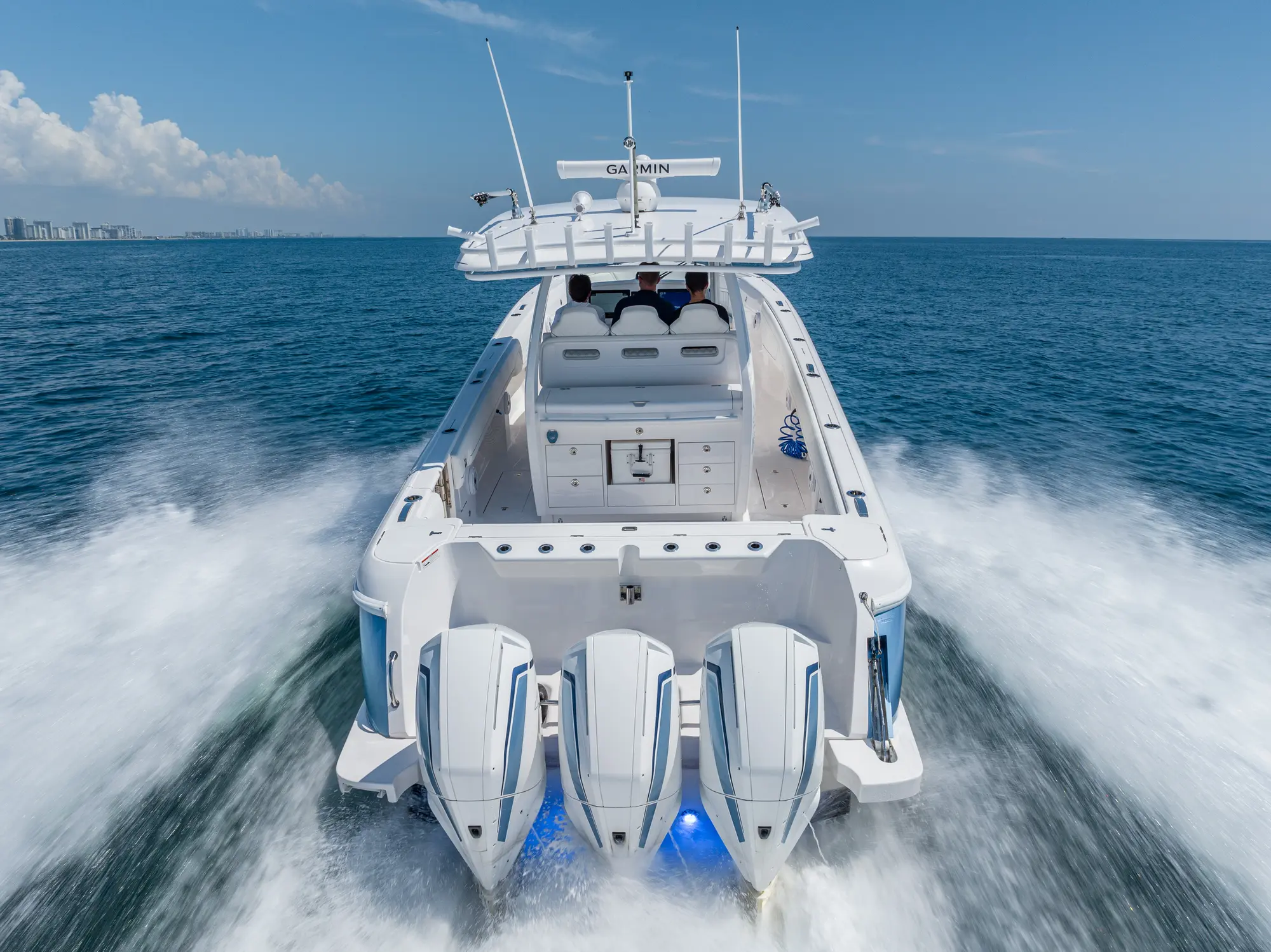
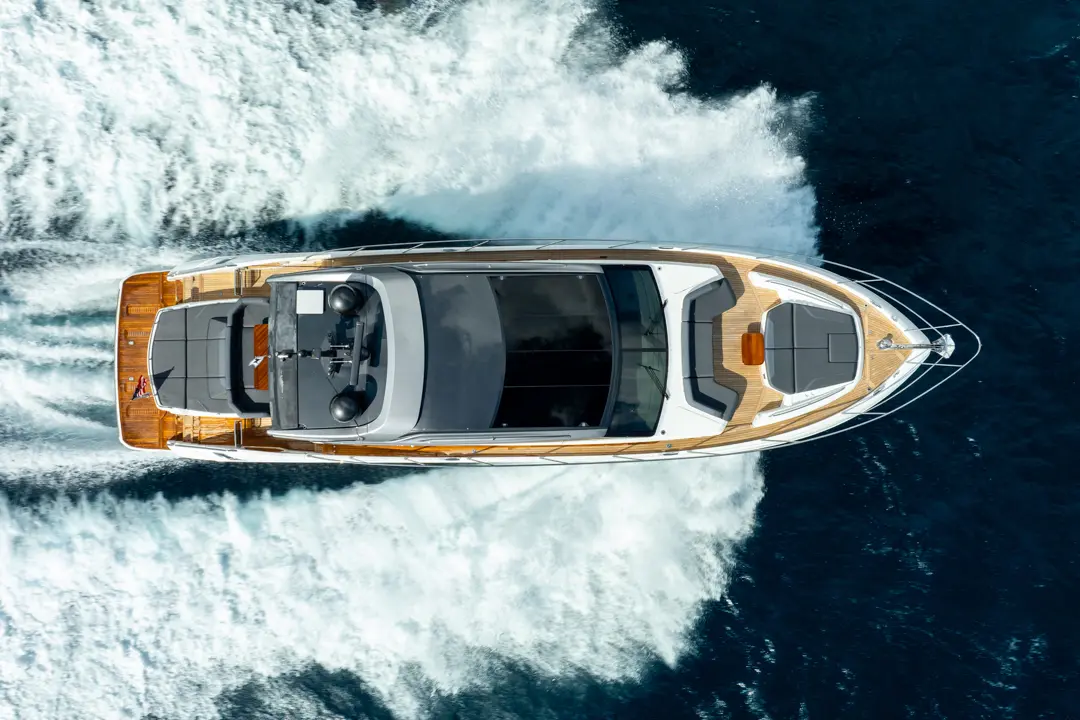
Modern 40-foot center console boats are among the most powerful recreational vessels on the water. With triple or quad outboard engines, some models can exceed 60 mph while carrying hundreds of gallons of fuel, multiple passengers, and enough equipment for serious offshore fishing.
But all that performance comes at a cost. How much fuel does a 40-foot center console actually burn?
Depending on the boat, engines, speed, and operating conditions, fuel consumption can vary enormously. A large center console cruising at moderate speeds might burn dozens of gallons per hour, while a high-performance model running at full throttle can consume well over 100 gallons per hour.
For buyers considering a boat in this size range, understanding fuel consumption is essential. A relatively small difference in fuel economy can translate into thousands of dollars in additional expenses over a boating season.
Here's how fuel burn works on a 40-foot center console, what affects cruising efficiency, and how to calculate the actual cost of operating one.
How Many Gallons Per Hour Does a 40-Foot Center Console Burn?
As a broad illustration, a 40-foot center console equipped with multiple high-horsepower outboards might consume approximately 35 to 70 gallons per hour at certain cruising speeds. At higher speeds or near wide-open throttle, fuel consumption may exceed 100 gallons per hour.
These figures are not universal performance specifications. Actual consumption depends on the specific hull, total horsepower, engine models, propellers, loading, and sea conditions.
A relatively efficient 40-foot boat cruising at 30 mph may burn substantially less fuel than a heavier, high-performance model running at 50 mph.
The most useful measurement is not simply gallons per hour. Owners should also consider how many miles the boat travels per gallon of fuel.
40-Foot Center Console Fuel Consumption by Speed
The following table illustrates how fuel consumption and efficiency might change as a large offshore center console increases speed.
| Boat Speed | Illustrative Fuel Burn | Fuel Economy |
|---|---|---|
| 20 mph | 30 GPH | 0.67 MPG |
| 25 mph | 35 GPH | 0.71 MPG |
| 30 mph | 40 GPH | 0.75 MPG |
| 35 mph | 48 GPH | 0.73 MPG |
| 40 mph | 60 GPH | 0.67 MPG |
| 45 mph | 78 GPH | 0.58 MPG |
| 50 mph | 100 GPH | 0.50 MPG |
| 55 mph | 125 GPH | 0.44 MPG |
These numbers are hypothetical examples designed to illustrate the relationship between speed, fuel burn, and efficiency. They are not measured results from a particular boat.
Notice how fuel economy improves between 20 and 30 mph in this example, then gradually declines as speed increases.
This is a common characteristic of many planing hulls. Once the boat reaches an efficient cruising attitude, it may travel farther per gallon than it does while operating near the transition onto plane.
At higher speeds, increasing drag requires substantially more engine power, which can cause fuel consumption to rise quickly.
Why Do 40-Foot Center Consoles Burn So Much Fuel?
Large center consoles combine several characteristics that contribute to fuel consumption.
Multiple High-Horsepower Outboards
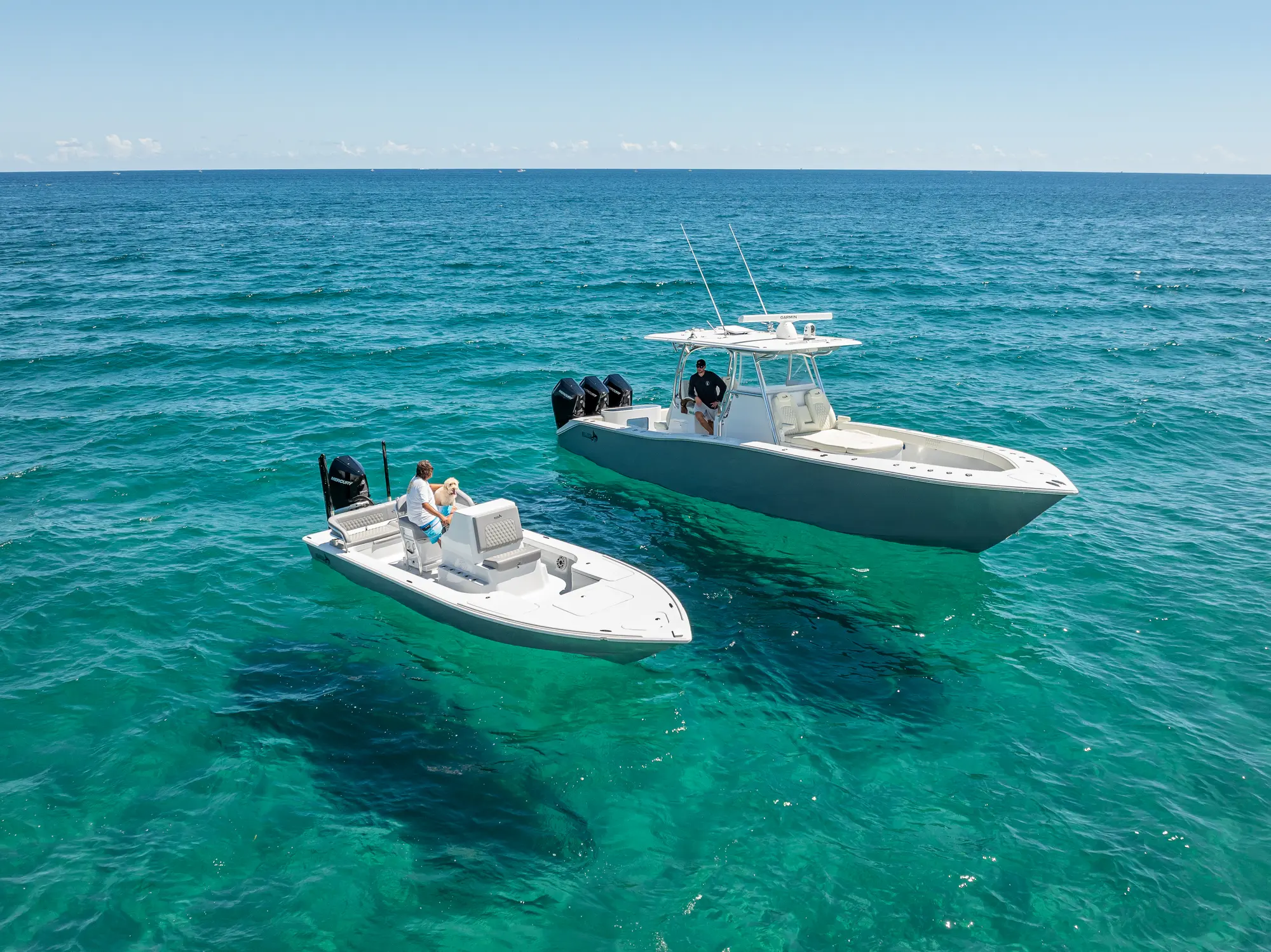
Many 40-foot center consoles use three or four large outboard engines.
For example, a boat equipped with quad 300-horsepower outboards has 1,200 total horsepower. A similar boat with quad 450s has 1,800 horsepower.
At full throttle, operating several powerful engines simultaneously requires substantial fuel.
However, installed horsepower alone does not determine fuel economy. The engines' efficiency at a particular load and the boat's hull characteristics are equally important.
Heavy Hull Construction
Offshore center consoles are designed to operate in demanding conditions.
They often feature deep-V hulls, substantial structural reinforcement, large fuel tanks, and heavy-duty equipment.
These features can improve offshore capability and comfort, but they also contribute to the weight that the engines must move.
Large Fuel and Equipment Loads
A 40-foot center console may carry several hundred gallons of gasoline.
At approximately six pounds per gallon, 500 gallons of gasoline weighs roughly 3,000 pounds.
Add passengers, freshwater, ice, fishing equipment, batteries, and other supplies, and the boat's operating weight can increase considerably.
That additional weight can affect acceleration, planing performance, and cruising efficiency.
High Cruising Speeds
One of the biggest reasons large center consoles consume substantial fuel is that their owners often cruise at relatively high speeds.
Traveling at 40 or 45 mph requires significantly more power than cruising at 25 or 30 mph on many hulls.
Even when the boat is capable of exceeding 60 mph, operating at a more moderate speed may produce much better fuel economy.
How Much Does It Cost to Fuel a 40-Foot Center Console?
The cost depends on fuel consumption, operating hours, and the price of gasoline.
For a simple example, assume the boat burns 50 gallons per hour and marina gasoline costs $4.50 per gallon.
The hourly fuel expense would be:
50 gallons × $4.50 = $225 per hour
At that operating point, a four-hour trip would consume approximately 200 gallons, costing $900 in fuel.
Actual trips include varying speeds, idling, maneuvering, and other operating conditions, so the total fuel bill may differ.
Annual Fuel Cost for a 40-Foot Center Console
Consider an owner who operates the boat for 100 hours per year at an average fuel consumption of 50 gallons per hour.
| Annual Engine Hours | Fuel Consumed | Cost at $4.50/Gallon |
|---|---|---|
| 50 hours | 2,500 gallons | $11,250 |
| 100 hours | 5,000 gallons | $22,500 |
| 150 hours | 7,500 gallons | $33,750 |
| 200 hours | 10,000 gallons | $45,000 |
These estimates assume a constant average burn of 50 GPH across the stated operating hours and a hypothetical gasoline price of $4.50 per gallon.
For owners who use their boats frequently, fuel can become one of the largest recurring operating expenses.
And these figures do not include engine maintenance, insurance, dockage, storage, cleaning, or other ownership costs.
Triple vs. Quad Outboards: Which Burns More Fuel?
A common question among buyers is whether a 40-foot center console with three outboards will consume less fuel than one with four.
The answer depends on the engines and the hull.
For example, consider two hypothetical configurations:
- Triple 400-horsepower outboards: 1,200 total horsepower.
- Quad 300-horsepower outboards: 1,200 total horsepower.
Both provide the same rated total horsepower, but their fuel consumption may differ.
The quad-engine configuration has an additional engine, gearcase, propeller, and associated weight. However, the individual engines may operate at different loads and efficiency points.
The triple-engine configuration may benefit from reduced gearcase drag and fewer engines to maintain.
Neither setup is automatically more fuel-efficient.
The correct comparison is measured miles per gallon at the same boat speed, under similar loading and sea conditions.
For a more detailed comparison, read our Twin vs. Triple Outboards: Is the Third Engine Worth It? guide.
How Far Can a 40-Foot Center Console Travel on a Full Tank?
Many large center consoles have substantial fuel capacities, but a large tank does not automatically guarantee exceptional range.
Range depends on both usable fuel capacity and fuel economy.
The basic calculation is:
Range = Usable Fuel × Miles per Gallon
Suppose a 40-foot center console carries 500 gallons of fuel and achieves 0.75 miles per gallon at its selected cruising speed.
The theoretical range would be:
500 gallons × 0.75 MPG = 375 miles
However, boaters should never plan to use every gallon in the tank.
Fuel reserves are essential for unexpected weather, changes in route, additional running time, and other contingencies.
If the owner plans to retain 20% of the fuel as a reserve, only 400 gallons would be allocated to the planned trip.
That reduces the illustrative planning distance to:
400 gallons × 0.75 MPG = 300 miles
This is still only a simplified calculation. Actual usable fuel, sea conditions, generator consumption, and the vessel's operating characteristics can change the result.
Offshore operators should establish reserves appropriate for their route and conditions rather than relying on a fixed percentage alone.
How Much Fuel Does a Bahamas Trip Use?
South Florida boat owners frequently use large center consoles for trips to the Bahamas.
One popular route is from the Miami area to Bimini, which is approximately 50 nautical miles depending on the departure point and destination.
That is roughly 58 statute miles each way, or approximately 116 statute miles round trip before adding local cruising or detours.
Assume a boat averages 0.75 miles per gallon during the crossing.
The theoretical round-trip fuel consumption would be:
116 miles ÷ 0.75 MPG = approximately 155 gallons
At $4.50 per gallon, that represents approximately $698 in gasoline.
This example excludes fuel used while maneuvering, fishing, idling, or traveling around the islands.
It also assumes the boat achieves the same fuel economy throughout the trip, which may not happen when crossing the Gulf Stream or operating in rough seas.
For a longer Bahamas trip involving multiple islands, fuel consumption can increase substantially.
Does Cruising Slower Always Save Fuel?
Not necessarily.
Slowing down often reduces fuel consumption per hour, but it does not always improve fuel economy per mile.
Many planing boats operate inefficiently at speeds just below or near the transition onto plane.
At those speeds, the hull may generate substantial resistance without achieving an efficient running attitude.
Once the boat is properly on plane, it may travel farther per gallon at a somewhat higher speed.
At the other extreme, running near maximum speed typically requires significantly more power and can reduce miles per gallon.
For many center consoles, the most efficient planing cruise occurs somewhere between minimum planing speed and maximum speed.
The exact point varies by hull, engine package, and loading.
Owners should use engine fuel-flow data and GPS speed to identify the most efficient cruising range for their particular boat.
How Much Fuel Does a 40-Foot Center Console Burn at Idle?
Fuel consumption at idle is much lower than at cruising speed, but it is not zero.
A boat equipped with three or four large outboards can still consume several gallons per hour in total while all engines are idling, depending on the engine models and operating conditions.
Extended idling during fishing trips, marina maneuvering, or waiting for bridges can add to the total fuel bill.
However, idle fuel consumption is usually a smaller expense than running at high cruising speeds.
Owners should consult engine monitoring data or manufacturer specifications for accurate idle consumption figures.
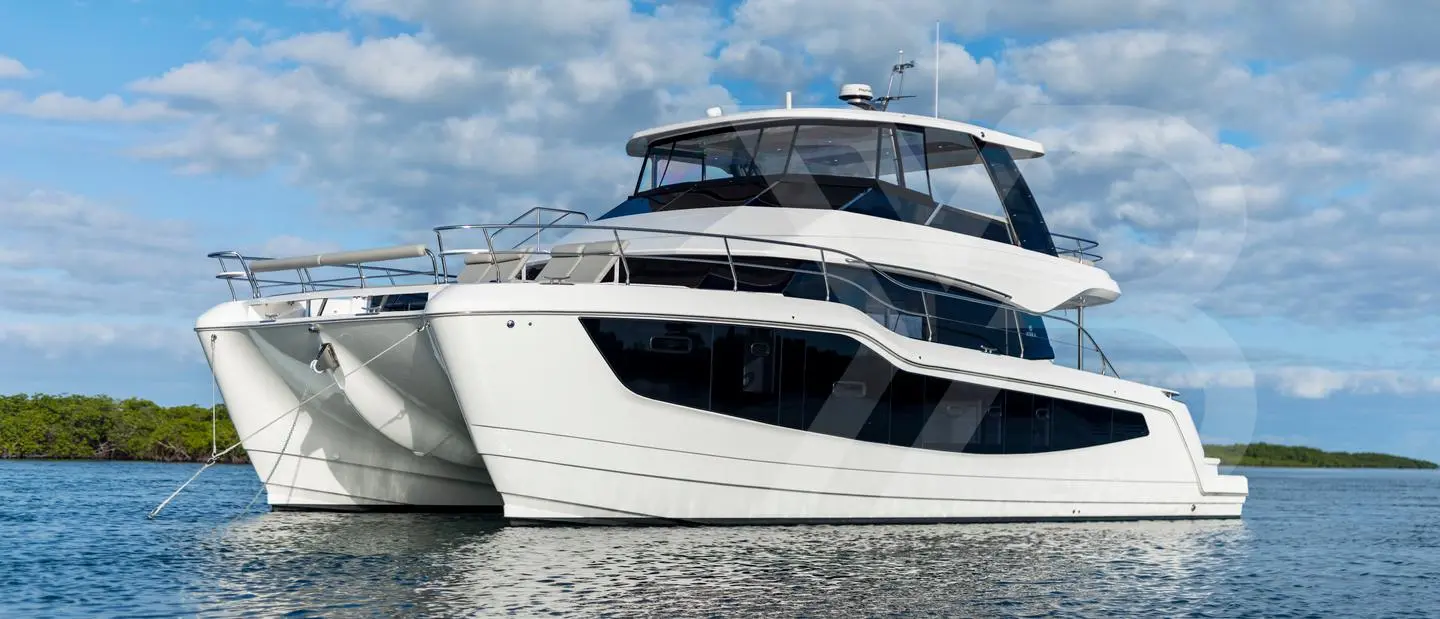
Does a 40-Foot Catamaran Burn Less Fuel Than a Deep-V Center Console?
Some power catamarans can achieve excellent fuel economy because their twin-hull designs may reduce resistance under certain operating conditions.
However, catamarans are not automatically more efficient than monohulls.
Fuel consumption depends on hull geometry, displacement, engine configuration, speed, and loading.
A well-designed power catamaran may outperform a similarly sized deep-V center console at certain speeds, while a different catamaran may offer little or no advantage.
Buyers should compare actual performance data rather than assuming one hull type will always consume less fuel.
How to Improve Fuel Economy on a Large Center Console
Although owners cannot eliminate the fuel demands of a large offshore boat, several practices can improve efficiency.
Find the Most Efficient Cruising Speed
Use the boat's engine displays to monitor gallons per hour and miles per gallon.
Test different cruising speeds in calm conditions and identify the range that provides the best economy.
Keep the Hull Clean
Marine growth and fouling increase drag, particularly on boats kept in the water year-round.
Regular hull cleaning and appropriate bottom maintenance can help preserve performance.
Maintain the Engines
Follow manufacturer service intervals and address engine performance problems promptly.
Properly maintained engines are more likely to operate as intended.
Use the Correct Propellers
Propeller selection affects acceleration, engine operating speed, and efficiency.
Incorrect propellers can prevent engines from reaching their recommended operating range and reduce performance.
Manage Unnecessary Weight
Remove equipment that is not needed for the trip and avoid carrying unnecessary supplies.
However, never reduce essential safety equipment or appropriate fuel reserves simply to improve fuel economy.
Adjust Trim Properly
Engine trim and trim tabs can significantly affect a planing hull's running attitude.
Improper trim may increase resistance and reduce fuel efficiency.
Operators should learn how their boat responds to trim adjustments at different speeds and loads.
Is a 40-Foot Center Console Expensive to Operate?
Fuel is only one component of the total cost of owning a large center console.
Other expenses may include:
- Routine servicing for three or four outboard engines
- Insurance premiums
- Marina dockage or dry storage
- Hull cleaning and detailing
- Electronics maintenance and repairs
- Battery replacement
- Bottom painting when applicable
- Registration, safety equipment, and miscellaneous expenses
A large center console with multiple high-horsepower engines can have significant annual operating expenses even when it is used relatively infrequently.
For buyers, estimating fuel consumption is an important first step, but the full ownership budget should include maintenance, storage, insurance, and potential repairs.
Frequently Asked Questions About 40-Foot Center Console Fuel Consumption
How many gallons per hour does a 40-foot center console burn?
Fuel consumption varies widely. Some large center consoles may burn approximately 35 to 70 gallons per hour at certain cruising speeds, while high-performance models can exceed 100 gallons per hour at high throttle settings. Actual figures depend on the boat and engines.
How much does it cost to run a 40-foot center console for an hour?
At a hypothetical burn rate of 50 gallons per hour and gasoline price of $4.50 per gallon, fuel costs would be approximately $225 per hour. This excludes maintenance and other operating expenses.
How far can a 40-foot center console go on one tank?
Range depends on tank capacity and fuel economy. A boat carrying 500 gallons and achieving 0.75 miles per gallon has a theoretical range of 375 miles before reserves. Actual safe planning range will be lower.
Do quad outboards burn more fuel than triples?
Not necessarily at the same boat speed. Fuel economy depends on total horsepower, engine efficiency, hull design, weight, and operating conditions. Quad engines generally involve additional maintenance and mechanical complexity.
What is the most fuel-efficient cruising speed for a 40-foot center console?
There is no universal answer. Many planing boats achieve their best cruising efficiency at moderate speeds once fully on plane. Manufacturer performance reports and onboard fuel-flow data can help identify the optimal speed.
How much fuel does a 40-foot boat use going to Bimini?
Using a hypothetical 116-mile round trip from the Miami area and fuel economy of 0.75 MPG, the trip would require approximately 155 gallons before reserves, detours, and additional operation.
Final Thoughts: Understanding the Real Fuel Cost of a 40-Foot Center Console
A 40-foot center console offers exceptional offshore capability, high cruising speeds, and the versatility to handle fishing trips, island crossings, and recreational boating.
However, the combination of a large hull and multiple high-horsepower outboards means fuel consumption can be substantial.
At moderate cruising speeds, some boats may burn dozens of gallons per hour. At higher speeds, consumption can rise dramatically, particularly on models equipped with triple or quad outboards.
For owners, the most important number is often miles per gallon rather than gallons per hour.
Understanding how far the boat travels for each gallon consumed makes it easier to estimate trip costs, plan offshore range, and identify efficient cruising speeds.
Before purchasing a large center console, review manufacturer performance data for the exact engine package and calculate fuel expenses based on realistic annual usage.
That preparation can make the difference between enjoying the boat comfortably and being surprised by the cost of every trip.
Follow Boats Daily for more center console comparisons, outboard engine guides, offshore boating advice, and practical information for boat owners.