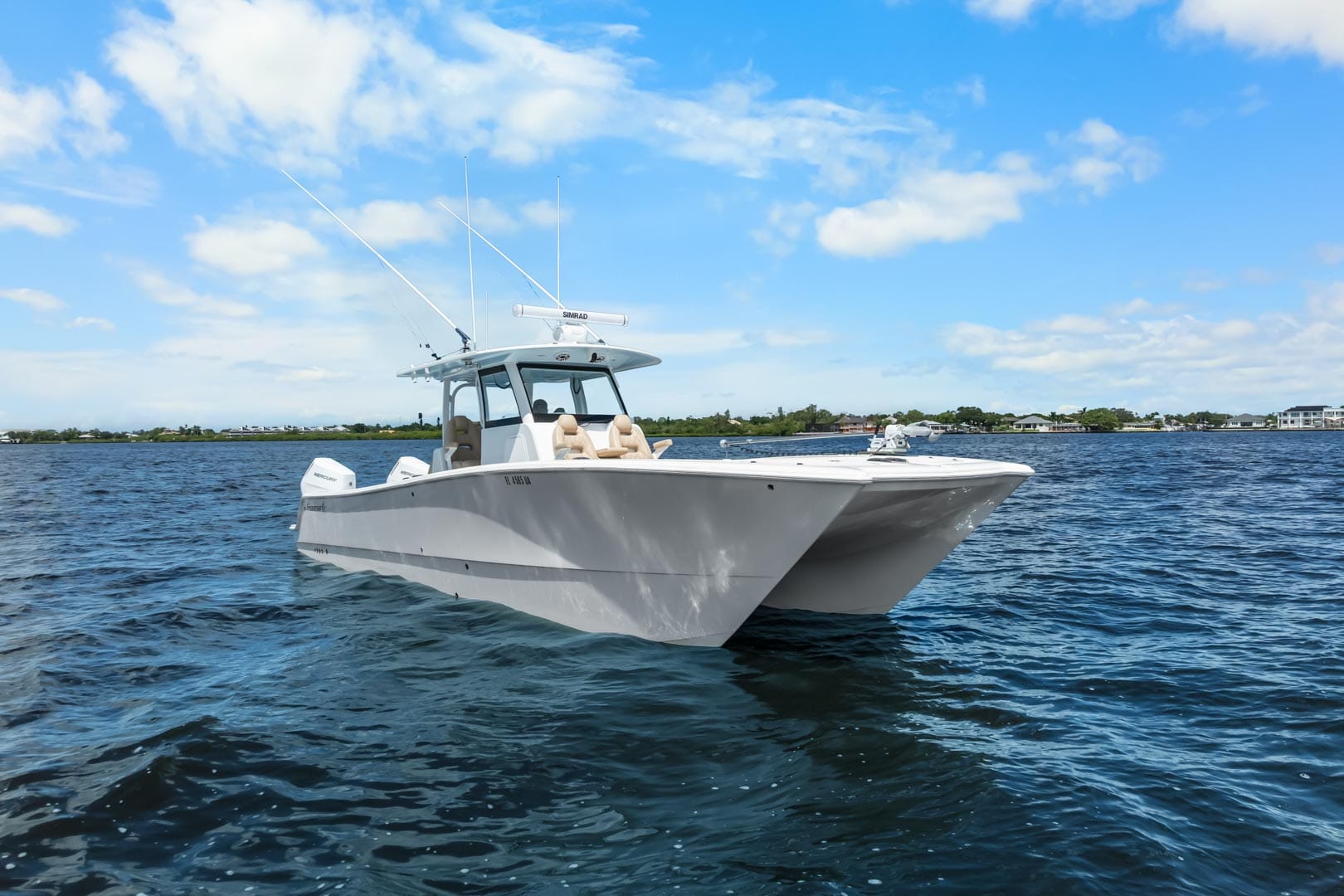
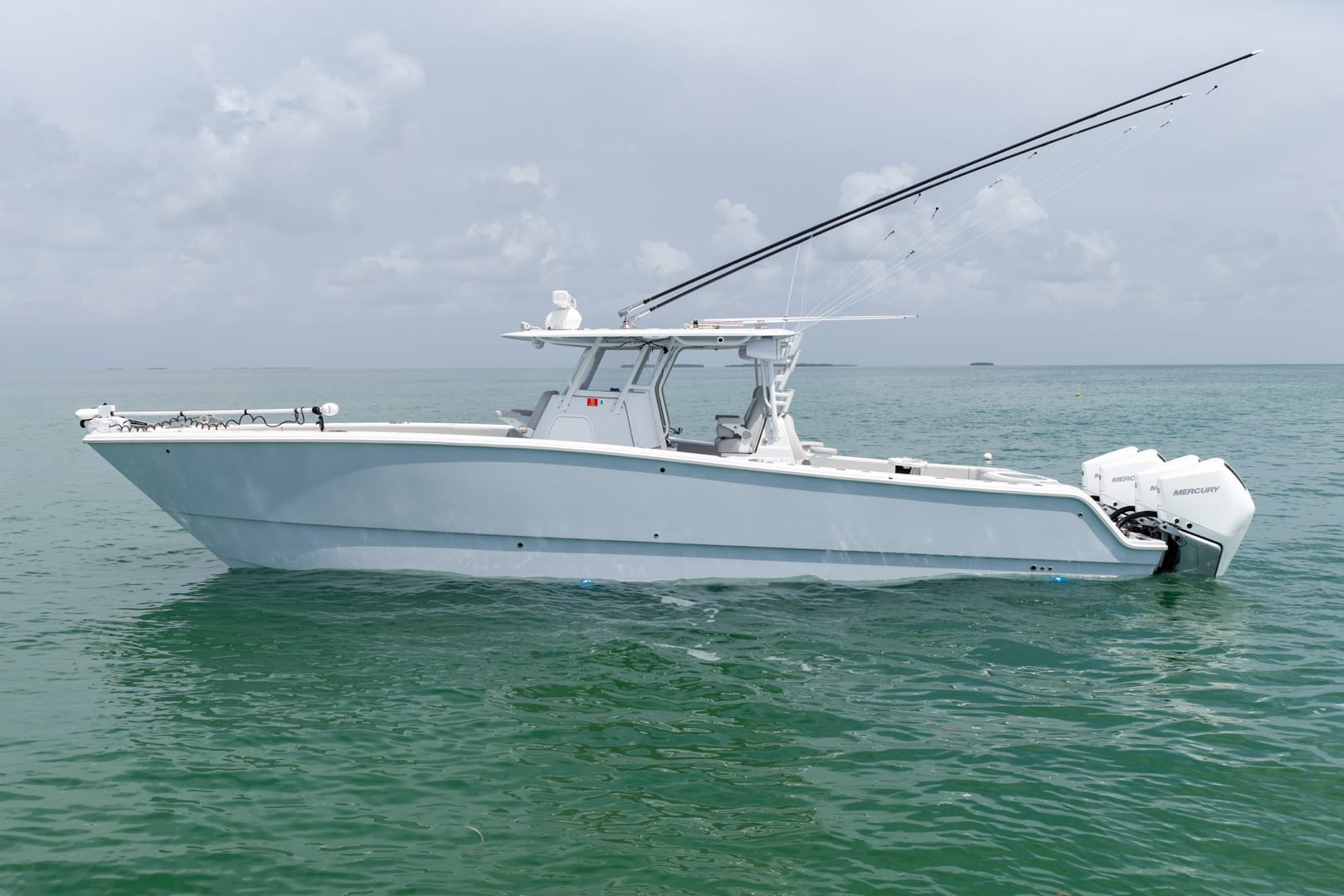
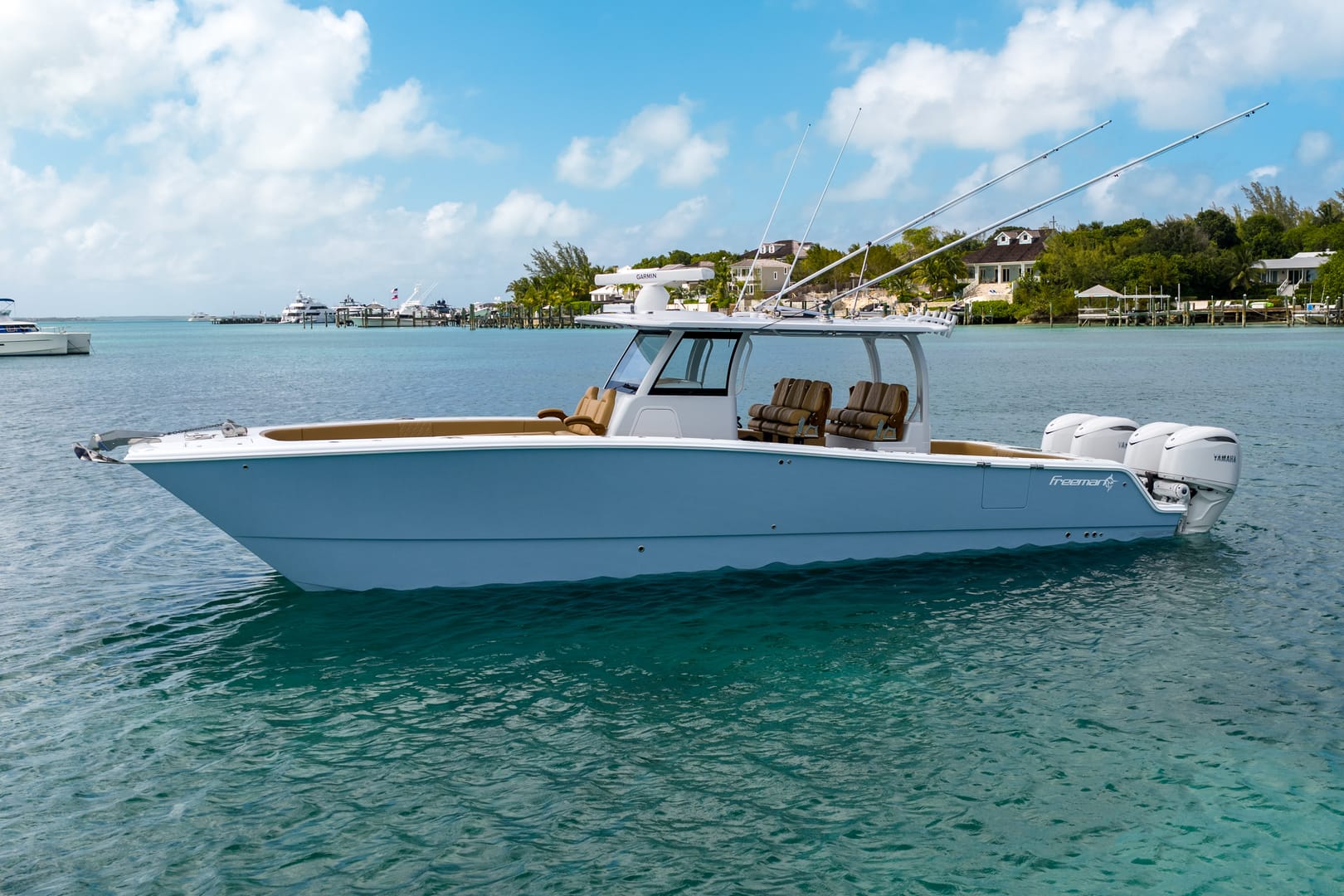
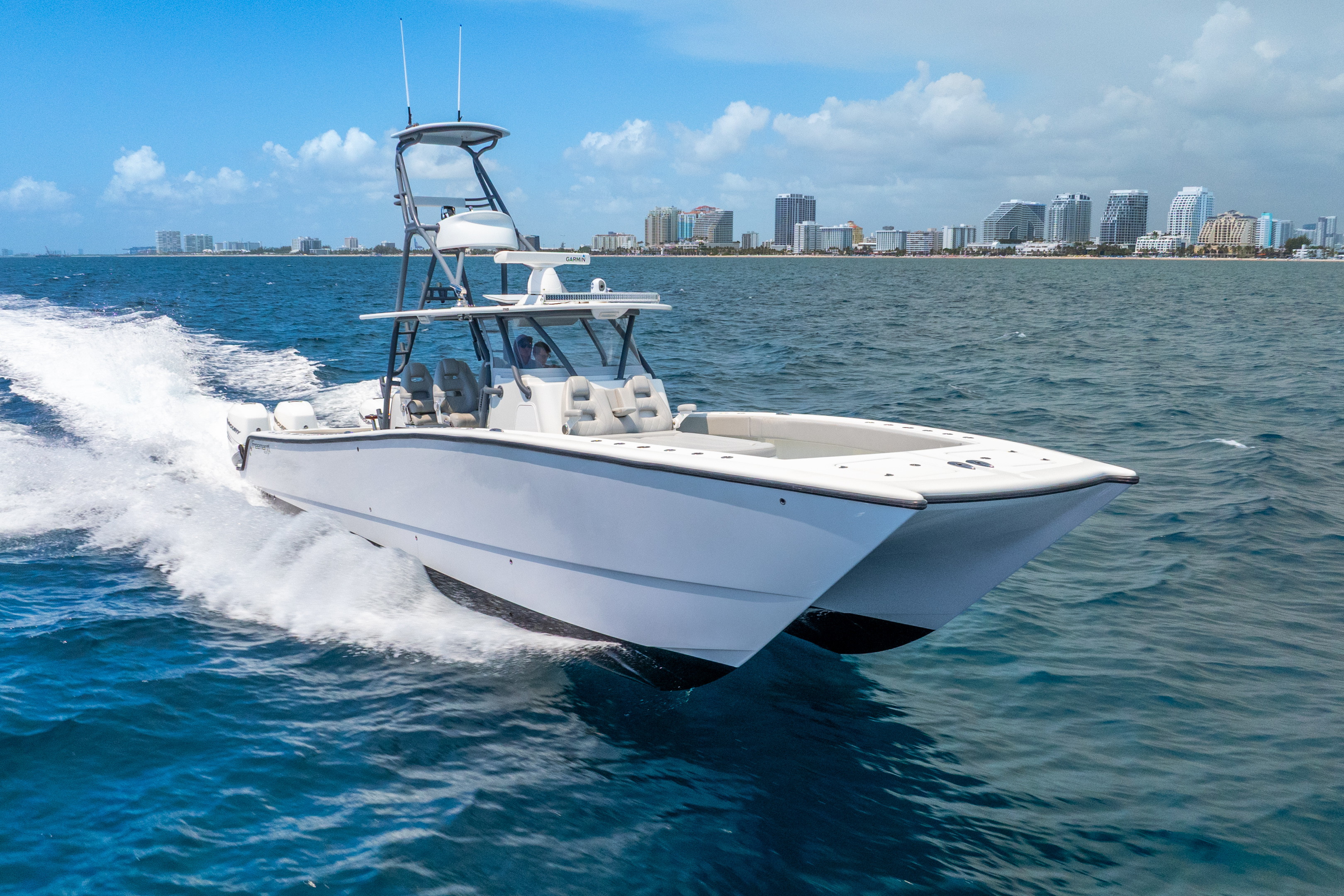
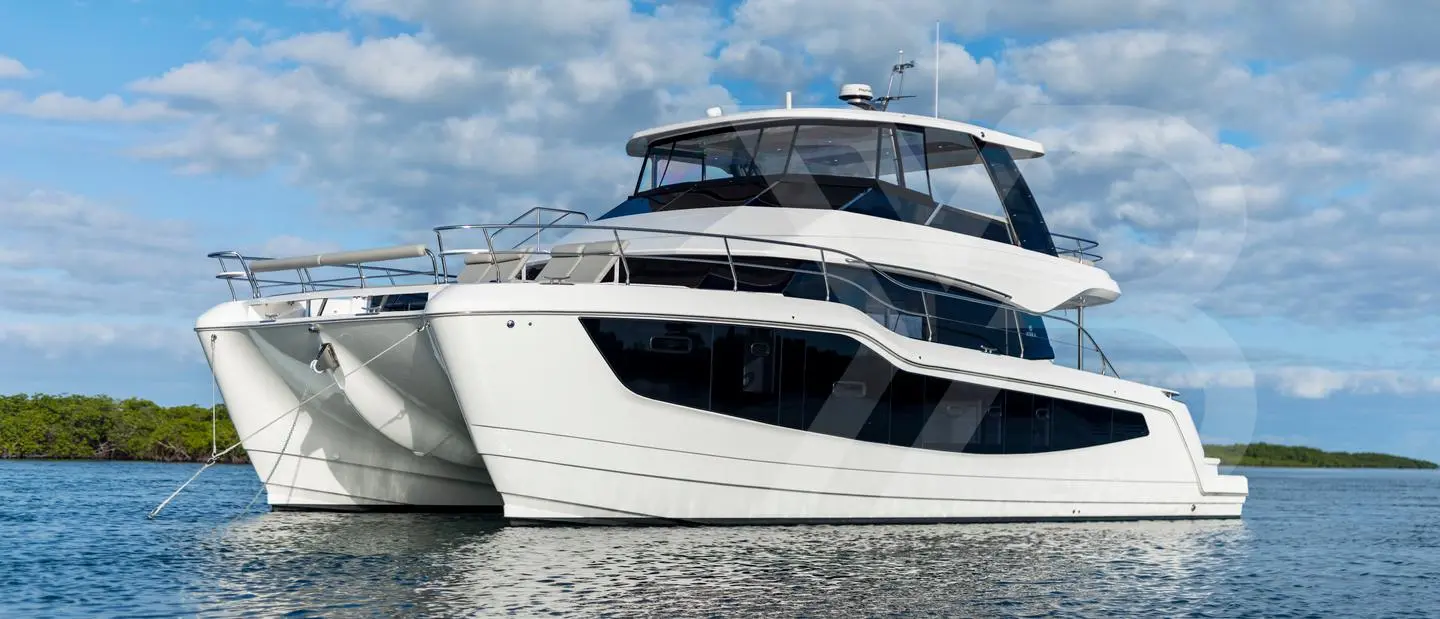
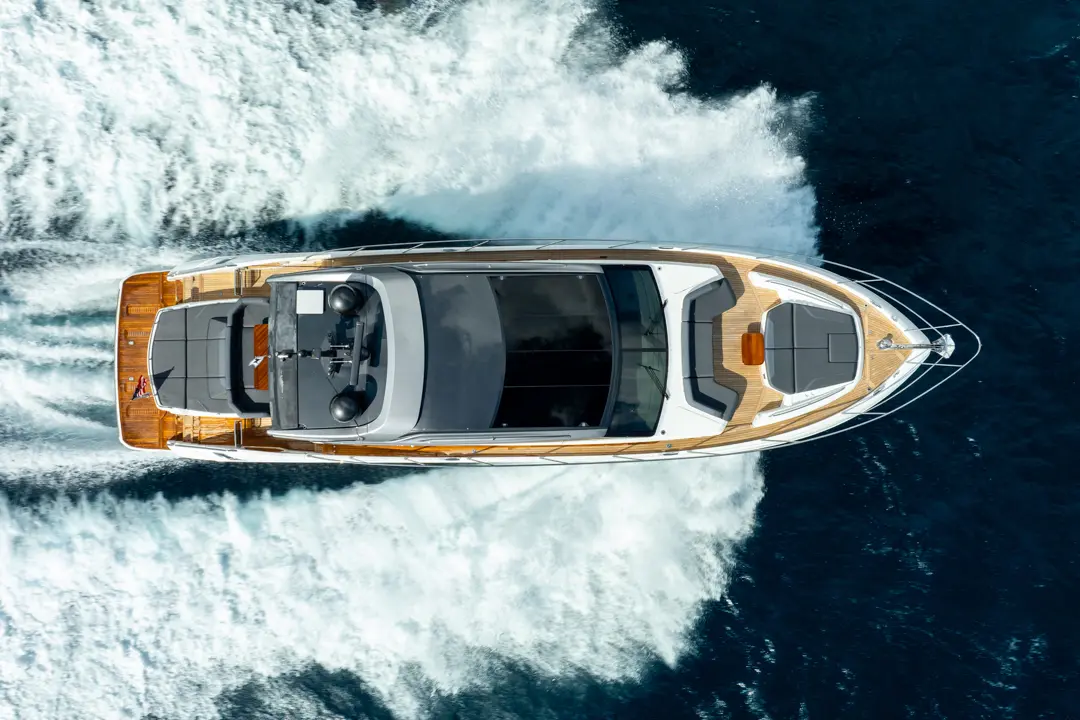
Walk through almost any marina in Miami, Fort Lauderdale, Monaco, or the Bahamas, and you'll notice something immediately: the overwhelming majority of yachts are white.
Whether it's a 40-foot motor yacht or a 200-foot superyacht, white remains the dominant exterior color. Even vessels worth tens of millions of dollars often feature nearly identical white hulls and superstructures.
Considering how much yacht owners spend on customization, it's reasonable to wonder why so many choose the same color.
The answer involves much more than appearance. White surfaces reflect sunlight, help reduce heat buildup, simplify certain aspects of maintenance, and provide a practical foundation for long-term ownership.
There are also important differences in how white and dark-colored yachts age, particularly in hot climates such as South Florida and the Caribbean.
Here's why most yachts are white, what happens when a yacht is painted black or another dark color, and whether white is actually the best choice.
1. White Yacht Hulls Reflect More Sunlight
One of the biggest reasons yachts are painted white is heat management.
White surfaces generally reflect more incoming sunlight than dark surfaces. Black, dark blue, and other deep colors absorb a larger portion of solar radiation, which can cause the exterior surface to become significantly hotter.
This difference is especially noticeable on boats operating in tropical and subtropical climates.
In South Florida, where yachts may spend hours exposed to direct sunlight, exterior surface temperatures can become uncomfortable even when the surrounding air temperature is relatively moderate.
A white fiberglass deck will generally remain cooler than an otherwise comparable dark-colored deck under the same conditions.
The exact temperature difference depends on the coating, surface material, sunlight intensity, wind, and other environmental factors.
For yacht owners, keeping exterior surfaces cooler improves comfort and can help reduce heat transfer into interior spaces.
2. White Can Help Reduce Air Conditioning Demand
Large yachts rely on extensive air conditioning systems to maintain comfortable interior temperatures.
Cabins, salons, guest accommodations, and crew quarters may require cooling throughout the day, particularly in warm destinations.
When sunlight heats the exterior of a yacht, some of that heat can transfer through the vessel's structure and into the interior.
White hulls and superstructures generally absorb less solar energy than dark-colored alternatives, which can help limit this effect.
However, exterior paint color is only one factor affecting air conditioning demand.
Insulation, window area, glazing, ventilation, interior layout, and the vessel's construction all influence how much cooling is required.
A white yacht is not automatically more energy-efficient than a dark yacht with better insulation and thermal design.
Nevertheless, using light exterior colors can be one practical way to reduce solar heat absorption.
3. White Paint Can Make Certain Maintenance Issues Easier to Spot
Yachts require regular inspections and cleaning, particularly when operating in saltwater environments.
White surfaces can make some types of contamination and damage easier to identify.
For example, rust-colored streaks from metal fittings, fuel stains, oil residue, and certain forms of surface discoloration may be especially noticeable against a white background.
This can help crew members identify areas that need cleaning or further inspection.
On the other hand, white also makes some everyday dirt and stains more visible.
There is no single paint color that hides every type of contamination.
Dark hulls may conceal certain stains but show salt deposits, water spots, scratches, and polishing marks more clearly.
For professional yacht crews, white provides a familiar and relatively straightforward surface to maintain, although the quality of the coating matters more than color alone.
4. Dark Yacht Hulls Can Be More Difficult to Maintain
Black, navy blue, and other dark yacht colors can look spectacular when freshly polished.
However, maintaining that appearance can require considerable attention.
Dark glossy surfaces often reveal imperfections that are less noticeable on lighter colors.
These may include:
- Water spots and dried salt residue
- Fine scratches and swirl marks
- Uneven polishing or buffing
- Fading and oxidation
- Surface imperfections and repairs
Dark-colored coatings also tend to reach higher temperatures under direct sunlight.
Depending on the paint system and underlying construction, repeated heating and cooling may place additional demands on the coating and substrate.
Modern marine coatings can perform very well in dark colors, but correct preparation, application, and maintenance remain essential.
Owners considering a dark yacht should discuss the specific coating system with an experienced marine paint professional.
5. White Is a Practical Color for Fiberglass Boats
Many recreational boats are built using fiberglass-reinforced plastic, often with a gelcoat exterior finish.
White gelcoat has been widely used in boat manufacturing for decades.
It provides a durable, familiar finish that manufacturers and repair facilities know how to work with.
White and off-white finishes can also make certain repairs and minor imperfections less conspicuous than they would be on a highly reflective dark surface.
However, matching an aged white finish is not always easy.
Sun exposure, oxidation, and differences between coating formulations can cause originally similar white surfaces to develop noticeably different shades over time.
Large yachts may use sophisticated painted finishes rather than exposed gelcoat, but white remains popular for many of the same practical reasons.
6. White Yachts Have a Timeless Appearance
Beyond maintenance and temperature, white has become a defining part of modern yacht design.
White exteriors create a clean appearance that works with a wide range of hull shapes, window arrangements, and architectural details.
Large dark windows often contrast sharply with white superstructures, emphasizing the vessel's lines and proportions.
White also pairs easily with teak decking, stainless steel fittings, polished railings, and other traditional yacht materials.
For designers, it provides a relatively neutral foundation that can accommodate different styling approaches without dominating the overall appearance.
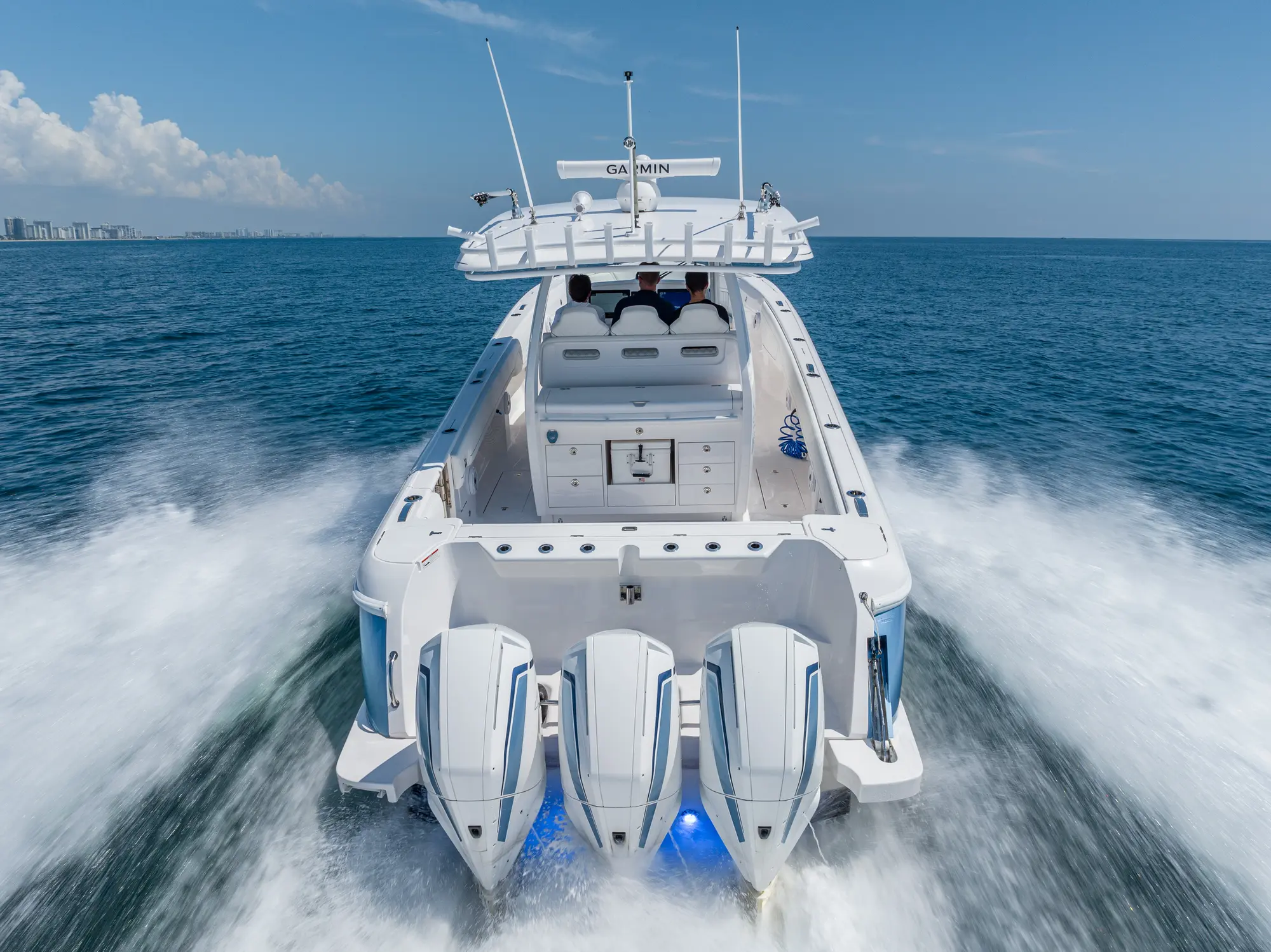
This helps explain why white remains popular across very different yacht categories, from sportfishing vessels to luxury motor yachts.
7. White Can Appeal to More Buyers When Selling a Yacht
Resale value is another consideration when selecting a yacht's exterior color.
White is widely accepted in the recreational boating market, making it a relatively safe choice for owners who expect to sell their vessels in the future.
A buyer may have strong preferences about a bright red, dark green, or metallic-colored hull, while white is generally less polarizing.
That doesn't mean white yachts always sell faster or command higher prices.
Condition, manufacturer, model, engine hours, maintenance history, equipment, and market demand are much more important factors.
Some dark-colored yachts are highly desirable, particularly when the color complements the design and has been maintained properly.
However, unusual or highly personalized color schemes may appeal to a smaller group of prospective buyers.
For owners thinking about long-term resale, white can reduce the risk of choosing an exterior color that future buyers dislike.
8. White Makes Exterior Repairs and Repainting More Familiar
Yacht paint and fiberglass repairs can be expensive, especially on large vessels.
White is a familiar color for marine service providers, and many repair facilities regularly work with white gelcoat and marine paint systems.
That experience can make certain repair processes more straightforward.
However, it would be incorrect to assume that every white yacht is inexpensive or easy to repaint.
Large yachts may use specialized multi-layer coating systems that require extensive preparation, controlled application conditions, and professional finishing.
Even a relatively small repair can require careful blending to achieve a consistent appearance.
For dark metallic or custom finishes, matching color, gloss, and surface texture can be particularly challenging.
The overall cost depends on the coating system, condition of the surface, size of the repair, and quality of finish required.
Why Are Some Yachts Painted Black?
Despite the popularity of white, some yacht owners deliberately choose black or other dark colors.
Dark hulls can create a dramatic appearance, emphasizing the vessel's profile and making it stand out from traditional white yachts.
Black can also create a strong contrast with bright stainless steel fittings, illuminated windows, and lighter-colored decks.
For some owners, the distinctive appearance is worth the additional maintenance considerations.
Dark-colored yachts are particularly noticeable in the superyacht market, where custom design is often a major part of the ownership experience.
However, dark paint requires careful maintenance to preserve its appearance, especially in locations with intense sunlight and saltwater exposure.
White vs. Black Yacht Hulls: Which Is Better?
Both colors can produce attractive, durable finishes when applied and maintained properly.
The main differences involve heat absorption, appearance, and the visibility of surface imperfections.
| Category | White Yacht | Black Yacht |
|---|---|---|
| Solar heat absorption | Generally lower | Generally higher |
| Surface temperature in sunlight | Usually cooler | Usually hotter |
| Salt residue visibility | Often less noticeable | Often more noticeable |
| Rust stains | More noticeable | May be less noticeable |
| Fine scratches and swirl marks | Often less noticeable | Often more noticeable |
| Visual appearance | Traditional and understated | Dramatic and distinctive |
| Buyer appeal | Broad, conventional choice | More dependent on buyer preference |
These are general tendencies rather than guaranteed outcomes. Different marine coatings can behave differently even when they appear to be the same color.
For most owners who prioritize practical maintenance and heat management, white is an attractive choice.
For those who place greater importance on distinctive styling, a dark hull may be worth considering.
Does Yacht Color Affect Fuel Efficiency?
Paint color generally has little direct effect on the fuel efficiency of a recreational yacht.
A white hull and a black hull with otherwise identical shapes, weights, and surface conditions should have broadly similar hydrodynamic performance.
Fuel consumption is influenced primarily by factors such as hull design, displacement, engine efficiency, propeller selection, speed, and sea conditions.
However, the condition and smoothness of the underwater hull surface can affect resistance.
Marine growth, damaged antifouling coatings, and rough underwater surfaces can increase drag and fuel consumption.
That is a separate issue from whether the visible topsides are painted white, black, or another color.
For owners trying to improve efficiency, maintaining a clean underwater hull is much more important than selecting a particular topside paint color.
Why Are Most Boat Decks White?
White and light-colored decks are common for many of the same reasons as white yacht hulls.
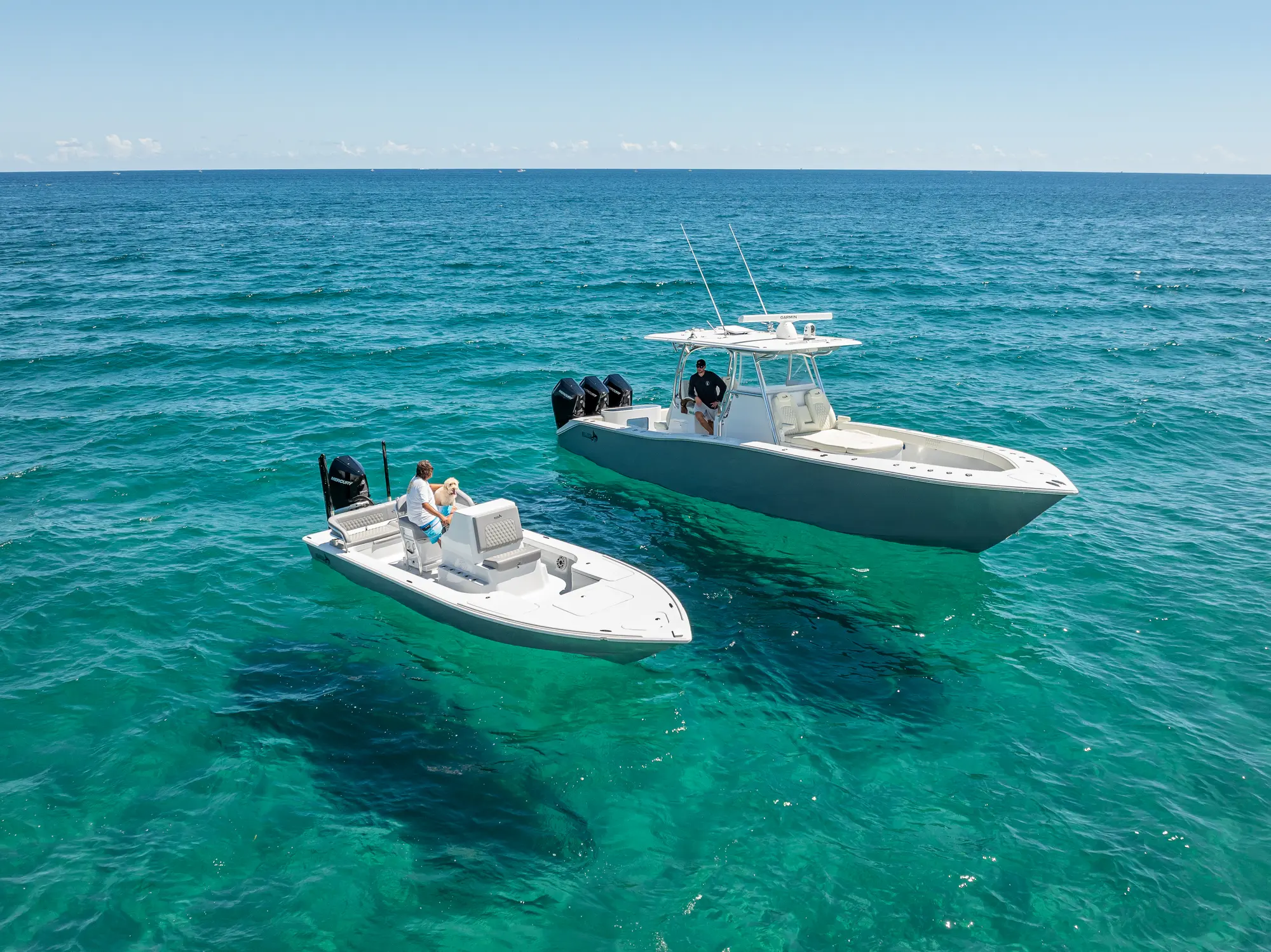
Deck surfaces receive substantial direct sunlight, particularly on open center consoles and sportfishing boats.
A light-colored deck generally absorbs less solar energy than a dark-colored surface, helping keep it more comfortable underfoot.
This is particularly important in hot boating destinations such as Miami, Fort Lauderdale, and the Florida Keys.
However, pure white decks can create glare in bright sunlight.
For this reason, many manufacturers use off-white, cream, or light gray nonskid finishes instead of highly reflective glossy white.
These colors can help balance surface temperature, visibility, and appearance.
Why Are the Bottoms of Boats Often a Different Color?
Although the visible hull and superstructure of a yacht may be white, the underwater portion is often painted black, blue, red, or another color.
This is usually because the underwater hull requires a different type of coating.
Boats kept in the water commonly use antifouling paint designed to reduce the accumulation of marine organisms such as barnacles and algae.
Antifouling coatings are formulated for underwater performance rather than appearance alone.
They are available in different colors, and the best choice depends on the vessel, operating environment, and coating system.
A white yacht with a dark bottom is therefore not unusual. The two surfaces serve different purposes and may require different maintenance procedures.
Do White Yachts Turn Yellow Over Time?
White gelcoat and painted surfaces can discolor with age, but yellowing is not inevitable.
Exposure to sunlight, oxidation, environmental contamination, and the chemistry of the coating can all affect appearance.
Some white finishes gradually develop a warmer or cream-colored appearance, while others remain relatively stable with proper maintenance.
Regular cleaning and appropriate surface care can help preserve the finish.
However, aggressive polishing or the use of unsuitable cleaning products can damage protective coatings.
Owners should follow the maintenance recommendations for their specific gelcoat or paint system.
Are White Yachts Easier to Keep Clean?
White yachts are not necessarily easier to keep clean, but they can be more forgiving of certain types of visible wear.
For example, dried salt residue and light-colored water spots may blend into a white surface more easily than they would on a black hull.
However, rust stains, dark scuff marks, exhaust residue, and other contamination can stand out prominently against white paint.
Dark hulls may conceal some discoloration but often reveal fine scratches, swirl marks, and mineral deposits more clearly.
Ultimately, cleaning requirements depend more on the coating quality, environment, and maintenance schedule than on color alone.
Can You Repaint a White Yacht a Different Color?
Yes. Many yachts can be professionally repainted in a different color, provided the new coating system is appropriate for the vessel's construction.
However, changing from white to a dark color is not always a simple cosmetic decision.
Dark coatings can create higher surface temperatures, which may affect certain composite structures, fillers, adhesives, and existing paint systems.
For this reason, owners should consult the boatbuilder and a qualified marine coatings specialist before selecting a substantially darker finish.
The project may require additional preparation, specialized products, or an assessment of the underlying materials.
On large yachts, a complete repaint can be a major undertaking involving extensive labor and significant time out of service.
Why Do Superyachts Still Use White?
Superyachts often have nearly unlimited customization possibilities, yet white remains a common exterior color.
Part of the reason is tradition. White has been associated with luxury yachts for generations, and many owners prefer its clean, recognizable appearance.
But the practical advantages remain relevant even on extremely expensive vessels.
Large superstructures expose substantial surface area to direct sunlight, making solar heat absorption an important design consideration.
White also provides a neutral background for large windows, exterior decks, and architectural features.
For yachts operating in destinations such as the Mediterranean and Caribbean, heat management and long-term coating maintenance can be meaningful concerns.
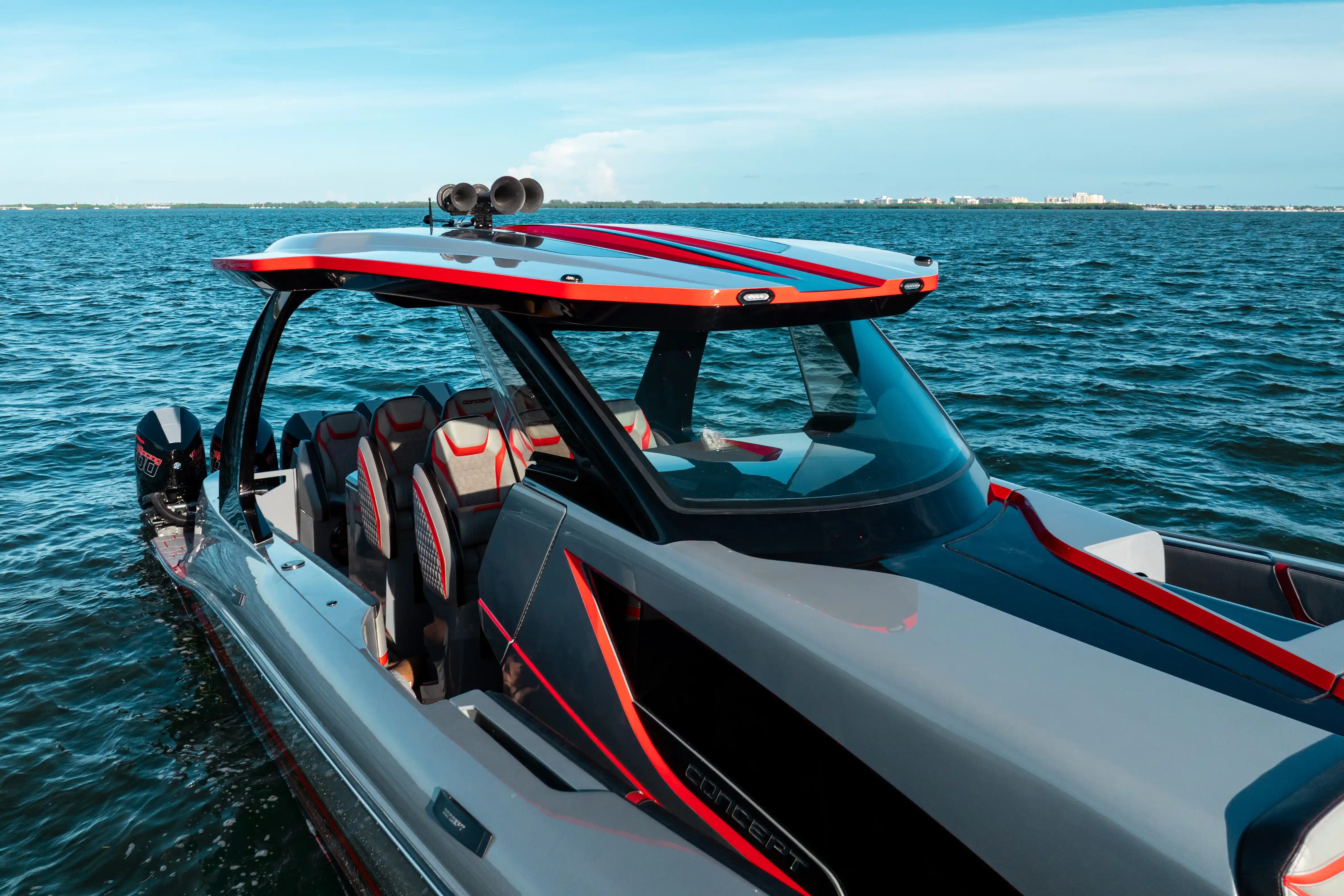
That said, many superyachts use distinctive dark hulls, metallic finishes, or contrasting color schemes to create a more individual appearance.
The choice ultimately reflects a balance between design preferences and practical ownership considerations.
Frequently Asked Questions About Yacht Colors
Why are most yachts painted white?
White reflects more sunlight than dark colors, helping reduce exterior surface temperatures. It also provides a traditional appearance, broad resale appeal, and a familiar finish for marine maintenance and repairs.
Are white yachts cooler than black yachts?
Generally, yes. Under comparable sunlight and environmental conditions, white surfaces typically remain cooler than black surfaces because they absorb less solar energy.
Do black yachts get hotter?
Yes. Black and other dark-colored surfaces generally absorb more sunlight, which can produce higher surface temperatures and potentially increase heat transfer into the vessel.
Are black yachts harder to maintain?
Dark glossy finishes often show water spots, salt deposits, scratches, and swirl marks more clearly. However, actual maintenance requirements depend on the quality and type of coating.
Does a white yacht have better resale value?
White may appeal to a broader range of buyers, but there is no guarantee that a white yacht will sell for more. Condition, manufacturer, model, equipment, and maintenance history are more important.
Why are boat bottoms often black?
Many boats use dark-colored antifouling coatings below the waterline. These paints are designed to help control marine growth and are separate from the cosmetic finish used above the waterline.
Can a fiberglass yacht be painted black?
Potentially, yes. However, dark colors can generate higher surface temperatures, so owners should confirm compatibility with the hull construction and coating system before repainting.
Final Thoughts: Why White Remains the Most Popular Yacht Color
White has become the standard color for yachts because it offers a practical combination of appearance, heat management, maintenance characteristics, and broad buyer appeal.
In sunny boating destinations such as South Florida and the Caribbean, the ability to reflect sunlight is particularly valuable.
White surfaces generally remain cooler than dark alternatives, while their familiar appearance works with nearly every style of yacht.
Dark hulls can be equally attractive and may create a more distinctive appearance, but they often require additional attention to maintain a flawless finish.
For most yacht owners, white remains a sensible choice that balances style with everyday practicality.
And while the marine industry continues to introduce increasingly bold designs and custom color schemes, the classic white yacht is unlikely to disappear anytime soon.
Follow Boats Daily for more yacht ownership guides, marine maintenance advice, boating comparisons, and news from the recreational marine industry.