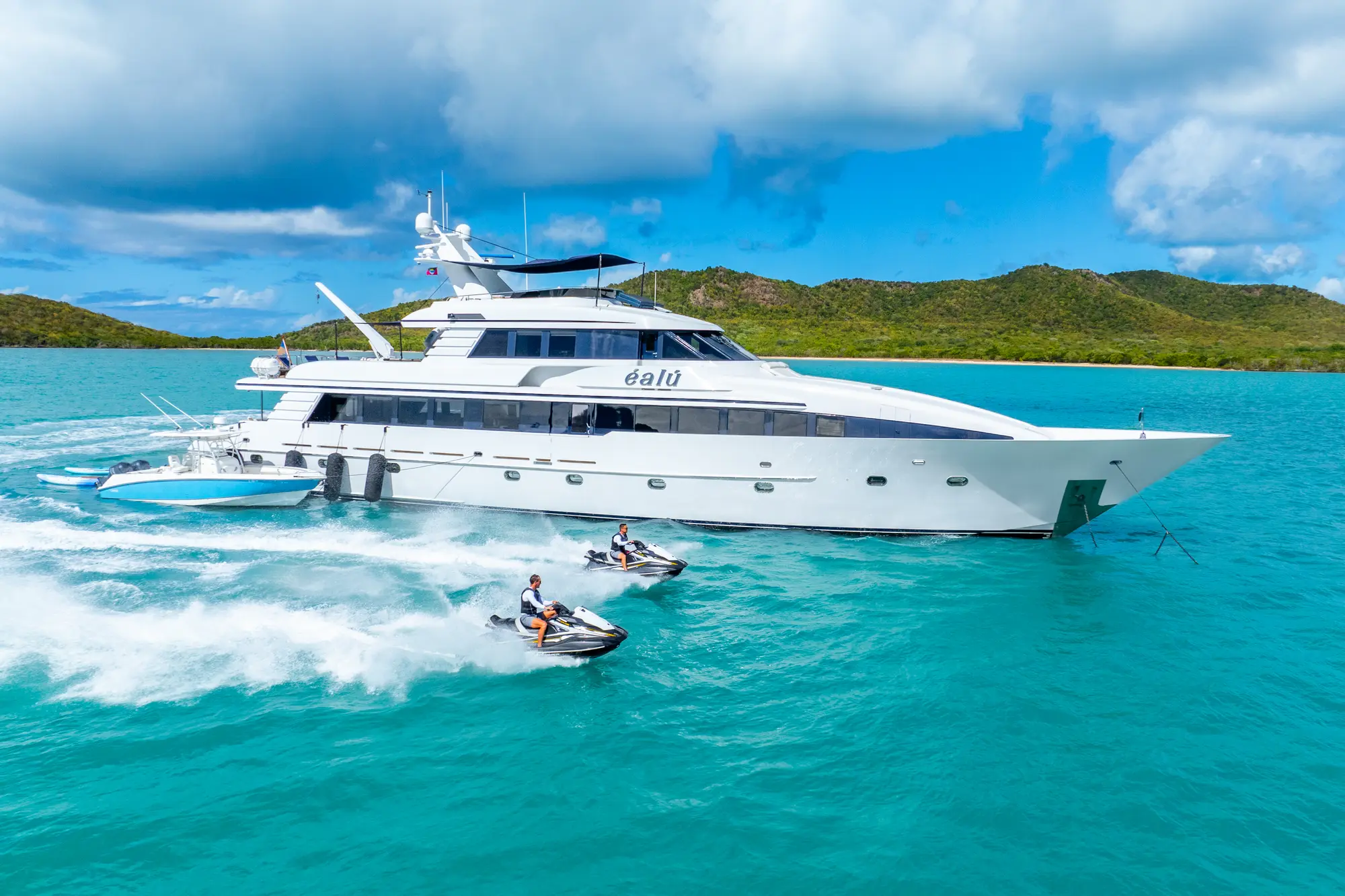
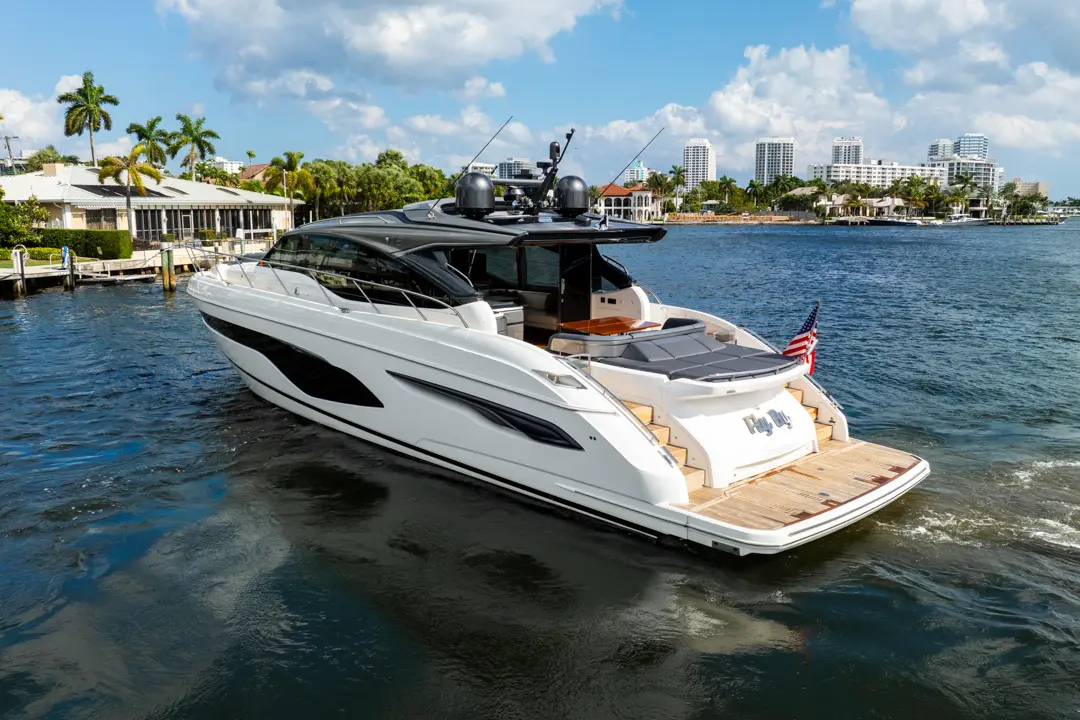
Apparently, owning a superyacht with a swimming pool, helicopter pad, beach club and garage full of jet skis isn't enough anymore.
Some owners are now adding something considerably more unusual to their collection of toys.
A private submarine.
And these aren't little underwater scooters designed to explore a coral reef a few feet below the surface. Modern private submersibles can carry multiple passengers hundreds or even thousands of feet underwater, complete with panoramic windows, climate-controlled cabins and sophisticated navigation systems.
One manufacturer has even developed a private submarine capable of traveling underwater at speeds approaching 10 knots.
The luxury yacht industry has officially found another way to make an already extraordinarily expensive hobby even more ridiculous.
Meet the Super Sub, a Private Submarine Built for Speed
Dutch manufacturer U-Boat Worx has developed one of the most unusual underwater vehicles available to private owners.
It's called the Super Sub.
Unlike conventional tourist submersibles designed to move slowly around underwater attractions, the Super Sub emphasizes speed, agility and the sensation of underwater flight.
The vessel accommodates three people, including its pilot, and is designed to dive to depths of 300 meters, approximately 1,000 feet.
Its most remarkable feature is its performance.
During sea trials off Curaçao, U-Boat Worx reported that the Super Sub reached nine knots underwater, using powerful electric propulsion and control surfaces that allow it to maneuver dynamically through the water.
The company also says the submarine can climb and descend at angles reaching 45 degrees.
That's a very different experience from sitting inside a traditional underwater observation capsule.
Instead of slowly descending toward the seabed, passengers can experience something closer to flying through the ocean.
The First Super Sub Completed Sea Trials in 2026
In March 2026, U-Boat Worx announced that its Super Sub had completed an intensive testing program in Curaçao.
The company confirmed that the vessel was being prepared for delivery to its first client following the trials.
The testing demonstrated its high-speed propulsion, maneuverability and ability to operate at substantial depths.
For the luxury yacht industry, the development represents an interesting shift.
Traditional yacht submersibles have generally emphasized underwater observation and exploration.
The Super Sub introduces a more performance-oriented experience, combining some of the appeal of a sports car with the ability to explore beneath the ocean's surface.
There's Also a Nine-Person Underwater Luxury Lounge
Speed isn't the only direction manufacturers are taking.
U-Boat Worx also offers the NEXUS series, a considerably larger submersible designed around passenger comfort and panoramic underwater visibility.
The NEXUS 8 can accommodate eight occupants in its standard configuration, with an optional arrangement allowing nine people, including children.
Instead of a traditional metal hull with small windows, the submarine features a large transparent acrylic pressure hull that surrounds passengers with underwater views.
Inside, the seating arrangement can rotate to face different directions.
That means passengers don't have to fight over the best window seat.
The NEXUS is rated for depths of 200 meters, approximately 650 feet, and features air conditioning, comfortable seating and an onboard sound system.
It even has a compartment for keeping drinks cold.
Somewhere along the way, submarine manufacturers apparently decided underwater exploration should feel more like flying business class.
Some Private Submarines Can Go Much Deeper
While 200 or 300 meters is already an extraordinary distance below the surface, other privately available submersibles are designed for considerably deeper exploration.
U-Boat Worx offers versions of its Cruise Sub capable of reaching depths of 1,700 meters.
That's more than 5,500 feet underwater.
At those depths, sunlight is essentially absent, water pressure is enormous and the environment is completely different from the tropical reefs most recreational divers experience.
Specialized lighting allows passengers to observe the surrounding environment.
These machines open up parts of the ocean that would otherwise be inaccessible to ordinary recreational diving.
For owners interested in marine biology, underwater geology or simply exploring places few people have ever seen, the possibilities are extraordinary.
Some Superyachts Are Being Designed Around Their Submarines
Perhaps the most interesting development is that submarines are beginning to influence the design of the yachts carrying them.
Traditionally, yacht tenders and water toys were selected after the basic vessel had already been designed.
A garage might accommodate a tender, jet skis, diving equipment and smaller recreational toys.
A submarine changes that equation.
Even a relatively compact private submersible can weigh several tons.
Larger passenger models can exceed 10 tons.
That means the yacht needs suitable lifting equipment, structural support, storage space and a carefully designed launch-and-recovery system.
Suddenly, carrying a submarine becomes a significant naval architecture consideration rather than simply another optional accessory.
Some expedition yachts are consequently developed with underwater exploration as a central part of their purpose.
The Yacht Shinkai Takes Underwater Exploration Seriously
One particularly interesting example is the explorer yacht Shinkai.
The yacht was developed with underwater exploration in mind, including the ability to support a dedicated submersible.
Its name means "deep sea" in Japanese, which gives a pretty good indication of what the owner wanted from the vessel.
Instead of treating a submarine as a novelty, projects like Shinkai demonstrate how an entire yacht can be designed around the ability to explore remote underwater environments.
That changes the purpose of the yacht itself.
It isn't simply a luxury residence that moves between destinations.
It becomes a platform for exploration.
The Engineering Behind These Machines Is Serious
Despite their luxurious interiors, private submersibles are not ordinary recreational toys.
They operate in an environment where mistakes can have catastrophic consequences.
Water pressure increases rapidly with depth, placing enormous demands on the pressure hull, seals, windows and supporting systems.
Submersibles also require carefully engineered buoyancy control, emergency systems, communications and life support.
Manufacturers such as U-Boat Worx incorporate multiple safety features into their designs, including emergency drop weights, location systems and automated surfacing mechanisms.
Independent classification and certification are particularly important considerations when evaluating any passenger-carrying submersible.
Professional training, operating procedures, maintenance and suitable weather conditions remain essential regardless of how sophisticated the technology becomes.
Launching a Submarine From a Yacht Is Its Own Operation
Buying a submarine is only part of the challenge.
Actually using it from a superyacht requires planning.
The crew must prepare the submersible, check its systems, evaluate sea conditions and coordinate the launch.
Depending on the design, the submarine may be lowered into the water using a dedicated crane or another engineered launch-and-recovery system.
Passengers board according to the manufacturer's procedures, and the pilot conducts the dive within established operating limits.
Meanwhile, the support vessel needs to maintain appropriate oversight and recovery capability.
After the dive, the submarine must be recovered, secured and prepared for its next mission.
For a yacht that already operates with professional crew, these responsibilities can be integrated into the vessel's broader operation.
But they require specialized expertise and equipment.
Underwater Exploration Is Becoming a Luxury Experience
The appeal is easy to understand.
Luxury yacht owners already have access to some of the most beautiful destinations on Earth.
They can visit remote islands, anchor in secluded bays and explore coastlines that most travelers never see.
But even the most expensive yacht usually stays on the surface.
A submarine opens an entirely different world.
Underwater cliffs, coral formations, shipwrecks and deep-sea habitats become potential destinations rather than invisible features beneath the hull.
For owners who have already visited the Mediterranean, Caribbean and South Pacific countless times, the opportunity to explore something genuinely unfamiliar can be particularly appealing.
It also helps explain the growing overlap between luxury yachting and scientific exploration.
Private Submarines Aren't Just for Billionaires Playing Around
Submersibles can also support legitimate scientific work.
Research organizations use crewed underwater vehicles to observe marine ecosystems, document species, inspect underwater environments and collect scientific data.
Some privately funded exploration programs combine sophisticated research equipment with luxury expedition vessels.
That creates an unusual situation where technology developed for wealthy private clients can overlap with equipment used for marine science.
The motivations may be different, but the engineering challenges are often similar.
Both require reliable underwater systems, carefully designed pressure hulls and the ability to operate in environments inaccessible to ordinary divers.
The Next Generation of Yacht Toys Is Getting Much More Complicated
For decades, the ultimate yacht accessory might have been a large tender or a collection of jet skis.
Then came personal watercraft, electric hydrofoils, underwater scooters and increasingly elaborate inflatable water parks.
Helicopters and support vessels became important features aboard some of the world's largest superyachts.
Private submarines represent another step in that progression.
They're expensive, technically demanding and require a level of operational support that ordinary recreational equipment simply doesn't need.
But for owners who want experiences unavailable almost anywhere else, that's part of the appeal.
There are only so many ways to make a swimming pool bigger.
Exploring the ocean floor is something else entirely.
The Ocean Is the Last Luxury Destination
There's also a broader story here.
Modern superyachts have become extraordinarily sophisticated, but much of the luxury experience remains familiar.
Beautiful bedrooms, expensive furniture, excellent food, swimming pools and spectacular views are all available at high-end resorts around the world.
What a yacht can offer that a resort cannot is mobility.
And what a submarine adds is access to an environment that even the most luxurious waterfront property cannot provide.
For some owners, that may be more compelling than another cinema, spa or enormous beach club.
Final Thoughts
Private submarines are still highly specialized equipment, and they are nowhere near becoming standard accessories aboard luxury yachts.
But their development says something interesting about where the upper end of the market is heading.
Manufacturers are no longer competing solely to offer bigger cabins, more elaborate interiors and increasingly enormous swimming platforms.
They're also helping owners access experiences that were once limited to scientists, professional explorers and specialized underwater expeditions.
U-Boat Worx's Super Sub is a particularly dramatic example, combining serious underwater capability with performance that would have seemed extraordinary for a private passenger submersible not long ago.
And as more expedition yachts are designed to accommodate these machines, the line between luxury vessel and private exploration ship continues to blur.
Apparently, when you've already explored every beautiful beach in the world, the next logical step is to see what's 1,000 feet underneath it.