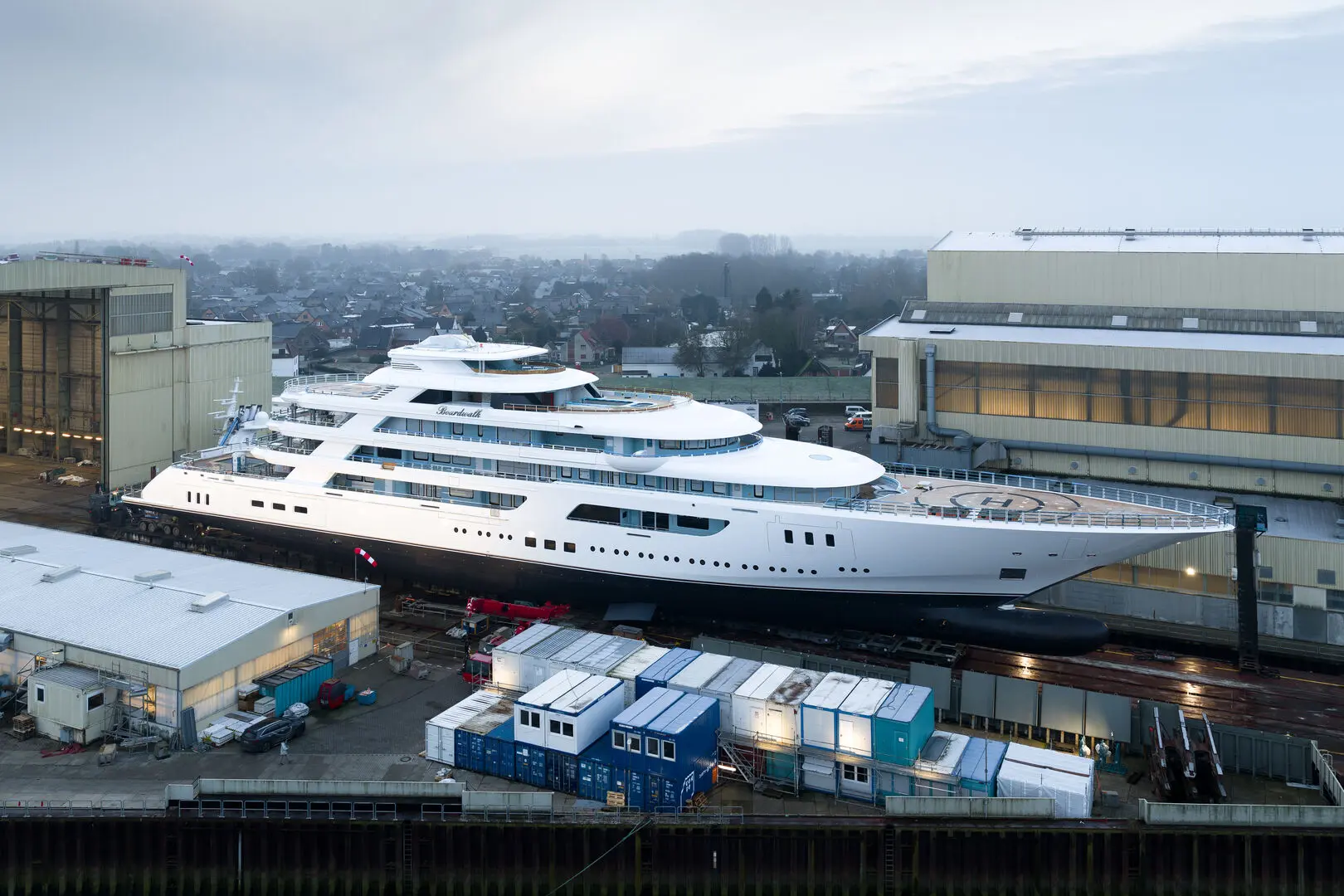
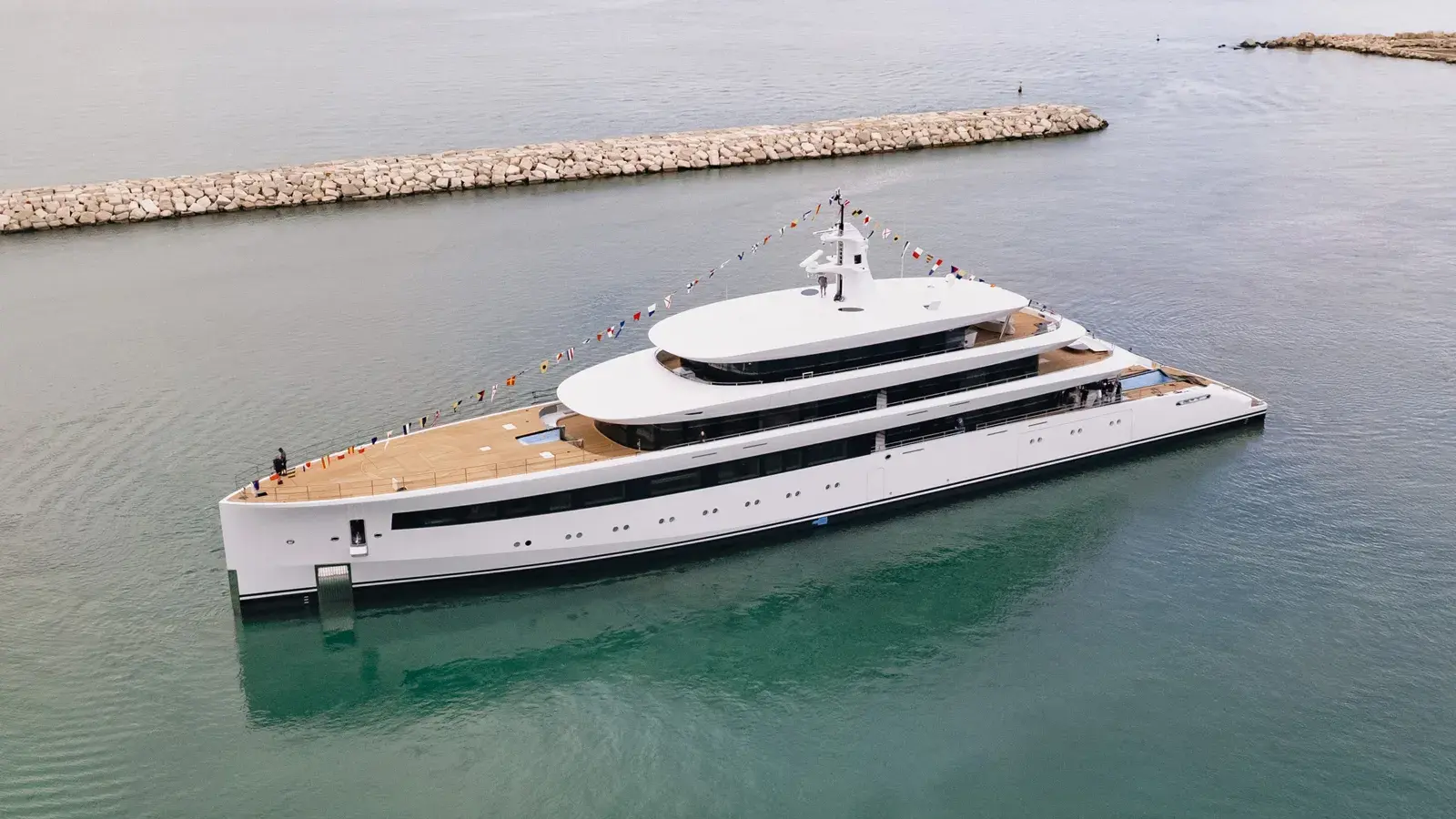
A billionaire buys a $100 million superyacht.
So the billionaire owns the yacht, right?
Not necessarily.
Look at the legal paperwork behind many of the world's largest yachts and you may find that the registered owner isn't a famous entrepreneur, investor or royal family at all.
It's a company you've probably never heard of.
That company might exist primarily to own one thing: the yacht.
This can make yacht ownership look unnecessarily complicated from the outside, but there are very practical reasons wealthy owners structure their vessels this way.
When the asset is worth tens or hundreds of millions of dollars, employs a professional crew, travels between countries and carries significant legal and financial risk, owning it personally isn't always the simplest solution.
The Yacht Gets Its Own Company
A common structure involves establishing a separate legal entity to own the vessel.
That entity is often referred to as a special-purpose vehicle, or SPV.
Instead of John Smith personally appearing as the registered owner of M/Y Example, the paperwork might show something like Example Yachting Ltd.
John Smith may ultimately control that company, directly or through a larger ownership structure, but legally the company owns the yacht.
The concept isn't unique to yachting.
Companies are frequently created to hold commercial ships, aircraft, real estate and other expensive assets.
With superyachts, however, the structure becomes particularly useful because the vessel is simultaneously an asset, a workplace and an internationally mobile piece of property.
Why Not Just Put Your Own Name on the Title?
Imagine personally owning a 200-foot yacht.
That yacht might employ 15 or 20 people. It could purchase millions of dollars worth of fuel and services. It signs contracts with marinas, shipyards, suppliers, management companies and charter brokers.
It may travel through multiple legal jurisdictions during a single season.
Suddenly, separating the vessel from the owner's other personal assets begins making considerably more sense.
The yacht-owning company provides a dedicated legal entity through which many of those relationships can be managed.
Liability Is a Huge Part of It
Boats create risk.
A yacht can damage another vessel. Someone can get injured aboard. An employee can make a claim. A docking accident can damage expensive marina infrastructure.
On a large yacht, the potential numbers become enormous.
Using a dedicated company can help separate liabilities associated with the yacht from other assets and business activities of the ultimate owner, although exactly how much protection exists depends on the structure, jurisdiction and circumstances.
That last part is important.
A yacht-owning company isn't a magical legal force field.
Corporate structures can be challenged, guarantees may be required, and owners still have to comply with applicable laws.
But separating a major asset into its own legal entity is a basic risk-management strategy used far beyond the yacht industry.
The Yacht Is Also an Employer
This is another thing people often forget.
A large yacht isn't just a luxury toy.
It's a workplace.
Captains, engineers, deckhands, chefs and interior crew may live and work aboard for months at a time.
Someone therefore needs to employ them, administer payroll, arrange contracts, manage insurance and deal with the legal responsibilities associated with professional crew.
Depending on the ownership and management structure, the yacht-owning company or another dedicated entity can form part of that arrangement.
At the upper end of yachting, the administrative operation behind the vessel can start looking surprisingly similar to a small business.
Then There Are All the Contracts
A superyacht generates an extraordinary amount of paperwork.
There are marina agreements, fuel purchases, maintenance contracts, shipyard work, insurance policies, satellite communications, provisioning, crew arrangements and management agreements.
If the yacht charters, the commercial side becomes even more complicated.
Having a dedicated company provides a clear entity through which many of these transactions can take place.
The owner gets to enjoy the yacht.
Behind the scenes, the yacht effectively operates as its own organization.
Financing Can Be Another Reason
Not every billionaire pays cash for a yacht.
That might sound strange, but wealthy individuals and family offices frequently use financing even when they could theoretically afford to purchase an asset outright.
Capital tied up in a yacht isn't available for investments, businesses or other opportunities.
If financing is involved, the ownership company can become an important part of the transaction.
A lender may take security over the vessel and have its mortgage properly registered against the yacht.
The legal structure therefore has to work not only for the owner, but also for the bank financing the asset.
This Is Where the Flag State Comes Back In
The company that owns a yacht and the country where the yacht is registered are related issues, but they aren't the same thing.
A yacht might be owned by a company incorporated in one jurisdiction while being registered under the flag of another, provided the relevant eligibility requirements are satisfied.
That's part of the reason superyacht ownership can look so confusing from the outside.
The beneficial owner might live in the United States.
A company might legally own the yacht.
The yacht might be registered in the Cayman Islands.
Its management company might operate from Monaco.
And the boat itself might spend the winter in the Caribbean.
All of those things can simultaneously be true.
Does This Hide Who Really Owns the Yacht?
Sometimes corporate structures make it more difficult for members of the public to immediately identify the person behind a yacht.
If a company appears as the registered owner, searching the yacht's registration information may initially lead to that company rather than an individual's name.
But that doesn't mean the ultimate owner is necessarily invisible to governments, banks, insurers or other regulated parties.
Modern anti-money-laundering and beneficial-ownership requirements can require financial institutions, corporate service providers and other regulated businesses to identify the individuals ultimately controlling companies and assets.
There's a major difference between privacy from casual public searches and anonymity from authorities.
The two are frequently confused.
And No, the Company Doesn't Automatically Make the Yacht Tax-Free
This is probably the biggest misconception.
Put a yacht into a company, register it offshore and suddenly nobody owes tax.
That's not how it works.
The tax treatment of a yacht can depend on an enormous number of factors, including where the ultimate owner resides, where the yacht was purchased and delivered, where it is imported, where it operates, how it is used and whether it is genuinely engaged in commercial activity.
European VAT rules alone can make yacht ownership extraordinarily complicated.
The United States has its own federal and state tax considerations.
Different jurisdictions have different rules.
Simply inserting a company between an individual and the yacht does not automatically eliminate those obligations.
Commercial Charter Makes Everything More Complicated
Some owners want to charter their yachts when they're not using them.
That can generate substantial revenue, but it also changes the regulatory and financial picture.
A yacht carrying paying charter guests may need to operate under commercial rules, comply with additional safety requirements and meet the standards imposed by its flag state and cruising jurisdictions.
The ownership structure may therefore be designed with commercial operation in mind from the beginning.
This is one reason buying a superyacht first and figuring out the paperwork later can be a very expensive mistake.
Owning the Company Can Also Be Easier Than Moving the Yacht
Here's where things get particularly interesting.
If a company exists primarily to own a yacht, a transaction can sometimes involve the ownership of that company rather than a simple direct transfer of the physical vessel.
That doesn't mean every yacht sale works this way, and the legal and tax consequences can vary enormously depending on the jurisdictions involved.
But it illustrates why sophisticated ownership structures are established before a yacht is even delivered.
Owners aren't only thinking about purchasing the vessel.
They're thinking about financing it, operating it, chartering it, eventually selling it and potentially transferring it as part of a larger estate.
Estate Planning Matters When the Asset Is Worth $100 Million
Superyachts can also become part of family wealth and estate planning.
A yacht owned personally by one individual can create complications if that person dies.
A yacht held within a broader corporate or trust structure may provide different options for succession and administration.
Again, there isn't one universal structure that works for everyone.
A 70-foot owner-operated yacht and a 300-foot yacht owned by a multinational family office are completely different situations.
But once the asset becomes valuable enough, planning for what eventually happens to it becomes part of ownership.
The Yacht May Have an Entire Corporate Structure Behind It
At the very top end, the company listed as the yacht's owner may only be one piece of a larger structure.
There can be holding companies, trusts, family offices, management companies and separate entities handling different parts of the yacht's operation.
This is why answering the seemingly simple question "Who owns that yacht?" can become surprisingly difficult.
There may be several technically correct answers depending on what "owns" means.
One company may be the registered legal owner.
Another entity may control that company.
A trust could sit above it.
And somewhere at the end of the chain is the person or family actually enjoying the boat.
Why Does Any of This Matter to Normal Boat Owners?
You don't need a 250-foot yacht before ownership structure becomes relevant.
Smaller yachts are sometimes held through LLCs or other entities as well, particularly when there are multiple owners, charter activity or business considerations involved.
But creating a company solely because somebody at the marina said it would "save taxes" can be a terrible reason to do it.
Entity ownership can introduce its own filing requirements, expenses, insurance considerations and legal obligations.
Whether it makes sense depends heavily on the owner, boat, location and intended use.
For an ordinary recreational boat, personal ownership may remain perfectly appropriate.
A Superyacht Is a Luxury Product Wrapped Around a Business Operation
This is perhaps the easiest way to understand why corporate ownership is so common.
From the guest's perspective, a superyacht is effortless.
The cabins are immaculate. Food appears. Tenders are waiting. The pool is clean. The boat moves overnight and another island appears outside the window in the morning.
Behind that experience is an operation involving employees, contracts, insurance, maintenance, regulatory compliance and millions of dollars in annual spending.
Putting a corporate structure around that operation suddenly doesn't seem particularly strange.
It almost seems inevitable.
Final Thoughts
When someone says a billionaire "owns" a famous superyacht, they're usually describing reality in the ordinary sense.
That person may control it, pay for it and decide where it goes.
Legally, however, the registered owner may be a company with an unremarkable name and one extraordinarily remarkable asset.
Those structures can help organize liability, financing, contracts, crew, charter operations and long-term ownership of vessels worth tens or hundreds of millions of dollars.
They can also provide a degree of public privacy, but they aren't magical invisibility cloaks or automatic tax loopholes.
The bigger lesson is that a superyacht isn't really purchased like a normal boat.
By the time you're buying a floating asset worth more than most office buildings, you aren't just deciding which yacht to own.
You're deciding what is going to own the yacht.